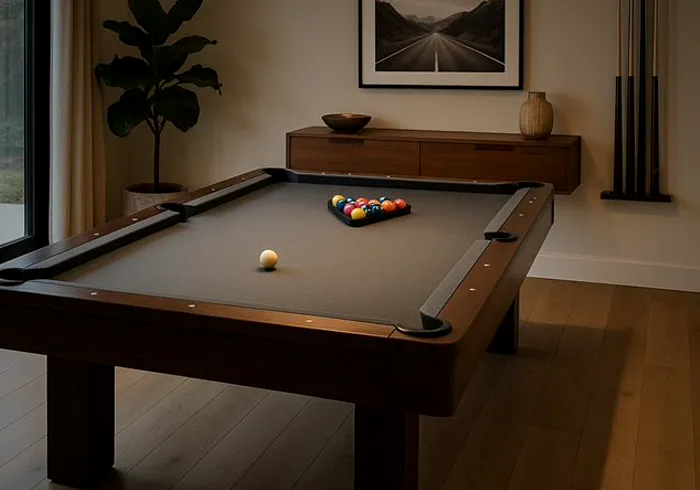
Billiard Table Cushions: Dead Rail Test and Replacement
Billiard table cushions are the triangular rubber strips glued to the inside edge of each rail, and on most American home tables they are a K-66 profile. When they go dead, banks come up short, the ball thuds instead of clicking, and the table plays smaller than it is. The WPA's equipment spec gives the yardstick: shot firmly from the head spot through the foot spot, a ball should travel at least 4 to 4 1/2 table lengths. If yours can't, the rubber is finished and needs replacing, not reviving.
This page covers how to test the cushions, which profile your table takes, and how the replacement job goes, step by step. What it costs to have it done is on our rail and cushion replacement cost page.
Signs your pool table cushions are dead
Dead rubber gives itself away in several ways, and you only need two of them to be sure:
- Banks and kicks come up short, and you start aiming them long without thinking about it.
- A ball hit firmly into a rail makes a dull thud instead of a crisp click.
- One rail plays differently from the others. Rubber near a sunny window or a heat vent usually goes first.
- The cushion feels hard as a brick when you press it through the cloth, or the opposite, soft and putty-like.
- Balls hop off the rail on hard shots. That can be nose height or a loose cushion as much as age, so measure before you order.
Before you blame the rubber, brush and vacuum the cloth and check the rail bolts. Dirty, worn cloth slows everything down, and the WPA spec ties a quiet, lively rebound to rail bolts that are properly torqued. A loose rail plays dead on good rubber.
How to test pool table cushions: four checks
1. The length test (the official one)
Place a ball on the head spot and shoot it through the foot spot with a level cue, center ball and a firm stroke. Count how many lengths of the table it travels before it stops. The WPA's recommended equipment specifications say it must travel a minimum of 4 to 4 1/2 lengths without jumping. Billiards Direct describes the same check as a BCA test and sets the bar at four full lengths.
Pool Table Portfolio puts healthy tournament rubber at 4 to 5 lengths with a hard, controlled stroke and calls 2.5 to 3 lengths a sign the cushions are soaking up the energy. Your stroke changes the count, so run it three or four times and have someone else shoot it too.
2. The sound test
Live rubber clicks. Dead rubber thuds. Hit the same firm shot into each of the four long rail sections and the two short rails and listen for the one that sounds different.
3. The thumb test
Press firmly along the top edge of the cushion every few inches. Billiards Direct's rule of thumb is that a cushion that gives more than 1/4 inch, or less than 1/8 inch, needs replacing. A.E. Schmidt Billiards describes the same failure from both ends: rubber that is hard as rocks, or so soft it feels like putty.
4. The rail-by-rail check
Roll the same medium-speed shot into each rail at the same angle and watch where it comes back. Rubber ages unevenly, and one dead rail is worse than six slow ones because you can't adjust for it.
Why cushion rubber goes dead
Rubber hardens as it ages and oxidizes. Heat and sunlight speed that up, and so does repeated heating and cooling, which is why a table under a window or in a garage dies young. Black Label Billiards says natural gum rubber can keep its elasticity for decades under normal conditions, while synthetic rubber, common on budget and recreational tables, tends to lose its bounce sooner.
For a real number: A.E. Schmidt Billiards, a St. Louis table maker and service company, says most American-made tables need new felt and new cushions after 10 to 20 years. HomeGuide's cost guide gives the same 10 to 20 years for a good quality table.
Can you bring dead rubber back? Not that we could find any evidence for. Black Label recommends a rubber conditioner on the rails every six months to keep cushions from hardening, which is prevention on live rubber. Once a cushion fails the length test, replacement is the fix. The other prevention is the room: a steady temperature and humidity (see pool table humidity) and a cover between sessions.
K-66 vs K-55 and other cushion profiles
The profile is the cross-section shape of the rubber, and the replacement has to match what the rail was built for. If it doesn't, the nose (the point the ball hits) sits at the wrong height and every bank plays wrong.
| Profile | Size (height x base) | Where you'll find it |
|---|---|---|
| K-66 | 1 3/16 x 1 in, about a 66 degree face | Most American home and recreational tables, including nearly all Legacy tables and non-Brunswick tables (per Legacy Billiards) |
| K-55 | About 1 1/4 x 1 1/8 in, about a 55 degree face | Brunswick tables made after 1975 (per Legacy); carom tables and some high-end American tables (per Black Label) |
| Older Brunswick K-55 | 1 5/16 in at the back, 1 1/8 in on top | Brunswicks made before 1975; Legacy says to measure the glue side |
| Brunswick Centennial and Contender | Proprietary, shaped more like a 7 than a triangle | Older 7 and 8 foot Brunswicks; Legacy names U-56 as a lower-cost substitute |
| U-23 | Sold at 43 in lengths (Seybert's) | Some older and bar box tables; Ozone sells U-23 sets for 7 and 8 foot tables |
Sizes come from Black Label Billiards and Legacy Billiards; the two describe K-55 use a little differently, which is one more reason to measure instead of guessing by brand.
How to identify your profile
- Check the nose height first. Legacy says that on a standard table with 2 1/4 inch balls the nose should sit 1 3/8 to 1 7/16 inches above the bed. The WPA spec puts it at 63.5 percent of the ball's diameter, plus or minus 1 percent, which works out to the same range. If yours is in range, replace like for like.
- Pull a rail, strip the cloth and look at the rubber. Seybert's suggests cutting a piece of the old rubber in half and measuring the cross-section.
- Compare against the table above, and match length too. Seybert's sells 47 inch K-55 and K-66 strips as long enough for tables up to 8 feet; 9 foot sets run about 48 to 50 inches per strip.
How to replace pool table cushions
This is the job a mechanic does, in the order they do it. Read it through before deciding to take it on.
- Remove the rails. The bolts are under the table; keep each rail's bolts with it and label the rails.
- Pull the staples and strip the rail cloth. It can't be reused: A.E. Schmidt requires new rail cloth with every cushion job, because cloth that has been stretched and stapled won't stretch tight again.
- Peel off the old rubber and clean the wood strip it was glued to. Every lump of old glue left behind lifts the new rubber and changes the nose height along the rail.
- Glue the new rubber with contact cement on both surfaces. Seybert's instructions are simply contact cement, then trim. Contact cement grabs on touch, so line up the cushion along its full length before it meets the wood. DAP lists a 2 hour open time for Weldwood once it is tack-free.
- Trim the ends at the pocket angles and glue on new facings, the thin rubber pads at the pocket jaws. Facings come in 1/8, 3/16 and 1/4 inch thicknesses, and Black Label traces some pocket rattle to soft 1/8 inch facings (more in our pocket guide).
- Recover the rails with new cloth, pulled tight over the cushion nose and stapled underneath.
- Bolt the rails back on, snug and even, and rerun the length test.
Steps 3 and 5 are where home jobs go wrong. A wavy glue line or a nose that wanders by an eighth of an inch shows up as banks you can't trust, and you won't fix it without doing the rail again. If the cloth on the bed is old too, do it in the same weekend; our how to replace pool table felt guide covers the stretch and the rail cloth.
DIY or hire a billiard mechanic
Do it yourself if you already plan to refelt the table, you have a free weekend and a patient helper, and the table is a solid-wood, slate table you intend to keep. The rubber is the cheap part of the job.
Hire a mechanic if the table is valuable, the rails are an unusual Brunswick profile, or you have never stretched rail cloth. A shop does cushions in the same visit as a refelt, and the labor overlap makes it the cheapest moment to do both.
Skip it on a cheap MDF table. New rubber won't fix a bed that isn't flat, and the bill can pass the table's value (see slate vs MDF).
The numbers, with sources, are on our rail and cushion replacement cost page, and the refelt side of the bill is in refelting cost.
Pool table cushion glue: what to use
Contact cement, the same type the retailers' instructions call for. DAP Weldwood Original is a neoprene contact cement that dries tack-free, bonds wood, rubber and fabric, and stays flexible, which matters on a strip of rubber that gets hit thousands of times. Brush it on the rail and the back of the cushion, let both go tack-free, then press the two together once.
Skip super glue and construction adhesive for the cushion. Neither is what the rubber sellers' instructions call for, and a thick bead of anything under the rubber raises the nose height, which is the one measurement you are trying to protect.
Sources
- WPA recommended equipment specifications (cushion nose height, rebound test, rail bolts)
- Legacy Billiards: rail cushion profiles
- Black Label Billiards: K-66 vs K-55 cushions
- Black Label Billiards: natural vs synthetic rubber cushions
- Black Label Billiards: game table care guide (rubber conditioner)
- A.E. Schmidt Billiards: pool table repair and services (lifespan, rail cloth with cushion work)
- Seybert's: replacement rail rubber (profiles, lengths, install)
- Billiards Direct: replacing pool table rails (thumb and length tests)
Our picks
Links open the current selection and price on Amazon so you can compare real reviews before buying.
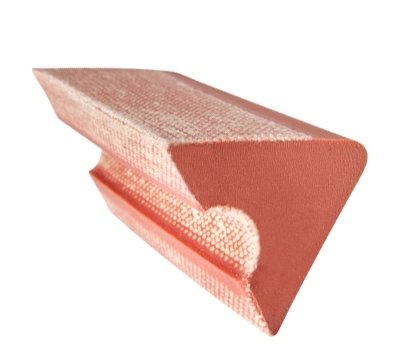
HAN'S DELTA K66 Rubber Bumpers, Set of 6 (8 ft)
Standard 8 ft home tablesSix 42 inch strips of K66, the profile most US home tables use, sold for 8 foot tables and listed as meeting BCA accuracy standards. Measure your longest rail section before ordering, because 42 inches leaves little room for trimming on a big 8 footer.
Amazon price: $39.59 as of 12:19 PM EDT. Price and availability can change; Amazon’s price at purchase applies.
Check price on Amazon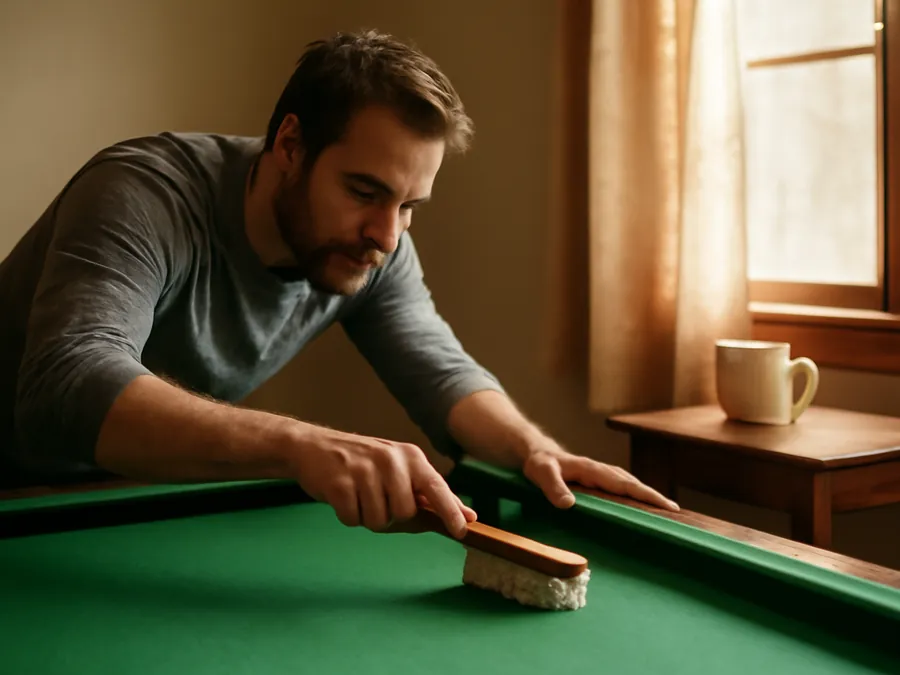
Championship K66 Cushion Rubber, 48-Inch Set of 6
Longer railsSix 48 inch strips in the K66 profile, which the listing says is the most common on home and commercial slate tables, sold as a set for a 9 foot table. Shorter tables trim to length. Check the profile against your old rubber before any glue comes out.
Check price on Amazon
DAP Weldwood Contact Cement
Gluing rubber to the railA neoprene contact cement that stays flexible on rubber and wood and lists a 2 hour open time once it dries tack-free. That window is what lets you coat all six rails, then set each cushion in one careful pass.
Check price on Amazon
Championship Saturn II Billiard Cloth
Recovering the railsNew rubber means new rail cloth, so a full cloth set with pre-cut rails finishes the job. Saturn II is Championship's Teflon-treated woolen for home tables, and doing the bed at the same time costs you cloth, not another teardown.
Check price on AmazonFrequently asked questions
How do I know if my pool table cushions are dead?
Shoot a ball firmly from the head spot through the foot spot. The WPA spec says it should travel at least 4 to 4 1/2 table lengths. Fewer than that, a dull thud off the rail, or rubber that feels rock hard or putty soft means the cushions need replacing.
How do you fix a dead rail on a pool table?
First rule out the easy causes: dirty cloth and loose rail bolts. If the rail still fails the length and sound tests, the rubber has hardened and has to be replaced, along with that rail's cloth. Nothing restores dead rubber.
What cushion profile does my pool table use?
Most American home tables use K-66. Many Brunswicks made after 1975 use K-55, and older Brunswick Centennial and Contender tables use their own profile. Measure the nose height and a cross-section of the old rubber before ordering.
What glue do you use for pool table cushions?
Contact cement, applied to both the rail and the cushion and allowed to go tack-free before you press them together. DAP Weldwood is a common choice. Avoid super glue and construction adhesive for the cushion itself.
How long do pool table cushions last?
A.E. Schmidt Billiards and HomeGuide both put it at 10 to 20 years on a good table. Natural gum rubber in a steady room lasts longest. Sun and big temperature swings shorten it.
Do I need new felt when replacing cushions?
You need new rail cloth, because the old cloth can't be stretched tight again once it is pulled off. Most owners do the bed cloth at the same time, since the table is already apart.
Can I replace just one cushion?
You can, and a single damaged rail is sometimes done that way. Rubber ages together, though, so a new rail next to five old ones plays faster than its neighbors. Most mechanics replace all six.
Related guides
LeaguePool is reader-supported. When you buy through links on this site we may earn an affiliate commission at no extra cost to you. As an Amazon Associate we earn from qualifying purchases.