
Best Carbon Fiber Shaft (2026): Revo, Cynergy, Defy, Siege
The best carbon fiber cue shaft for most players is the Cuetec Cynergy in 12.5mm. It's sold in more native joint pins than any other name-brand carbon shaft, it sits at the low end of name-brand pricing, and 12.5mm is the easiest switch from a 13mm maple shaft. The Predator Revo is the benchmark if you play a Predator, Lucasi or other Uni-Loc or Radial butt. McDermott owners should look at the Defy, which comes in the widest spread of diameters and lengths, and Viking owners at the Siege, built for Viking's quick-release joint.
Fit decides everything here. A carbon shaft that doesn't match your joint pin and collar is a $450 paperweight, so the joint section below is the part to read before you order. If you want carbon for under $200, that's a different set of shafts, covered in our budget carbon fiber shafts guide.
The best carbon fiber shafts compared
Specs come from each maker's own page, plus Seybert's listings where the maker doesn't say. Prices aren't listed per shaft because they change; the product cards show live Amazon prices.
| Shaft | Best for | Tip sizes | Joint pins offered | Lengths | Warranty |
|---|---|---|---|---|---|
| Cuetec Cynergy | Most players; widest pin choice | 10.5, 11.8, 12.5mm | 3/8x10, 3/8x11, 3/8x14, 5/16x14, 5/16x18, Radial, Uni-Loc, Mezz United, Mezz Wavy | Standard | See Cuetec's terms |
| Predator Revo | Uni-Loc and Radial butts; the benchmark | 11.8, 12.4, 12.9mm | Uni-Loc QR, Radial, 3/8x10, 5/16x18, 5/16x14 | 29 or 30 in | Limited lifetime against warpage |
| McDermott Defy | McDermott cues; 13mm or long shafts | 11.5, 12, 12.5, 13mm | 3/8-10, McDermott QR, 5/16-14, 5/16-18, Viking QR, Radial, Uni-Loc | 29, 30 or 31 in | Lifetime, void if sanded |
| Viking Siege | Viking cues | 12.25, 12.5, 12.75mm | Viking QR (5/16x18), 5/16x18, 5/16x14, 3/8x10, Uni-Loc QR | Not listed | Limited lifetime, register within 30 days |
| Triple 60 Whyte Carbon | Owners of several cues with different joints | 11.75 to 12.75mm | Universal insert system (one insert per joint type) | 29 or 30 in | Lifetime (per Cue Pros) |
All five are built for low endmass at the tip and sold as low-deflection shafts. The real differences are fit, diameter options, warranty terms and feel.
What a carbon shaft changes, and what it doesn't
Carbon does two things well. First, it squirts less on side spin than standard maple, because the tip end is light. Dr. Dave Alciatore's research shows squirt is set by the mass in roughly the last 5 to 8 inches of the shaft, and carbon shafts are typically hollow or foam-filled there. Second, it stays the same: it won't warp in a hot car or a damp basement, it doesn't ding, and it cleans with a damp towel.
Two cautions. Dr. Dave also points out that not all carbon shafts deflect the same amount, so carbon is not a single number. And no shaft fixes your stroke, your speed control or your position play. If you're still deciding whether to switch at all, read whether carbon shafts are worth it and wood vs carbon fiber first.
Cuetec Cynergy carbon fiber shaft
The Cynergy is the shaft we'd tell a league friend to buy if they asked for one name. Cuetec builds it from layers of unidirectional carbon over a polyurethane foam core and ships it with a Tiger Sniper tip. It comes in three diameters:
- 12.5mm, the one most players coming from maple should order.
- 11.8mm, for players who use a lot of english and want less squirt still.
- 10.5mm, a specialty size most people should hit before buying.
Its biggest advantage is the joint list. Seybert's carries it in nine pins, including the Mezz United and Wavy joints that the other shafts here don't offer, plus 3/8x11 and 3/8x14 (Cuetec's own SVB Gen II cue uses 3/8x14). If your cue is anything other than a Predator or a Viking, the Cynergy is the shaft most likely to be offered in your exact pin.
The other side of that coin: each Cynergy is made for one pin. If you own two cues with different joints, you need two shafts or an insert-based shaft like the Triple 60. Cuetec also sells complete cues built around this shaft, such as the SVB models; those are in our Cuetec Cynergy cues guide.
Predator Revo
The Revo is the shaft the others get compared to. Predator makes it ferruleless, with what it calls the lowest front-end mass in its lineup, in three sizes. The 12.4 and 12.9mm use a low-rise pro taper; the 11.8mm uses a hybrid conical taper. It comes in Uni-Loc quick release, Radial, 3/8x10, 5/16x18 and 5/16x14, in 29 or 30 inches, with a limited lifetime warranty against warpage.
It's also the most expensive of the four main picks. Buy it if you play a Predator butt (or a Lucasi or custom cue with a Uni-Loc or Radial pin) and want the shaft built for that joint, or if resale matters to you. Choosing between 11.8, 12.4 and 12.9 is covered in the Revo diameter guide, and our Revo review covers the complaints owners raise.
McDermott Defy
The Defy covers the most sizes: 11.5, 12, 12.5 and 13mm tips, and 29, 30 or 31-inch lengths. That makes it the pick for two groups the others ignore. Players who want carbon but refuse to give up a 13mm tip can get one here, and tall players or anyone who bridges long can get a 31-inch shaft.
McDermott sells it in 3/8-10, McDermott quick release, 5/16-14, 5/16-18, Viking quick release, Radial and Uni-Loc, and lists two joint diameters, .843 and .855 inch. Its advice is that most steel-collar joints are near .843 and many non-steel McDermott joints near .855, and it says to measure with a caliper. It ships with a Navigator Automatic soft tip on a short .125-inch ferrule.
One rule to know: McDermott says never to sand the Defy, because sanding damages the finish and voids the lifetime warranty.
Viking Siege
Viking cues use a 5/16x18 quick-release pin, and the Siege's standard joint is exactly that, on a flat-faced collar of .840 inch to match Viking butts. It also comes in full-thread 5/16x18, 5/16x14, 3/8x10 and Uni-Loc quick release, in 12.25, 12.5 or 12.75mm, with a 12 to 14-inch pro taper, a quarter-inch ferrule and a Kamui Black Soft tip. Viking's limited lifetime warranty requires registration within 30 days of purchase, so do that the day it arrives.
If you play a Viking and want a carbon shaft, this is the simplest fit. The Defy in Viking QR is the alternative if you want a 13mm tip or a longer shaft.
Other name-brand carbon shafts worth knowing
- Triple 60 Whyte Carbon: uses a universal insert, so one shaft can fit several butts with an insert for each joint type (Seybert's sells the inserts separately). Offered from 11.75 to 12.75mm. Worth a look if you own more than one cue.
- Jacoby BlaCk: 11.8 or 12.3mm, 29 or 30 inches, listed in Radial at Seybert's.
- Pechauer Rogue II: 11.8, 12.4 or 12.8mm, sold in Pechauer's Speed Joint plus radial, 3/8x10, Uni-Loc and 5/16x18, so it isn't only for Pechauer owners.
- Bull Carbon: 11.75 to 12.85mm depending on model, with Uni-Loc and insert options.
None of these is a bad choice. We rank them below the four above only because they fit fewer cues out of the box, or need an insert to do it.
Joint compatibility: how to make sure a carbon shaft fits your cue
A shaft fits when three things match: the pin, the thread style and the collar. Get any of them wrong and it either won't thread on, threads on and binds, or wears the threads out over time.
1. Read the pin size
A pin like 5/16x18 means a 5/16-inch pin with 18 threads per inch. The common ones are 3/8x10, 5/16x14 and 5/16x18, plus branded pins like Uni-Loc, Radial and the McDermott and Viking quick releases. If your cue isn't marked, count the threads along half an inch of the pin and double it, or send the shaft maker a photo of the pin. Most retailers will identify one from a picture.
2. Match the thread style, not just the numbers
- Quick release and full thread are different. A Viking QR and a full-thread 5/16x18 share a pin size but not a thread form, which is why Viking sells the Siege in both.
- Radial and 3/8x8 look alike. Radial is its own coarse-thread pin, and many import cues use a generic 3/8x8. They're close enough that people confuse them, but they are not guaranteed to be the same thread. If your cue says 3/8x8, ask the shaft maker before ordering a Radial shaft.
- Uni-Loc comes in more than one version. Seybert's lists Uni-Loc quick release, Uni-Loc Radial and Uni-Loc Bullet pins separately. Know which one your butt has.
- Never force a shaft that binds partway. Mismatched threads can feel snug at first and strip later.
3. Compare collar diameters
Viking lists the Siege joint at .840 inch; McDermott lists .843 and .855. A few thousandths of an inch won't change how the cue plays, but you will see and feel a lip where the shaft meets the butt. Measure your butt's collar with a caliper and pick the closest option where the maker offers one.
What common cues use
| Your cue | Pin | Carbon shafts made for it |
|---|---|---|
| McDermott | 3/8-10, or McDermott QR on some models | Defy (both), Revo and Cynergy (3/8x10), Siege (3/8x10) |
| Viking | 5/16x18 Viking quick release | Siege, Defy in Viking QR |
| Predator | Uni-Loc or Radial | Revo, Cynergy, Defy, Siege (Uni-Loc QR) |
| Lucasi | Uni-Loc | Revo, Cynergy, Defy, Siege (Uni-Loc QR) |
| Mezz | Mezz United or Wavy | Cynergy |
| Older and import cues | Often 5/16x18, 5/16x14, 3/8x11, 3/8x14 or 3/8x8 | Cynergy covers the most of these; 3/8x8 is rarely offered by name brands |
Insert systems such as Triple 60's are the workaround if you own cues with different pins, but each insert is another joint surface, so buy the shaft in your native pin if you only play one cue. Our joint types guide explains how to identify each pin.
Which diameter and taper to order
Coming from a 13mm maple shaft, order 12.4 to 12.5mm. Every major carbon shaft offers that size, it keeps most of the forgiveness you're used to, and it still cuts squirt. Go to 11.8mm only if you've hit with one and liked it; the thinner end feels skinny in a closed bridge and gives you less room on off-center hits. If you can't give up 13mm, the Defy is the name-brand carbon shaft that still offers it.
Taper matters more than half a millimeter for most players. A pro taper (constant diameter for the first 12 to 14 inches or more) feels the same through your bridge from address to follow-through. The Revo 11.8's conical taper widens sooner. Our tip size guide explains what diameter changes and doesn't.
What carbon shafts cost
| Tier | Typical price | Examples |
|---|---|---|
| Budget import | Under $200 | Linc, Rhino, CUEDESG and similar |
| Name brand | About $425 to $525 | Cuetec Cynergy, McDermott Defy, Viking Siege, Jacoby BlaCk, Triple 60 |
| Top of the range | About $495 to $570 | Predator Revo, Pechauer Rogue II, Bull Carbon |
Ranges are from Seybert's carbon shaft listings on October 15, 2026; makers' own sites are sometimes higher. The budget tier gets you most of carbon's stability for less than half the money, with more variation from shaft to shaft. It has its own page: best budget carbon fiber shafts.
The best-selling carbon cues on Amazon
Most of what sells on Amazon under carbon fiber is complete cues, not shafts. The top sellers, from CRICAL, CUESSIR and SYNCSHOT, share a pattern: 58 inches, a 12.5mm tip, a carbon shaft and a stainless 3/8x8 joint. As a first cue or a bar cue, that's a reasonable package. As a platform for upgrades, it isn't. None of the name-brand shafts above is listed in 3/8x8, so if you later want a Revo or a Cynergy, plan on buying a new butt too.
The best-selling standalone shaft in our Amazon search, the CUEBOTS Z Wave, is a budget shaft sold in Uni-Loc QR, Radial, 3/8-10 and 5/16-18 with a 12.5mm tip. It belongs with the other sub-$200 options on the budget page, where we explain how to check one when it arrives.
Tips and care for a carbon shaft
Carbon needs less care than maple, but it needs different care.
- Clean it with a damp towel. No sandpaper, no scuffing pads, no burnishing. McDermott voids the Defy's warranty for sanding, and Triple 60 and Bull Carbon sell cleaning wipes made for carbon.
- Have tips installed by someone who works on carbon. The tip has to be trimmed flush without scoring the shaft end, and adhesion on carbon is less forgiving than on a wood ferrule.
- Keep the tip it ships with until it wears out. The Cynergy comes with a Tiger Sniper, the Defy with a Navigator Automatic soft and the Siege with a Kamui Black Soft. When it's time to replace one, see our best cue tips and soft vs hard tips guides.
- Use joint protectors. A carbon shaft won't warp, but its threads can still collect grit and wear.
One technical note from Dr. Dave: carbon is laterally stiffer than wood, so the tip rebounds faster and can double-hit on extreme spin shots near the miscue limit. You'll rarely play those shots in league, but it's real.
Not sold on carbon? Low-deflection maple
Low-deflection maple shafts, such as the Predator 314 or Lucasi Zero Flexpoint, also cut squirt and keep the wood feel, at the cost of normal wood maintenance and the risk of warping. They're the better choice if you love how maple hits and keep your cue indoors. Compare them in our best low-deflection shafts guide, read how low-deflection shafts work, or see replacement cue shafts if you just need a straight shaft again.
Sources
- Predator: Revo carbon fiber shaft specifications
- McDermott: Defy carbon fiber shaft specifications
- Viking: Siege carbon fiber shaft specifications
- Seybert's: carbon fiber shaft listings, joints and prices (checked October 15, 2026)
- Dr. Dave Alciatore: carbon fiber shaft FAQ
- Dr. Dave Alciatore: shaft endmass and squirt
Our picks
Links open the current selection and price on Amazon so you can compare real reviews before buying.
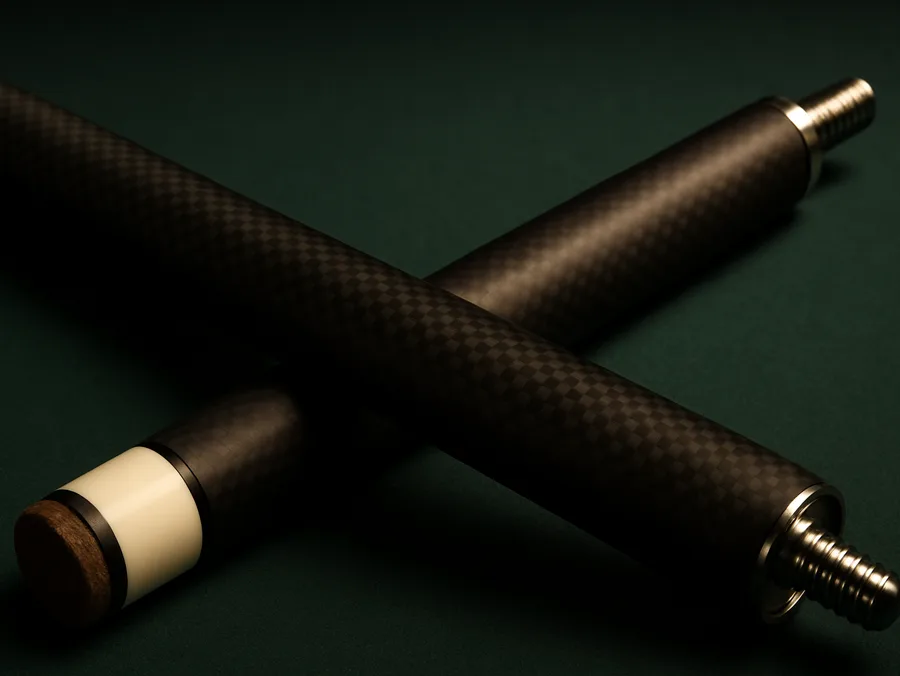
Cuetec Cynergy CT-15K Carbon Shaft
Best carbon fiber shaft for most playersCarbon over a foam core with a Tiger Sniper tip, offered in more joint pins than any other name-brand carbon shaft. Order the 12.5mm if you're coming from 13mm maple, and pick your exact pin on the listing. This link is the 12.5mm in 3/8x10; Cuetec lists other pins separately.
Check price on Amazon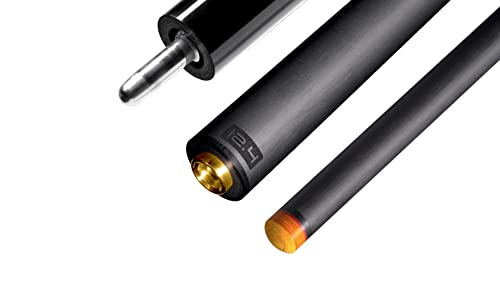
Predator REVO 12.4 Carbon Shaft, Radial
Predator and Radial buttsThe benchmark carbon shaft: ferruleless, low-rise pro taper, and Predator's lowest front-end mass. This listing is the 12.4mm in Radial, which suits Predator butts with a Radial pin and other Radial cues.
Amazon price: $549.00 as of 12:07 PM EDT. Price and availability can change; Amazon’s price at purchase applies.
Check price on Amazon
Predator Revo 12.9mm Carbon Fiber Shaft
Closest to a 13mm maple feelPredator's largest Revo, for players who want carbon without a thinner tip. Same low-rise pro taper as the 12.4. Check that the listing's joint matches your butt before you buy.
Check price on Amazon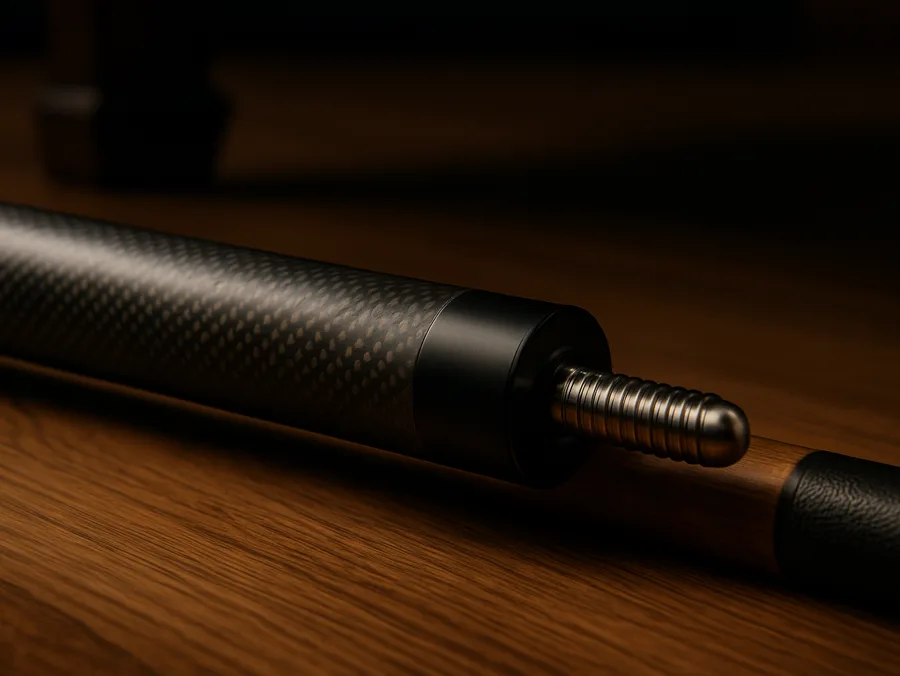
McDermott Defy 12.5mm Carbon Shaft, 3/8x10
McDermott cuesBuilt for the 3/8-10 pin on McDermott cues, with a Navigator Automatic soft tip and a lifetime warranty. Measure your collar first: McDermott makes .843 and .855-inch joints. Don't sand it, or the warranty is gone.
Check price on Amazon
CUEBOTS Z Wave Carbon Fiber Shaft, 12.5mm
Best-selling budget shaftThe best-selling standalone carbon shaft in our Amazon search, sold in Uni-Loc QR, Radial, 3/8-10 and 5/16-18 with a 12.5mm seven-layer microfiber tip and a hybrid conical taper. Select the joint that matches your butt. See our budget guide for how to inspect one.
Check price on Amazon
CRICAL Carbon Fiber Pool Cue, 58 in
A complete carbon cueA full 58-inch cue with a foam-filled carbon shaft, a 12.5mm layered pigskin tip and an XTC ferrule. The joint is a stainless 3/8x8, which the name-brand shafts aren't sold in, so treat it as a complete cue rather than a butt to upgrade later.
Check price on AmazonFrequently asked questions
What is the best carbon fiber cue shaft?
For most players, the Cuetec Cynergy in 12.5mm, because it comes in the most joint pins and is the easiest switch from 13mm maple. The Predator Revo is the pick for Predator and other Uni-Loc or Radial butts, the McDermott Defy for McDermott cues, and the Viking Siege for Viking cues.
Will a carbon fiber shaft fit my cue?
Only if it's made in your exact joint pin and thread style. Identify the pin (for example 3/8x10, 5/16x18, Uni-Loc or Radial), note whether it's a quick release, and compare collar diameters with a caliper. If you're not sure, send the shaft maker a photo of your pin.
Is a Radial shaft the same as 3/8x8?
Not necessarily. Radial is its own coarse-thread pin, and many import cues use a generic 3/8x8 that looks similar. Ask the shaft maker before you put a Radial shaft on a 3/8x8 butt.
What sizes does the Cuetec Cynergy shaft come in?
10.5, 11.8 and 12.5mm. Most players switching from maple should start with the 12.5mm.
How much does a carbon fiber cue shaft cost?
Name-brand carbon shafts list for roughly $425 to $570 at major retailers. Budget import shafts sell for under $200.
What size carbon shaft should I get?
12.4 to 12.5mm if you're coming from a 13mm maple shaft. Try an 11.8mm before buying one, and look at the McDermott Defy if you want to stay at 13mm.
Do all carbon fiber shafts have the same deflection?
No. Dr. Dave Alciatore's testing shows carbon shafts differ, because squirt depends on the mass in the last 5 to 8 inches of the shaft. Most still deflect less than a standard maple shaft.
Can you sand a carbon fiber shaft?
No. Clean it with a damp towel. McDermott says sanding the Defy damages the finish and voids its lifetime warranty.
Can one carbon shaft fit cues with different joints?
Only with an insert system, such as Triple 60's, which uses a separate insert for each joint type. Standard carbon shafts are made for one pin.
Do carbon fiber shafts feel different than wood?
Yes. Many players describe carbon as stiffer and quieter than maple, and some never warm to it. Many adjust with a few weeks of regular play.
Related guides
LeaguePool is reader-supported. When you buy through links on this site we may earn an affiliate commission at no extra cost to you. As an Amazon Associate we earn from qualifying purchases.