Pool Cue Joint Types: Pins, Sizes and Quick Releases
A pool cue joint is named for its pin: 5/16x18 means a pin 5/16 of an inch across with 18 threads per inch. The common types are 5/16x18, 5/16x14, 3/8x10, 3/8x11 and 3/8x14 threaded pins, the Uni-Loc Radial pin, and quick-release pins such as Uni-Loc QR, McDermott QR and Viking QR. A shaft only fits a butt with the same pin, and often the same joint-face diameter too.
Pool cue joints (pool stick joints, if you prefer) get less attention than tips and shafts, but the pin decides which spare, carbon or low-deflection shafts you can ever buy for your cue. Below: every common pin and who uses it, how to identify yours with a caliper and a ruler, and what adapters and conversions can and can't fix.
Pool cue joint sizes at a glance
This table covers the pins you'll actually meet on production cues sold in the US. Brand assignments come from the makers' own pages where they publish them, and from the joint lists that two big shaft retailers, CuesPlus and Seybert's, keep for their customers. Brands change joints over the years, so treat the brand column as the usual case and check your own cue.
| Joint | What the name means | Usually found on | Notes |
|---|---|---|---|
| 5/16x18 | Thin pin, 18 threads per inch | Meucci, Players, Action, Dufferin, Rage | The most common production-cue pin. Usually threads into a brass insert in the shaft. |
| 5/16x14 | Same thin pin, coarser 14 threads per inch | Joss, Schon (piloted), many custom makers, older Predators | Easy to confuse with 5/16x18 by eye. Piloted and flat-faced versions differ. |
| Mezz United | A 5/16-14 pin and insert made to Mezz's own tolerances | Mezz EC9, ASTR23 | Buy shafts listed as Mezz United, not plain 5/16x14. |
| 3/8x10 | Fat pin, 10 coarse threads per inch | McDermott, Hunter, Lambros, some Jacoby and OB cues | Often threads straight into the shaft wood. McDermott's anatomy diagram and its Lucky listings show this pin. |
| 3/8x11 | Fat pin, 11 threads per inch | Southwest | Not interchangeable with 3/8x10, even though they look alike. |
| 3/8x14 | Fat pin, 14 threads per inch | Cuetec | Cuetec shafts come with a 21.30mm or a 20.00mm joint face. |
| Uni-Loc Radial | A larger pin Predator describes as a 7-thread design | Predator special editions, Poison, Tiger, some Lucasi and Jacoby | Threads directly into the wood or carbon of the shaft. Slower to assemble, less upkeep. |
| Uni-Loc Quick-Release | Smooth pin in a steel channel, brass shaft insert | Most Predator cues since 2002, Lucasi, PFD, Samsara | About one and a half turns to assemble. |
| McDermott QR | McDermott's own quick release | Some McDermott cues | Not the same as Uni-Loc QR. |
| Viking QR | A 5/16x18 pin cut down to about 4 to 6 threads | Viking, Valhalla | About five turns. Viking lists it separately from full-thread 5/16x18. |
| Pechauer Speed Joint | Pechauer's patented piloted joint | Pechauer JP and Pro | Pechauer will build other pins on request. |
| Mezz Wavy, Wavy 2 | Mezz's own joint geometry | Mezz ACE218, CP-26 (Wavy 2) | Separate from United and from each other. |
Less common systems you may see on listings: Uni-Loc Bullet (Predator says it no longer carries it), Uni-Loc Steel-Lite (a short quick-release pin on the BK Rush and Air Rush), Turbo Lock (Players break and jump cues), Becue B-Loc, Longoni VP2 and Tiger's own joint. For a parts-level picture of where the pin, insert and collars sit, see our pool cue parts guide.
How to tell which joint your cue has
Start with the maker. Predator, Cuetec, McDermott, Meucci, Viking and Mezz all publish the joint on their product pages, and Predator keeps a brand-by-brand joint list for shaft buyers. If the brand is known and the cue hasn't been modified, that answer is usually right. If it's a used or unbranded cue, look at the pin itself.
- Unscrew the shaft and look at the pin. A smooth, unthreaded pin with a short threaded section deep in the butt is a quick release. A pin with only a few threads near the base is likely a Viking-style partial thread. A fully threaded pin is one of the standard sizes.
- Measure the pin diameter. A 5/16 inch pin is about 7.9mm; a 3/8 inch pin is about 9.5mm. A cheap digital caliper settles this in seconds.
- Count threads per inch. Lay a ruler along the pin, count the thread crests across half an inch and double it. You're looking for 10, 11, 14 or 18. A thread pitch gauge is faster and less fiddly. CuesPlus points out that 14 versus 18 is the pair people most often get wrong by eye, so count twice.
- Check the face. Is there a short smooth pilot sticking out before the threads (piloted), or does the pin come straight out of a flat face? Two cues can share a thread and still need different shafts because of this.
- Measure the joint face. Caliper across the collar or the wood at the joint. Predator says all its shafts and butts measure .839 to .842 inch (21.31 to 21.38mm).
Still not sure? Send clear photos of the pin and the shaft's joint end to the shaft seller before you order. CuesPlus asks for exactly that, Seybert's offers to help by phone, and either costs less than a return.
Joint pins: why 14 versus 18 threads matters
Thread count is the part people skip, and it's the part that strips. Screw a 5/16x18 shaft onto a 5/16x14 pin and it will start, bind after a turn or two, and chew up the insert if you force it. The pins are the same diameter, which is exactly why the mistake happens.
The fat pins have the same trap. A 3/8x11 Southwest pin and a 3/8x10 McDermott pin are within a single thread per inch of each other. CuesPlus flags this pair specifically: don't treat them as interchangeable. And 3/8x14 is a third fat pin, used by Cuetec, so a used Cuetec butt won't take a McDermott shaft even though both pins are 3/8 inch.
Where the threads go also differs. Fine 5/16 pins nearly always thread into a brass insert set in the shaft, which wears slowly and can be replaced. Coarse 3/8x10 pins often thread straight into the shaft's maple. McDermott lists a brass shaft insert as an extra-cost option, which tells you its standard shaft goes without one. Radial pins thread directly into the shaft too, wood or carbon, which is part of why Predator describes that joint as having a tighter, more solid feel for some players.
Quick release joints compared
A pool cue quick release joint goes together in one to a few turns instead of spinning down a full-length thread. The trade-off is that every quick release is its own design, and none of them fit each other.
| Quick release | Turns to assemble | How it works | Maker's care note |
|---|---|---|---|
| Uni-Loc QR (Predator, Lucasi) | About 1.5 | Smooth pin; brass shaft insert interlocks with a steel channel around the pin | Clean the joint and facing every six months |
| Uni-Loc Steel-Lite (BK Rush, Air Rush) | Slower than QR | Shorter, lighter pin for break and jump cues | Line it up and turn slowly; it can misthread |
| Viking QR | About 5 | 5/16x18 pin with all but about 4 to 6 threads removed | Viking says the partial thread makes the connection more stable, not weaker |
| Mezz Wavy 2 | About 2 | Mezz's own joint with a phenolic insert | Match the exact Mezz joint when buying shafts |
| McDermott QR | Not published | McDermott's own pin | McDermott sells shafts and protectors made for it |
| Pechauer Speed Joint | Not published | Patented piloted pin and shaft insert | Check the pin on any used Pechauer |
CuesPlus is blunt about this: Uni-Loc QR, McDermott QR, Viking QR, the Speed Joint and the Mezz joints may look alike and are mechanically different. If a listing just says "quick release" without a brand, ask which one.
Is a quick release worth having? For a player who breaks the cue down a dozen times a night, yes. The more practical question is the aftermarket. Uni-Loc QR has the widest choice of quick-release shafts because Predator, Lucasi and others build for it. A brand-only quick release means buying that brand's shafts, or paying for a conversion.
Collars and joint-face diameter
The pin decides whether a shaft screws on. The joint face decides whether it looks and feels right once it's on. If the shaft's collar is wider or narrower than the butt's, you get a lip you can feel under your bridge hand on long follow-through and see every time you look down.
Typical numbers from the makers and retailers:
- Predator: .839 to .842 inch (21.31 to 21.38mm) on all its shafts and butts.
- Cuetec: 3/8x14 shafts with a 21.30mm (0.84 inch) joint face, or a 20.00mm legacy face. Same pin, different collar, so measure an older Cuetec before ordering.
- CuesPlus's observed averages: about .840 inch for 3/8x10, .841 for 5/16x18, .842 for 5/16x14, .843 for Radial and .844 for Uni-Loc. It adds that most McDermott steel-collar joints are near .843 while many non-steel McDermott joints are closer to .855.
Collar material is mostly a feel and durability choice. Stainless steel collars add a little mass at the joint and the crisp, solid feel Predator describes for its quick release. Phenolic collars (Cuetec uses a 1.5mm black phenolic collar on Cynergy shafts) are lighter. Wood-to-wood joints have no collar at all; the faces of the shaft and butt simply meet, which is the feel Radial and sneaky pete fans tend to like. We haven't found any measured test showing one collar type makes a cue more accurate, so pick on feel and on what's easy to match.
Joint collar replacement and conversions
A cracked or loose collar is a lathe job. McDermott lists collar replacement at $75 and a collar refinish at $45 on its own cues; our pool cue repair costs guide compares shop prices.
A full joint conversion changes the pin on the butt and the insert on the shaft. McDermott charges $90 to move a 3/8-10 cue to Radial and $150 to move it to Quick Release or Uni-Loc, both pieces included. That makes sense in one situation: you love the butt and the shaft you want only comes in another pin. Most popular shafts already come in several pins, so look first. Predator sells REVO, 314-3 and Z-3 in Uni-Loc, Radial, 3/8x10, 5/16x14 and 5/16x18, and Cuetec sells Cynergy carbon shafts in 3/8x10, 3/8x11, 3/8x14, 5/16x14, 5/16x18, Radial, Uni-Loc and both Mezz joints. Our carbon shaft guide and replacement shaft guide sort shafts by joint.
Pool cue joint adapters: what they can do
People search for an adapter hoping to put any shaft on any butt. Three real products sit near that idea, and each has a catch.
- Insert-adapter shafts. Some carbon shafts, such as Bull Carbon and Triple 60's Whyte Carbon, use a removable joint adapter in the shaft, so one shaft can be fitted to a different butt by swapping the adapter with a tool. This is the clean solution if you own cues with different pins.
- Joint extensions. A short piece that screws between butt and shaft, with a pin on one end and an insert on the other. McDermott's 4 inch joint extension comes in 3/8-10 and McDermott QR, and Balance Rite makes 4 inch versions in 5/16x18, 3/8x10, 5/16x14, Uni-Loc and Radial. Both makers warn the cue may not roll perfectly straight with one installed. They are built for reach, which our cue extensions guide covers.
- Thread-to-thread adapters. Cheap converters that turn one pin into another add a second joint and a second chance for runout. We'd use one to test a shaft, not to play league on.
Also know the warranty angle. Predator's warranty covers its Uni-Loc and Radial shafts only on genuine Uni-Loc and Radial joints, so an adapter or a copied pin can cost you that coverage.
Does joint type change how a cue plays?
It changes feel and convenience more than where the ball goes. Deflection and spin come mostly from the shaft and tip, which is why the shaft is the upgrade worth spending on (see our low-deflection shafts guide). The joint adds or removes a little mass at the balance point and changes how much vibration reaches your hand. Steel joints feel firmer; wood-to-wood and Radial joints feel more like a one-piece cue to many players. Viking, which builds four joint styles, calls the choice a matter of personal preference and points new players to its two standard options.
Our order of priorities when buying: shaft first, then a joint with a wide aftermarket (3/8x10, 5/16x18, Uni-Loc QR and Radial all qualify), then feel as the tiebreaker. A rare proprietary pin is fine if you love the brand's shafts. Just know it before you pay.
Keeping a joint healthy
Most joint trouble is dirt. Wipe the pin and shaft face before you assemble, cap both ends with joint protectors in the case, and if a joint turns stiff use a silicone or graphite lubricant (Cuetec's advice) rather than force. A clicking joint usually needs cleaning or a cheap refacing; a wobbling pin or spinning insert is a repair shop job.
Sources
- Predator: joint types by pool cue brand (joint-face .839 to .842 inch, Radial vs QR)
- Predator: Uni-Loc joint guide (QR 1.5 turns, Radial, Steel-Lite, cleaning)
- Cuetec: 3/8x14 Cynergy shaft, 21.30mm joint and 20.00mm joint
- Cuetec: FAQ (stiff joints)
- McDermott: pool cue anatomy and repairs and conversions
- Viking: FAQ (quick-release pin, threads, turns)
- Pechauer: FAQ (Speed Joint and other joints)
- Mezz: joint technology
- CuesPlus: pool cue joint compatibility guide and joint pins by brand (collar averages)
Our picks
Links open the current selection and price on Amazon so you can compare real reviews before buying.
Predator 314-3 Maple Shaft, 3/8x10
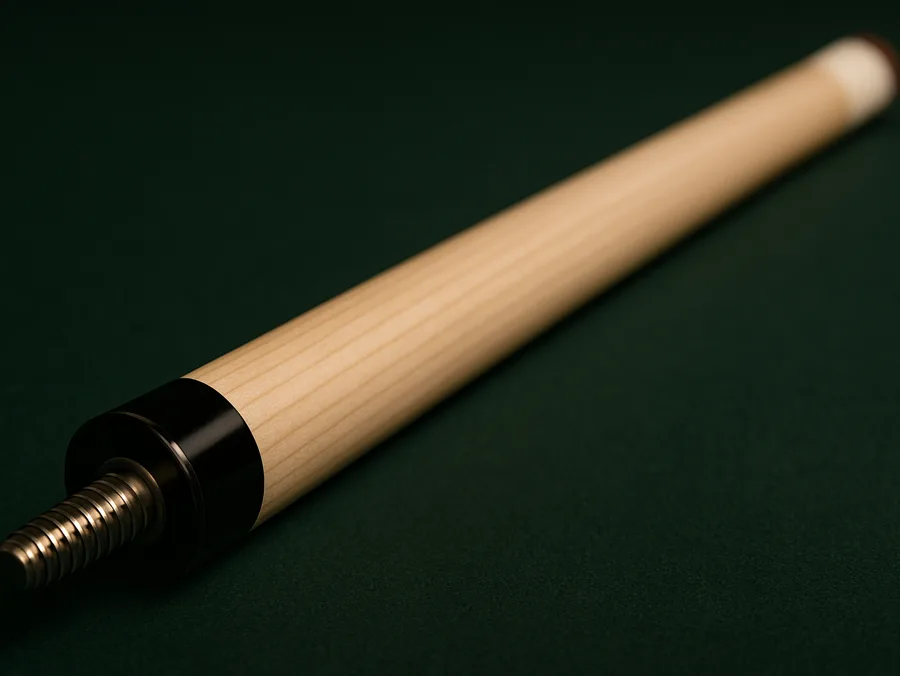
Low-deflection upgrade for a 3/8x10 buttPredator's 10-piece spliced maple shaft in the 3/8x10 pin with a black collar, the version that fits most McDermott butts. Predator also builds the 314-3 in Uni-Loc, Radial, 5/16x14 and 5/16x18, so order the pin your butt uses.
Check price on Amazon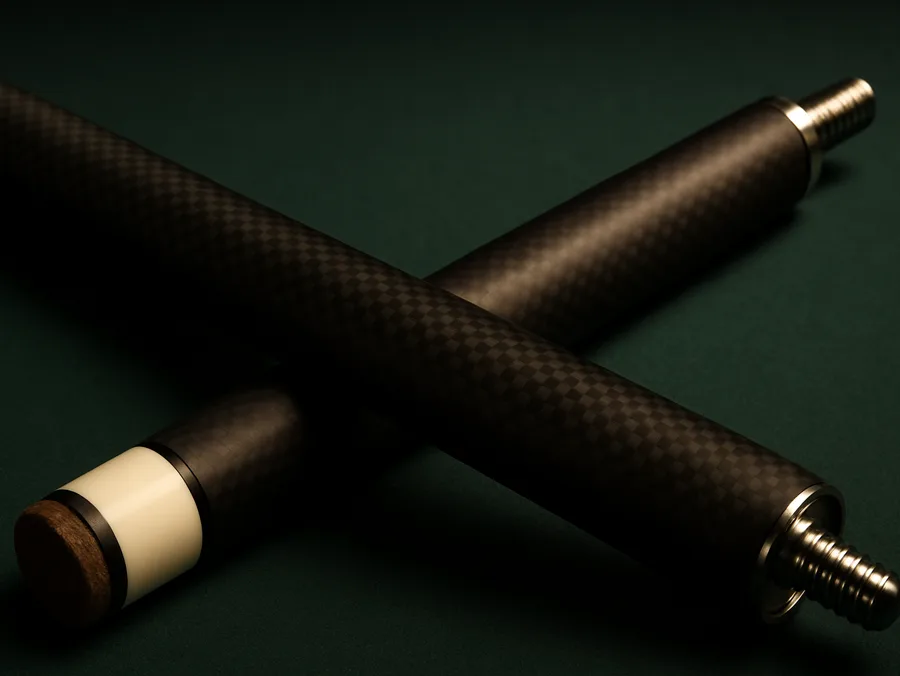
Cuetec Cynergy CT-15K Carbon Shaft
Widest choice of joint pinsA carbon composite shaft with a 15.5 inch pro taper, and the one sold in the most pins we found: 3/8x10, 3/8x11, 3/8x14, 5/16x14, 5/16x18, Radial, Uni-Loc and both Mezz joints. Pick the pin and, on Cuetec butts, the collar size. This link is the 12.5mm in 3/8x10; Cuetec lists other pins separately.
Check price on Amazon
McDermott Lucky L8 Cue, 3/8-10 Joint
A first cue on a common pinA 58 inch hard rock maple cue with a 29 inch pro-taper shaft, Irish linen wrap and a 3/8-10 joint. That pin takes shafts from McDermott, Predator, Cuetec and plenty of others when you want to upgrade later.
Check price on Amazon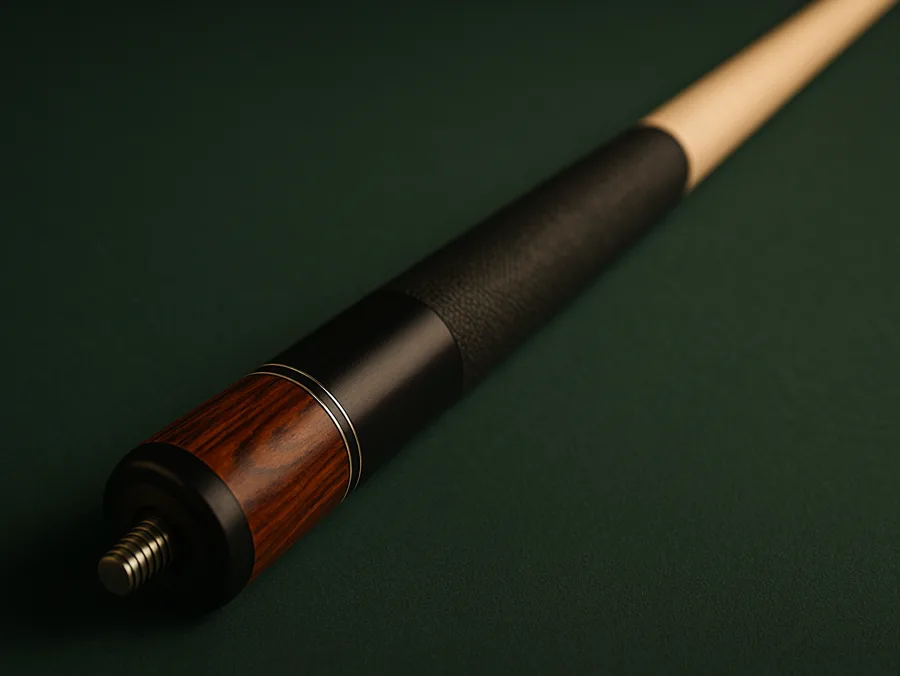
Lucasi Custom+Hybrid LZ2004 Cue
Uni-Loc quick releaseA Lucasi with the Zero Flexpoint low-deflection shaft on a Uni-Loc quick-release joint, a soft Kamui Black tip and weight adjustable from 18 to 21 oz. Uni-Loc QR has the deepest aftermarket of any quick release.
Check price on AmazonFrequently asked questions
What are the different pool cue joint types?
Threaded pins named by diameter and threads per inch (5/16x18, 5/16x14, 3/8x10, 3/8x11, 3/8x14), the Uni-Loc Radial pin, and brand quick-release pins such as Uni-Loc QR, McDermott QR, Viking QR, the Pechauer Speed Joint and the Mezz United and Wavy joints.
What does 5/16x18 mean on a pool cue?
The pin is 5/16 of an inch in diameter with 18 threads per inch. 5/16x14 is the same diameter with 14 coarser threads, and the two do not interchange.
How do I know what joint my cue has?
Check the maker's product page first. Otherwise unscrew the shaft, measure the pin (about 7.9mm for 5/16 inch, 9.5mm for 3/8 inch), count threads per inch and note whether the pin is smooth, partly threaded or fully threaded. When in doubt, send photos to the shaft seller.
What joint do McDermott cues use?
Most McDermott cues use a 3/8-10 pin, and McDermott also has its own quick-release joint. McDermott's anatomy diagram and its Lucky listings show the 3/8-10.
What joint does Cuetec use?
Current Cuetec cues use a 3/8x14 pin. Cuetec sells 3/8x14 shafts with either a 21.30mm or a 20.00mm joint face, so measure the collar on an older Cuetec.
Are all quick release joints the same?
No. Uni-Loc QR, McDermott QR, Viking QR, the Pechauer Speed Joint and Mezz's joints are separate designs. A shaft has to be made for the exact system.
Is there an adapter to fit any shaft on any cue?
Not a good one. Insert-adapter carbon shafts let one shaft fit different butts, and joint extensions add a pin, but makers of joint extensions warn the cue may no longer roll perfectly straight. Buying the shaft in your pin is better.
How much does a joint collar replacement cost?
McDermott lists $75 to replace a joint collar and $45 to refinish one. Other shops vary; see our repair costs guide.
Related guides
LeaguePool is reader-supported. When you buy through links on this site we may earn an affiliate commission at no extra cost to you. As an Amazon Associate we earn from qualifying purchases.