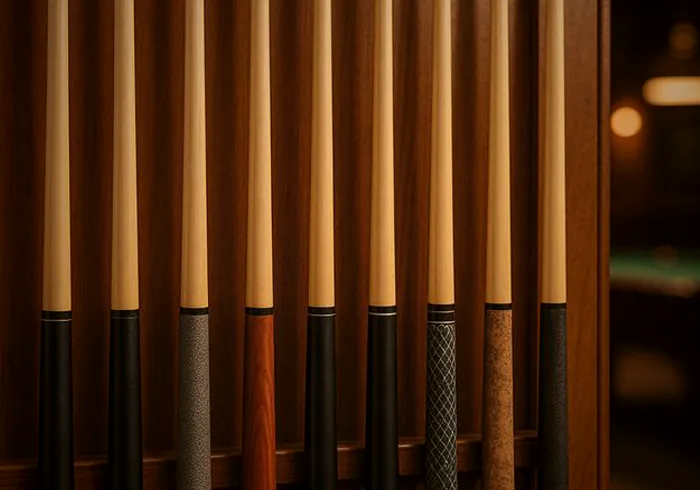
Predator Cues: Lines, Shafts, Prices and Which to Buy
Predator cues start at about $300 for a Poison by Predator carbon cue and run past $4,000 for the limited editions. For most league players the choice comes down to two routes: a P3 butt with a REVO carbon shaft, or a REVO shaft added to the cue they already own. The company built its name on the shaft, not the butt, and that is still where most of your money goes.
Below is the current lineup with the prices Predator lists in its own store, the shafts and the joints they fit, the warranty fine print that matters when you buy used or online, and the older names (Throne, Ikon, P2) that still turn up in for-sale listings.
Are Predator cues good?
Yes, for the right player. Predator built its name on low-deflection shafts (the 314 in 1994, the REVO carbon shaft in 2016), and those shafts are the real reason to buy one. A player who shoots several nights a week and uses side spin gets something a plain maple cue can't give them. A player who plays a few times a year doesn't, and for them a Predator butt costs more than the hit justifies.
| You are | Our verdict |
|---|---|
| A league or tournament player who uses spin | Worth it. A P3 or a REVO shaft is the buy. |
| Happy with the cue you own | Buy a REVO or 314-3 shaft for it instead of a whole cue. |
| Budget around $600 | A REVO for your current cue or a Poison Maelith, not a P3 with a maple shaft. |
| A beginner or casual player | Not yet. Learn on a standard maple cue first; see pool cues for beginners. |
Why are Predator cues so expensive? Predator's own answer is three decades of low-deflection research, its own systems (REVO carbon shafts, the Uni-Loc joint and weight system, the Victory tip) and testing by its Pro Team. Our view: the shaft technology is real, and so is the lifetime warranty when you buy new from a dealer, but part of the price is the name and the strong resale market. Cuetec, McDermott and others sell carbon shafts for less (more on that in the shafts section below).
Where are Predator cues made?
Predator doesn't say. We read its story and history pages, its warranty and support pages, its buying guides and its product pages, and none of them names the country where its cues or shafts are built. So we can't tell you whether a given Predator is made in the USA, China, Taiwan or anywhere else, and we won't guess.
What Predator does say:
- It is a United States-based company. Its founders developed the first shaft in a shop in Clawson, Michigan, it launched the 314 in 1994, and it is now headquartered in Jacksonville, Florida.
- It calls itself the largest billiard cue manufacturer in the world.
- The only country-of-manufacture statements we found are for other products: its Arcadia table cloth is made in China to Predator's specifications, and its APEX tables are assembled in the USA (in Jacksonville) with European components.
- The P3 USA is a commemorative design for America's 250th anniversary. Its product page makes no made-in-USA claim.
If country of origin matters to you, ask Predator directly or the dealer before you buy, and check the box label. For context, McDermott does publish where its cues are made; see our McDermott cues guide.
Predator cues at a glance: the current lineup
Prices are the ranges on Predator's own store on October 15, 2026, rounded. Each range covers different shafts and wraps, so the low end usually means a maple shaft and the high end a REVO. Retailers often sell for less, and the product cards below show live Amazon prices.
| Line | What it is | Predator's listed range | Who it suits |
|---|---|---|---|
| Poison Candy and Maelith | Playing cue, Venom carbon shaft | About $300 to $450 | First serious cue, gifts |
| SP2 | Playing cue | $859 to $1,148 | League players stepping up |
| P3 | Playing cue, Uni-Loc joint and weight cartridge | $999 to $1,841 | The default pick for regular league and tournament play |
| 10K | Playing cue | $1,009 to $1,298 | Intermediate players who want a simpler look |
| True Splice 16 (limited) | Playing cue | $1,498 to $1,737 | Players who want a spliced-point butt |
| Blak5 | Playing cue, ebony and curly maple, 1 to 5 designs | $2,809 to $3,513 | Advanced players who want the top production cue |
| Limited editions (TS8 Artisan, Double Butterfly, Avant Garde) | Collector cues | $2,659 to $4,098 | Collectors |
| Air II and Air Rush | Jump cues | $299 to $659 | Jumpers |
| BK Rush and BK Rush+ | Break, and break/jump | $849 to $1,019 | Players who want a dedicated breaker |
| Poison VX Break and VX Jump/Break | Break, and break/jump, Venom carbon | $379 to $399 | A carbon breaker on a budget |
Two things the table doesn't show. Predator sells most butts with a choice of shaft, so the same P3 can come with a 314-3 maple shaft or a REVO, which explains the wide ranges. And Predator says most of its cues weigh 18 to 21 ounces, with 19 as the standard.
Which Predator cue should you buy?
Start from how often you play and how much you spin the ball. A low-deflection shaft pays off when you use side spin, and it pays off more the more you play.
- Two or three league nights a week and a real budget: P3 with a REVO 12.4. The Uni-Loc joint means any Predator shaft or extension fits later.
- You already own a cue you like: skip the butt and buy a REVO or 314-3 shaft in your joint. Most of the playing difference lives in the shaft.
- First good cue, or a gift: Poison Maelith. Carbon shaft, Radial joint, a soft bag, and the same lifetime warranty structure as Predator.
- You want the nicest production cue Predator makes: Blak5. Most of the extra money goes into the ebony and the inlay work, not into the hit.
- Your break is the weak spot: a BK Rush, or a Poison VX if you'd rather not spend that much on a breaker.
If you play a few times a year, a Predator won't change much for you. A good maple cue from our pool cue brands guide will do the same job for less.
The Predator P3: the playing cue most people mean
The P3 gets more searches than any other Predator model, and it's the butt Predator builds most of its catalog around. Predator's spec page describes a 30-piece core of alternating hard maple and ash splices, with phenolic used in place of wood at the joint facing, the bumper and the weight bolt threads, so those wear points don't compress or strip over time.
The feature you'll actually use is the Uni-Loc weight cartridge. Predator lists the standard P3 at 19 ounces with options from 18.5 to 20, and the cartridge system lets you move that in tenths of an ounce, up to 30 combinations. The cartridge kit is sold separately. Butt and shaft are 29 inches each, and Predator offers 30-inch versions of both, so a P3 can be built from 58 to 60 inches. That matters for tall players (our cues for tall players guide covers the sizing).
P3 designs carry names like Prowler, Galaxy and Knight Horse, plus a USA version. They share the same construction; you're choosing the look and the shaft. Predator lists them from about $999 to $1,841 depending on those choices.
Predator shafts: REVO, 314-3, Z-3, Vantage and Centro
This is the part of the catalog that made the brand. Predator dates itself to the 314 shaft in 1994, added the Z shaft in 2003 and launched the REVO carbon shaft in 2016. The idea behind all of them is the same: less mass at the front of the shaft, so the cue ball squirts less off your aim line when you use side spin. Our low-deflection explainer covers how that works.
| Shaft | Build | Tip diameter | Joints Predator lists | Listed from |
|---|---|---|---|---|
| REVO | Carbon fiber, no ferrule | 11.8, 12.4 or 12.9 mm | Uni-Loc, Radial, 3/8x10, 5/16x14, 5/16x18 | $549 |
| Centro | Maple with a carbon fiber core | 12.4 mm | Uni-Loc, Radial | $479 |
| 314-3 | Spliced maple, low deflection | 12.75 mm | Uni-Loc, Radial, 3/8x10, 5/16x14, 5/16x18 | $359 |
| Z-3 | Spliced maple, Predator's thinnest | 11.85 mm | Uni-Loc, Radial, 3/8x10, 5/16x14, 5/16x18 | $359 |
| Vantage | Spliced maple, Pro V taper | 12.9 mm | Uni-Loc, Radial | $359 |
Which one? The REVO 12.4 is the safe default and the one most players should buy. The 12.9 feels closest to a standard 13 mm maple shaft, and the 11.8 (with a conical taper modeled on the Z-3) is for players who want maximum spin and accept a smaller margin on tip placement. Our REVO diameter guide goes deeper, and the REVO review covers the complaints.
If you like wood, the 314-3 is the classic, and Vantage is the maple choice for players who hit hard and want a thicker, stiffer shaft. Centro sits between maple and carbon: Predator says the hybrid build is stiffer and transfers more power. One honest caveat: Cuetec and others sell carbon shafts for well under REVO money (see our Cynergy guide and carbon shaft picks). Part of what you pay for with a REVO is the name, the joint choice and a busy resale market.
Will a Predator shaft fit my cue?
Only if the joint matches, and that's the first thing to check. Predator's own butts use either the Uni-Loc Quick-Release joint or the Radial pin. Seybert's Predator listings show how lopsided that is: of 158 cues, 133 are Uni-Loc and 19 Radial. Poison cues use Radial.
REVO, 314-3 and Z-3 also come in 3/8x10, 5/16x14 and 5/16x18, which covers most other brands (3/8x10 is the pin on most McDermott cues). Vantage and Centro are Uni-Loc or Radial only. Measure before you order, and don't plan on an adapter: Predator's warranty covers its Uni-Loc and Radial shafts only when they're used on genuine Uni-Loc or Radial joints. Our joint types guide shows how to identify yours.
Poison by Predator: the cheapest way into the brand
Poison is Predator's own sub-brand, and it's the answer to "what's the cheapest Predator cue." The playing cues are the Candy and the Maelith, both with Predator's Venom carbon fiber shaft. Predator's Maelith page lists a 12.4 mm shaft with a pro taper, a Radial joint, a 58-inch cue and a soft bag. On Predator's store the Maelith is listed at $449, and the Candy Sugar models were on sale below that in October 2026.
What you give up against a P3 is the Uni-Loc joint and weight cartridge, plus the spliced butt. What you keep is the part that matters most to the hit, a low-deflection carbon shaft, and a limited lifetime warranty that covers the Venom shaft against warping. Poison's warranty page says you must register the cue on Predator's site, so do it the day it arrives.
The Candy is also the busiest Predator-made listing in Amazon's results right now, and the colorways make it an easy gift. That's a fine use for it, as long as the person getting it already plays enough to want a carbon shaft.
Predator break and jump cues
Predator says the BK Rush is the most-played break cue on the pro tour (that's Predator's claim, not ours). It pairs a four-piece fused butt with the REVO BK-R carbon break shaft. The BK Rush+ adds interchangeable forearms and handles, so one cue covers break and jump. The Air Rush is a dedicated jump cue with an Air REVO shaft, and the Air II is the maple-shaft jump cue at a much lower price. The Poison VX Break and VX Jump/Break carry the Venom carbon shaft, a phenolic tip and a Radial joint.
The older BK4 is still widely sold. For how these compare with McDermott's Stinger and the budget breakers, see best break/jump cues.
Retired Predator lines: Throne, Ikon, P2, Sport and 9K
Predator's cue archive describes itself as the full list of retired lines, naming the Ikon and Throne series along with earlier P3, Blak and 10K designs. Those cues still show up because dealers sell remaining stock and players resell them. Seybert's Predator page, for example, still lists Throne, Ikon, 9K and Sport3 series cues.
- Throne and Ikon: retired playing cue series. Predator still sells replacement bumpers for both Ikon generations.
- P2: not in Predator's current catalog or archive text we could read, so we can't give specs. If you're looking at one, ask the seller which shaft it carries.
- Sport 2, Sport 3 and 9K: earlier playing lines that turn up new-old-stock at retailers.
- Roadline: not a cue at all. It's Predator's current cue case line.
A retired butt with a Uni-Loc or Radial joint takes today's REVO and maple shafts, which is why a clean used Ikon or Throne can be a sensible buy. The warranty, though, does not come with it (next section).
Predator warranty: the fine print that matters
Predator's warranty page gives cues, shafts and extensions a limited lifetime warranty against manufacturing defects. The conditions are where people get caught.
- Warping is covered only on REVO and Venom carbon shafts. A warped 314-3 or Z-3 is your problem.
- Coverage is for the original purchaser and doesn't transfer. A used Predator has no warranty, however new it looks.
- It only applies to products bought from Predator or an authorized Predator dealer. Predator's site has a dealer locator.
- The warranty is void if the official Predator logo is missing.
- Sanding or abrasives on a REVO void its warranty. So does turning a maple shaft below Predator's minimums (12.25 mm for the 314-3, 11.40 mm for the Z-3, 12.50 mm for Vantage) or changing a ferrule.
- Predator has no authorized repair centers. Repairs done outside Predator Warranty and Repair void the coverage. Predator lists a tip install at $20 and a REVO Recharge (tip plus reconditioning) at $79.
- Cases are covered for one year.
Predator cues for sale: used and knockoff risks
Because REVO shafts and P3s hold their value, they're the Predator items most often listed second-hand and the ones most worth checking. We couldn't find an official Predator statement on counterfeits, so here is what the warranty terms tell you to do:
- Buy new from Predator's store or a dealer on its locator if you want the lifetime warranty. A marketplace listing from an unknown seller may be genuine, but it won't be covered.
- Look for the Predator logo and the correct joint and shaft markings for the model. The archive page lists model numbers and finishes for retired cues, which helps you match a used one.
- Be suspicious of a REVO or P3 priced far below what dealers charge. A real one has little reason to sell that cheaply.
- For a used shaft, check straightness and tip diameter before you pay. Our used cue checklist and warp test cover how.
On this page we link only Amazon listings we checked: Predator-branded shafts and chalk, and Poison cues sold under the Poison brand. We don't link any Amazon P3 or REVO-equipped full cue, because none is on our verified list.
Predator cue cases, extensions and chalk
Predator's case lines on its store in October 2026, rounded:
| Case line | Sizes | Listed from |
|---|---|---|
| Hard Core | 1x1 hard | $49 |
| Roadline | 2x4 and 3x5 hard; 3x6 and 4x8 soft | $159 soft, $169 hard |
| Metro | 2x4 and 3x5 hard | $179 |
| Urbain | 2x4 and 3x5 hard; 2x4 soft | $179 soft, $199 hard |
| Sport | 3x5 soft | $249 |
| Legacy (leather) | 2x4 | $599 |
A 2x4 holds two butts and four shafts, a 3x5 adds a break or jump cue, and a 4x8 is for players who carry several shafts. For cheaper options in the same sizes, see best pool cue cases and hard vs soft cases.
Predator's QR2 extensions come in 3, 8 and 12 inches and fit the butt end where the bumper goes. They need a Uni-Loc weight-bolt butt, which Predator has used since 2012; Poison cues have their own carbon extension. Replacement bumpers are cheap and specific to the line, so order the one for your model. For other brands' options, see cue extensions.
Predator also makes chalk, including the 1080 Pure. Whether it beats Kamui or Taom is a separate question, answered in premium chalk compared.
Top pool cue brands: where Predator fits
Our best pool cue brands guide ranks the brands on warranty, price, consistency and resale. The top five:
| Rank | Brand | Home base | Best for |
|---|---|---|---|
| 1 | McDermott | Menomonee Falls, Wisconsin | Most players, best all-round |
| 2 | Predator | Jacksonville, Florida | Low deflection and carbon |
| 3 | Viking | Middleton, Wisconsin | American-made mid-range |
| 4 | Lucasi | Sold by Cue & Case | Low-deflection value step-up |
| 5 | Valhalla (by Viking) | Designed by Viking, imported | Best value first cue |
Predator ranks second for its shaft technology and carbon. McDermott takes first for its wider price range and a lifetime warranty that covers warping on its own line. Cuetec, Meucci, Mezz and the handmade shops are compared in the full guide.
Sources
- Predator: Our Story (1994, 314, Z, REVO dates)
- Predator pool cues collection and Predator's best pool cues 2026 page (lines, listed prices, weights)
- Predator P3 spec page
- Predator REVO shafts, Z-3, Vantage and Centro
- Predator warranty, Poison warranty and Predator repairs
- Predator cues archive (retired lines)
- Predator cue cases
- Predator: 30 years of innovation (Clawson, Michigan start, US-based, largest cue manufacturer claim)
- Predator: making the best pool cues (Predator's case for its price and technology)
- Predator table cloth FAQ (cloth made in China) and APEX coin-op table (assembled in the USA)
- Predator P3 USA (commemorative design)
- Predator payment and shipping (Jacksonville, Florida headquarters)
Our picks
Links open the current selection and price on Amazon so you can compare real reviews before buying.

Poison by Predator Maelith Cue with Venom Carbon Shaft
Best budget Predator-made cueVenom low-deflection carbon shaft, contrasting carbon fiber points and a case in the box. Predator builds it with a 12.4 mm shaft and a Radial joint, so a REVO or Predator maple shaft can go on it later. Register it with Predator to keep the warranty.
Check price on Amazon
Poison by Predator Candy Cue with Carbon Fiber Shaft
The gift pickThe same Venom carbon shaft idea in a peach and lavender design with no wrap, plus a case. It's the most-bought Predator-made cue in Amazon's results, and a good one for a player who has outgrown house cues.
Check price on Amazon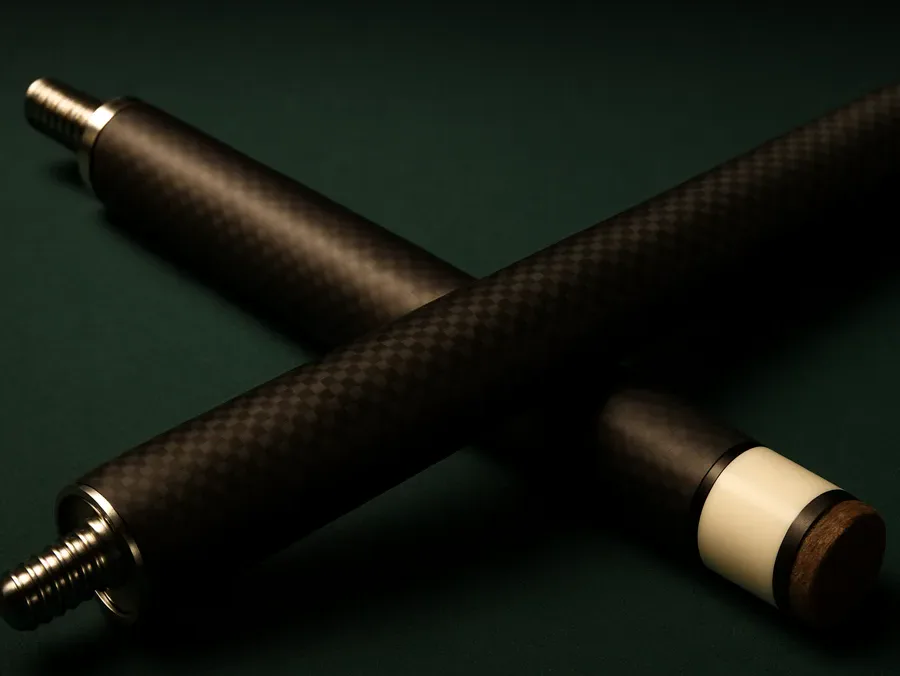
Predator REVO 12.4 Carbon Shaft, Radial
Best Predator upgradeThe middle REVO diameter and the one we'd pick for most players: ferrule-less carbon with Predator's low-rise taper and a limited lifetime warranty against warping when bought from an authorized dealer. This one is for Radial-pin butts, so check your joint first.
Check price on Amazon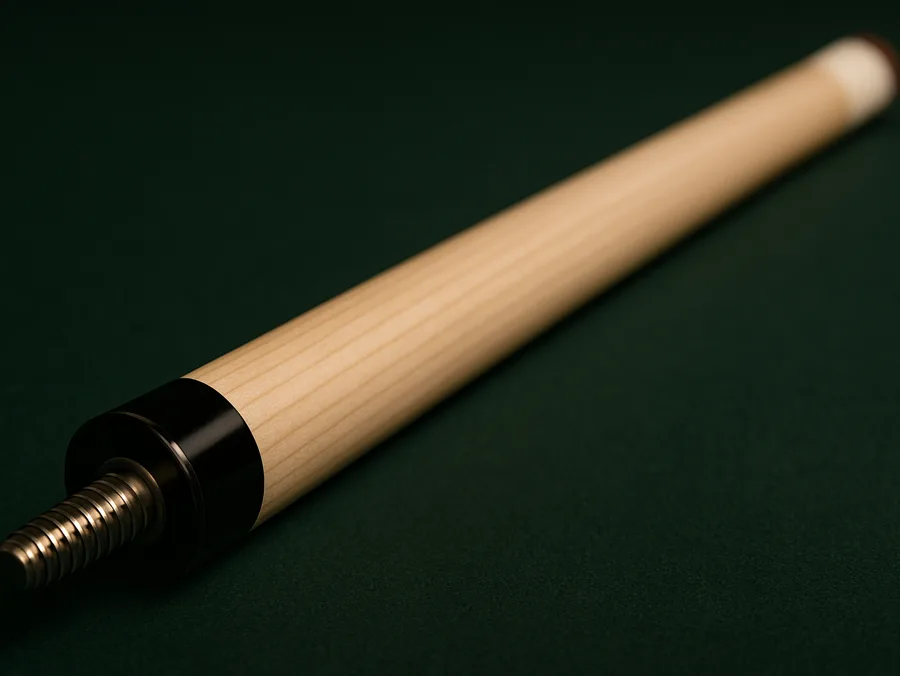
Predator 314-3 Maple Shaft, 3/8x10
Low deflection in woodPredator's classic spliced-maple shaft with a 12.75 mm tip, in the 3/8x10 pin most McDermott butts use. The cheapest way to get Predator's shaft on a cue you already like. Remember the warranty doesn't cover warping on wood shafts.
Check price on Amazon
Poison by Predator VX Jump/Break Cue
Budget carbon breakerA three-piece break and jump cue with a Venom carbon break shaft, a phenolic tip, a Radial joint and a tacky GTX grip. It covers both jobs for far less than a BK Rush+.
Check price on Amazon
Predator Cue Chalk
Predator's chalkOne of the best sellers in Amazon's chalk results. Predator claims longer on-tip life and better coverage; our chalk comparison weighs it against Kamui and Taom.
Check price on AmazonFrequently asked questions
Are Predator cues good?
Yes, for players who play often and use spin. Their low-deflection shafts, especially the REVO carbon shaft, are the reason to buy one. For beginners and casual players a Predator costs more than it adds; learn on a standard maple cue first.
Are Predator cues made in China?
Predator doesn't say where its cues are made. Its pages describe it as a United States-based company headquartered in Jacksonville, Florida, but none of them names the country where cues or shafts are built. The only made-in statement we found is that its table cloth is made in China. Ask Predator or the dealer if origin matters to you.
Why are Predator cues so expensive?
Predator points to its low-deflection research, its REVO carbon shafts, the Uni-Loc joint and weight system and testing by its Pro Team. The lifetime warranty on new cues bought from a dealer is part of the price too, and so is the brand name.
What are the top 5 pool cue brands?
In our brand ranking: McDermott, Predator, Viking, Lucasi and Valhalla by Viking. McDermott is the best all-round brand, and Predator leads on shaft technology and carbon.
What is the best Predator cue?
For most regular players, a P3 with a REVO 12.4 carbon shaft. The Uni-Loc joint takes every Predator shaft and extension, and the weight cartridge lets you tune it. On a smaller budget, the Poison Maelith is the best value.
What is the cheapest Predator cue?
The Poison by Predator Candy and Maelith playing cues, listed at about $300 to $450 on Predator's store in October 2026. The Air II jump cue is in the same range. The cheapest Predator-branded playing cues (SP2, P3) start around $860 to $1,000 there.
How much does a Predator P3 cost?
Predator's store lists P3 cues from about $999 to $1,841, depending on the design, wrap and shaft. A REVO shaft puts you at the top of that range. Dealers often sell for less.
Do all Predator cues come with a REVO shaft?
No. Most Predator butts are sold with a choice of shaft, including the 314-3, Z-3 and Vantage maple shafts, the Centro hybrid and the REVO. Poison cues come with Predator's Venom carbon shaft instead.
Who makes Predator cues and where are they based?
Predator Group, which dates itself to 1994 and the 314 shaft. It is headquartered in Jacksonville, Florida, and Poison is its sub-brand.
What is the official Predator cues website?
predatorcues.com. It has the full catalog, the warranty and registration pages, a dealer locator and the archive of retired cues.
Is there a Predator cues discount code?
We don't have one. Predator's US store lists free returns on orders over $100 and a 30-day guarantee, and dealers often price below Predator's listed prices.
Can I buy a used Predator cue?
Yes, but the warranty stays with the original buyer, so a used Predator has none. Check the joint, straightness and tip diameter, and use Predator's archive to confirm the model.
Are Predator cues on Amazon genuine?
Some are, but Predator's warranty only covers purchases from Predator or an authorized dealer. Check who the seller is. We link only Predator-branded shafts and chalk and Poison-branded cues that we verified.
Are Predator Throne and Ikon cues still made?
No. Predator's archive lists Throne and Ikon as retired series. Remaining stock still sells at some dealers, and both take current Predator shafts if the joint matches.
Related guides
LeaguePool is reader-supported. When you buy through links on this site we may earn an affiliate commission at no extra cost to you. As an Amazon Associate we earn from qualifying purchases.