How to Tell If a Pool Cue Is Warped (and What to Do)
Sight down the cue before you roll it. Hold the butt end at your eye, look down the shaft toward a straight line, and turn the cue slowly through a full circle. A warped shaft shows a curve that moves as you rotate it. That's the test the old rec.sport.billiard FAQ (reprinted by Dr. Dave Alciatore) calls the best one, and it adds that rolling a cue on a table more often shows a joint problem than a bent shaft.
Rolling still earns its place, as long as you roll each piece separately. Here's how to do both tests, how to read what you see, and what to do when the shaft really is bent.
Test 1: sight down the cue
- Take the shaft off the butt. Check it alone first.
- Hold the joint end up to one eye, tip pointing away, the way you'd sight down a rifle barrel.
- Line the shaft up against something you know is straight: a door frame, the edge of a window, or the long rail of a pool table.
- Rotate the shaft slowly through a full turn while you watch the tip end against that line. A straight shaft stays on the line. A warped one drifts off and comes back once per turn.
- If you see a bend, stop at the point where it's worst and put a small piece of tape on the outside of the curve. You'll use that mark later.
- Repeat with the butt, then with the cue assembled.
Sighting tells you what your eye will see at the table, which is why it beats the roll test for deciding whether a bend matters. A bend you can't find by sighting won't be in your head when you aim.
Test 2: the roll test, piece by piece
Use the flattest surface you have. A slate pool table is ideal. Roll slowly, with a light push of the fingers, and watch the tip end. Light under the shaft that opens and closes, or a tip that rises and falls, means it isn't straight. A fast spin hides small wobbles.
- Roll the shaft by itself.
- Roll the butt by itself.
- Screw the cue together firmly and roll the whole thing.
Dr. Dave's guide to selecting a cue mentions a second way to roll it: with the cue at an angle, butt on the bed and the middle of the cue resting across the cushion. If the flat roll gives a result that surprises you, try it that way as a second opinion, then go back to sighting.
What the results mean
| What you see | Most likely cause | What to do |
|---|---|---|
| Shaft wobbles alone, and you can see the curve when sighting | Warped shaft | Play it bend-up if it's mild; replace it if it's obvious (see below) |
| Shaft rolls with a faint wobble you can't see when sighting | Normal wood movement | Nothing. Store it upright and recheck every month or two. |
| Pieces roll straight apart, assembled cue wobbles | Joint: dirty threads, a loose or worn insert, a joint face that isn't flat, or a bent pin | Clean the pin and threads, retighten, test again. If it persists, a shop can reface the joint for $10 to $20. |
| Only the tip end hops | Possibly a mushroomed or lopsided tip, or a bend near the tip | Look at the tip from the side first; sighting tells you which |
| Butt wobbles alone | Warped butt, a bumper that isn't seated, or an uneven wrap | Sight the butt; check the bumper and wrap before blaming the wood |
| Everything wobbles, on every surface | Several problems at once, or a cue that was stored badly for years | Price a new shaft or a new cue |
False alarms to rule out
- The table. A cloth with a groove, a ball mark or a dirty patch makes a straight cue bump. Roll it in a different spot, and in both directions.
- The joint. As above, the most common cause of a wobbly assembled cue. Dr. Dave's FAQ says a joint defect isn't serious as long as the fit is tight.
- The tip. A tip that has mushroomed over the ferrule on one side lifts the shaft as it rolls over that spot.
- Dents. A dent or flat spot along the shaft bumps on every roll in the same place but won't show as a curve when you sight it. Small dents in a wood shaft can often be raised with water (Dr. Dave's dent FAQ explains the method).
- The wrap and butt cap. A worn wrap or a loose bumper can make the butt roll unevenly with nothing wrong with the wood.
How much warp is too much
No cue maker we checked publishes a straightness tolerance, so be wary of any page that quotes one as a standard. What we can tell you is how the trade treats it.
Cue dealers describe a good cue as "straight together and apart", meaning the butt and each shaft roll true alone and assembled. They also sell cues that fall short of that and say so. Proficient Billiards, a Pennsylvania cue repair shop and dealer, listed an early-1970s custom whose butt was straight but whose shaft had "a roll of about 1/8 inch," and noted that the assembled cue still rolled straight at the tip. It was still offered as a playable collectible.
Our working rule: if you can't see the bend when you sight the shaft, it won't affect your game. If you can see it but it's gentle, you can play with it using the trick below. If it's obvious, or the bend is sharp in one spot rather than a long, gentle curve, replace the shaft.
Playing with a slightly warped cue
The rec.sport.billiard FAQ gives a simple fix for a slight warp: always hold the cue in the same position, with the bend pointing straight up or straight down rather than sideways. A vertical bend changes your tip height a hair; a sideways bend tempts you to aim off line. Use the tape mark from the sighting test, or line up a feature of the butt (a logo, an inlay, the end of the wrap) with the bend so you hold it the same way every shot.
Do this on a two-piece cue and it helps to mark the joint too, so the shaft goes onto the butt in the same rotation each time.
What to do about a warped shaft
- Rule out the joint first. Clean the pin and threads, screw the cue together firmly, and test again. A loose joint is the cheapest fix there is.
- Change how it's stored. Upright in a rack or in a case stood on end, in a room with steady temperature and humidity. A cue leaning in a corner or riding in a car trunk keeps moving. Our storage guide has the humidity numbers makers publish.
- If you want to try straightening it, the low-risk attempt is hanging the shaft vertically for weeks. It works best on a recent, mild warp and often doesn't hold. Don't use heat and don't bend it over anything; that's how a single curve becomes two.
- Otherwise, replace the shaft. None of the cue repair price lists we've read offers straightening as a service. A replacement maple shaft costs about $145 to $225 at a shop (repair costs), and our replacement shaft guide explains how to match your joint.
If you're replacing it anyway and you're tired of wood moving, a carbon shaft is the one option that sidesteps the problem. Predator says its REVO carbon shafts are guaranteed never to warp and covers warpage on them for life. Wood vs carbon fiber covers the trade-offs in feel and price.
Does your warranty cover warping?
Check this before you pay for a shaft. Coverage varies more than people expect:
| Maker | Warpage covered? | Conditions |
|---|---|---|
| McDermott (McDermott, Stinger, Sledgehammer) | Yes, lifetime | Original owner with receipt; cues from 2004 on; excludes damage from extreme temperature or humidity; shafts under 11.75 mm void it |
| McDermott Star, Lucky | No | Star: limited lifetime on defects. Lucky: three years on defects. |
| Viking | Yes, lifetime | Original owner, registered within 60 days, authorized dealer (details) |
| Predator wood shafts | No | Predator excludes warpage on wood because wood moves with humidity and temperature |
| Predator REVO and Venom carbon shafts | Yes | Limited lifetime, original purchaser |
Every one of these is for the original owner, so a cue bought used has no warpage coverage. That's one more reason to sight a cue before buying it (our used cue checklist covers the rest).
Why cues warp
Wood takes on and gives up moisture. McDermott's care notes say temperature and humidity extremes cause thermal expansion that can warp a cue, and Meucci's FAQ says wood naturally expands, contracts and occasionally warps. The usual triggers are a hot or freezing car, a damp basement, a sunny window or a heater, and leaning the cue at an angle for weeks. Carbon shafts don't absorb moisture the same way, which is why they resist it. Prevention is all in how to store a pool cue.
Sources
- Dr. Dave Pool Info: cue care FAQ (sighting, rolling, slight warp)
- Dr. Dave Pool Info: selecting a cue (roll test methods)
- Dr. Dave Pool Info: shaft dents
- McDermott: warranty terms and maintenance tips
- Predator: warranty and REVO shaft FAQ
- Meucci Cues: FAQ
- Proficient Billiards: cue listings
Our picks
Links open the current selection and price on Amazon so you can compare real reviews before buying.

Casemaster Q-Vault Supreme 1x1 Hard Cue Case
Keeping a straight cue straightA rigid case that supports the butt and shaft along their length and slows down temperature swings. Stand it on end in a closet rather than leaving it in the car.
Check price on Amazon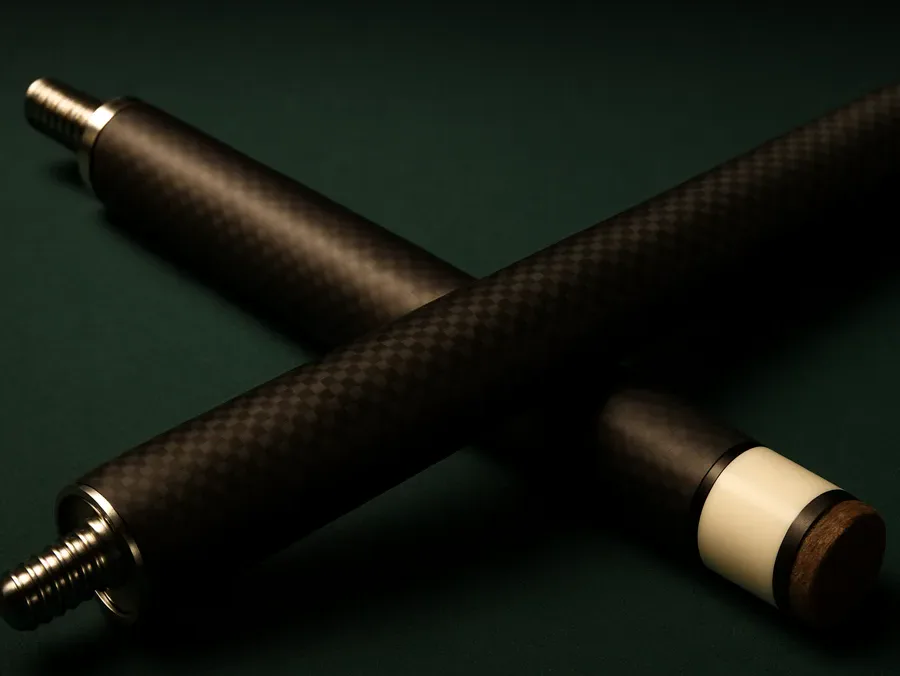
Predator REVO 12.4 Carbon Shaft, Radial
Replacing a warped shaft for goodPredator guarantees REVO shafts against warping and covers warpage under its limited lifetime warranty, for the original buyer. This one is the radial joint version, so check your butt's pin before ordering.
Check price on Amazon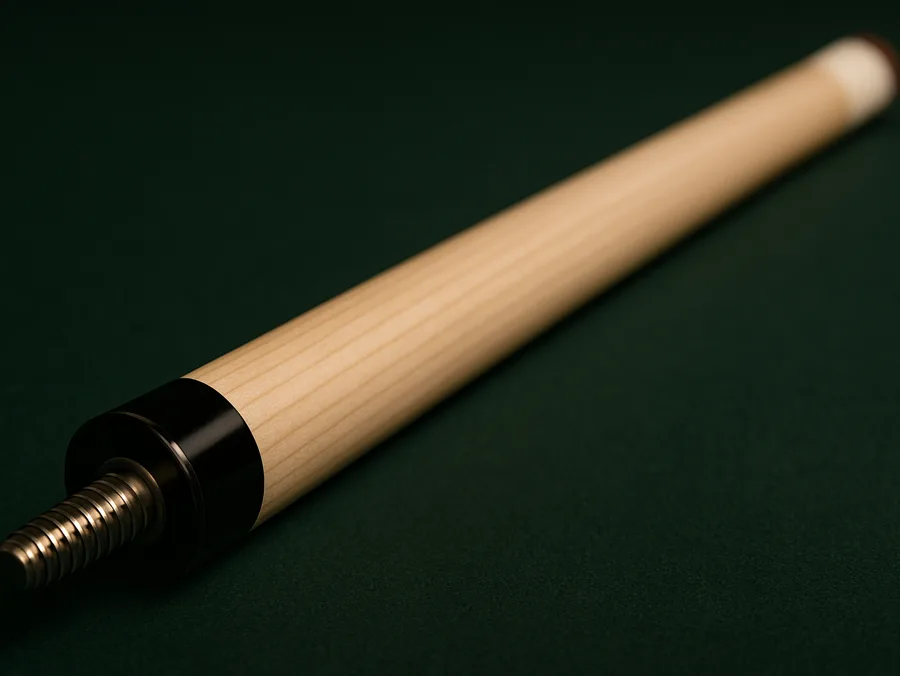
Predator 314-3 Maple Shaft, 3/8x10
A wood replacement shaftIf you'd rather stay with maple, this low-deflection shaft fits 3/8x10 butts such as McDermott's. Know that Predator doesn't cover warpage on wood shafts, so store it upright.
Check price on Amazon
Joint pin cleaner and cue care set
Ruling out the jointA clean pin and clean threads let the cue seat tight, which cures the most common cause of a cue that wobbles assembled but rolls fine in pieces.
Check price on AmazonFrequently asked questions
How do you know if your pool cue is warped?
Sight down it from the butt end while slowly rotating it and look for a curve that moves as you turn. Then roll the shaft, the butt and the assembled cue separately on a flat table. A shaft that wobbles on its own and shows a curve when sighted is warped.
Is a little warp in a pool cue normal?
Yes. Wood moves, and a faint wobble on the roll that you can't see when sighting won't affect your shots. The rec.sport.billiard FAQ calls a slight warp nothing to be upset about.
Why does my cue wobble when rolled but look straight?
Usually the joint. If the shaft and butt roll straight on their own but the assembled cue wobbles, clean the pin and threads and retighten. A joint that still won't seat flat can be refaced by a shop for about 10 to 20 dollars.
Can a warped pool cue be fixed?
Not reliably. Shops don't list straightening as a service. Hanging the shaft vertically for weeks sometimes helps a recent, mild warp, but heat and bending tend to make it worse. Most players replace the shaft.
Can you play with a warped cue?
With a slight warp, yes. Hold the cue so the bend points straight up or down rather than sideways, and mark it so you hold it the same way every shot. An obvious bend is worth replacing.
Is warping covered by the warranty?
It depends on the maker. McDermott (cues from 2004 on) and Viking cover warpage for life for the original owner. Predator covers it on its carbon shafts but not on wood shafts. McDermott Lucky and Star cues exclude it.
Do carbon fiber shafts warp?
Predator says its REVO carbon shafts are guaranteed never to warp, and it covers warpage on them. Carbon still chips or cracks from impacts, and the wood butt it screws into can still move.
Related guides
LeaguePool is reader-supported. When you buy through links on this site we may earn an affiliate commission at no extra cost to you. As an Amazon Associate we earn from qualifying purchases.