Pool Ball and Cue Ball Cleaner: Best Picks (2026)
The best pool ball cleaner for almost every set is Aramith Ball Cleaner, the liquid made by the company that makes the balls. It cleans and polishes phenolic in one pass, it is silicone free, and it works by hand or in a ball machine. Add a microfiber cloth and you own everything a home table needs.
Below: what each cleaner actually does, how Aramith's Cleaner and Restorer differ (most pages get this wrong), what to use on a cue ball, what to skip, and the short answer on pool table and felt cleaners.
Our picks at a glance
| Need | Pick | Why |
|---|---|---|
| One cleaner for any home set | Aramith Ball Cleaner | Made for phenolic by Aramith, cleans and polishes, hand or machine |
| Old, caked or neglected balls | Aramith Ball Restorer, then the Cleaner | Aramith's two-step for hard spots |
| Wiping and buffing | Microfiber cloths | Lifts oil and chalk without leaving lint |
| Ball cleaning machine fluid | Aramith Ball Cleaner, a drop or two at a time | What Diamond tells its polisher owners to use |
| Chalky table cloth | A cloth cleaner such as Quick-Clean, or a brush | Different job; see the table cleaner section below |
That's the whole shopping list for most people. The rest of this page explains why, and covers the cases where the answer changes.
Why Aramith Ball Cleaner is the default
Aramith (made by Saluc in Belgium) says its cleaner was formulated for its own phenolic resin, and its directions are short: shake the bottle, put a little on the ball, rub, then buff dry with a cloth, paper or an electric buffer. The bottle is 8.4 fl oz, and you only need a little per ball.
Three things make it the safe pick:
- It is silicone free, according to Aramith, so it leaves the surface polished without a slippery coating that changes how balls react.
- It works in machines. Diamond, which builds commercial ball polishers, tells owners to use Aramith Ball Cleaner in them.
- Dr. Dave Alciatore's pool physics site calls it the generally recommended ball cleaning product, and notes it can be thinned with water or rubbing alcohol, up to half and half, to stretch a bottle.
Aramith writes its directions for phenolic balls, so it suits any phenolic set, whoever made it. For a cheap polyester set, Clean 'n' Shine (below) is sold as suitable for all types of pool and snooker balls. Aramith also claims its balls last up to 40 years in home use when they're kept up with this cleaner, which tells you how much of a set's life depends on the five minutes of care you give it. Several Aramith sets, including the Pro-Cup Value Pack, come with a bottle of this cleaner and a microfiber cloth in the box; Aramith pool balls compared sorts out which set is which.
Cleaner vs restorer: they are two different bottles
Aramith sells a Ball Cleaner and a separate Ball Restorer, and they are not the same product in two sizes. Both are liquids.
| Aramith Ball Cleaner | Aramith Ball Restorer | |
|---|---|---|
| Job | Routine cleaning and polishing | Hard spots on balls with heavy chalk, dust and hand-grease buildup |
| When | Aramith says after each game; at home, whenever balls look dull | Only when the Cleaner alone won't shift the dirt |
| Order | Last step, then buff dry | First step, always followed by the Cleaner |
| Who needs it | Every set | Used sets, bar sets, balls that sat for years |
One correction to a common claim: Aramith does not say the Restorer fills scratches. It describes it as a way to remove very hard spots and repolish balls that have built up a lot of grime. A chip or a deep scratch stays a chip or a deep scratch.
If you're cleaning up a used set, buy both. If your balls are new or in decent shape, the Cleaner alone is enough. The full two-step method is in how to clean pool balls.
Other pool ball cleaners worth knowing
Aramith isn't the only bottle on the shelf. These are the ones billiard dealers stock, with what their makers claim:
- Tiger Crystal Ball Cleaner is sold for hand use and for all types of cleaning machines. Tiger says it brings back the original shine and color of the balls.
- Clean 'n' Shine Pro from 8-Ball Direct is a pH-neutral two-in-one spray in 125 ml and 500 ml bottles, sold for rotary ball machines or hand use. The fine mist makes it easy to dose in a machine.
- Some machines ship with their own polish. The Ballstar Pro comes with a liter of polish rated for 500 cycles, and the 16-ball polisher sold on Amazon includes a spray.
Some ball machine owners on AZBilliards run Novus 1 plastic polish. Dr. Dave's site reprints one owner's comparison: balls done with Novus 1 in his machine threw less at first, then varied from shot to shot, while hand-cleaned Aramith balls threw the same every time. Consistency is what you want, so we'd stay with a ball cleaner made for billiard balls.
Our call: if you already own one of these and it leaves the balls glossy and dry to the touch, keep using it. If you're buying fresh, buy Aramith. Don't switch back and forth in a machine, though. Diamond warns that mixing cleaning solutions builds a sticky residue in the pads.
What not to use on pool balls
Soap and water is the one item the authorities disagree on. The WPA's equipment specs say balls may be washed with soap and water, while Iwan Simonis, the cloth maker in the same group as Aramith, says balls are normally cleaned with special polishes and water is not recommended. Either way, soap doesn't polish, so it isn't a substitute for a ball cleaner, and we'd skip the laundry-detergent bucket soak some how-to sites suggest. Our neighbor guides best pool balls and Aramith vs cheap pool balls give the same advice: skip dish soap.
- Abrasive cleaners and scouring pads. Brunswick's care guide warns against abrasive materials and harsh chemicals.
- Silicone sprays and furniture polish. Dr. Dave shows that silicone on the cue ball adds draw and masse action (trick shot artists use it for that), then wipes off onto your cloth and leaves a slippery film on your hands.
- Car wax and paste wax. One big retailer's care guide recommends paste wax and its own blog says avoid it. Dr. Dave's work explains the problem: wax cuts throw at first, then wears off unevenly, so the balls play differently from rack to rack.
- Strong, undiluted solvents. Dr. Dave found that balls stripped too clean by an aggressive solvent throw more than normal on cut shots. The WPA's advice for removing wax is a cloth moistened with diluted alcohol, not a soak.
The theme: a good cleaner leaves the ball clean and dry, without a coating that changes how it plays.
Best cue ball cleaner
Same bottle. The cue ball needs the most attention because it takes every tip hit and picks up blue chalk marks, but there's no separate product for it. Clean it with Aramith Ball Cleaner, and use the Restorer on stubborn chalk smudges.
Wipe the cue ball more often than the rest of the set, even between racks on a league night. Dr. Dave's site notes the cue ball also wears faster than the object balls, so an old one ends up slightly smaller and lighter. Cleaning brings back the shine but not the lost size. If yours plays noticeably different from the rest of the set, see best replacement cue balls.
Cloths matter as much as the liquid
A cleaner applied with a dirty rag or a paper towel just moves grime around. Aramith makes its own microfiber cloth for this job and says it absorbs about four times its weight in water and eight times its weight in grease, and survives washing at 140 F without shrinking.
You don't need Aramith's cloth specifically. Any lint-free microfiber does the same job: one cloth to apply, a second dry one to buff. A 24-pack means you always have a clean one, and you can keep a couple by the table and one in your cue case.
Pool table and felt cleaners
Searches for a pool table cleaner usually mean the cloth, not the balls, and the products are not interchangeable. Don't put ball cleaner on the cloth; it is a polish made for balls.
For the cloth you have three choices. A soft billiard brush is the classic. The Simonis X-1 lifts chalk dust using static, and Simonis designed it for its own cloth. Quick-Clean is a dry-foam spray you mist on and wipe off, and the table is ready to play right away. Its maker says it also keeps chalk dust off the pockets and the balls.
Quick-Clean is the pick if you want a spray. For the full method, including stains and how often to brush, see how to clean pool table felt, and for the tools, best pool table brush and best pool table vacuums. A clean cloth also means cleaner balls, because the balls pick up whatever chalk sits in it.
Do you need a ball cleaning machine?
Not for one home set. A bottle, a cloth and ten minutes gets the same gloss. Machines earn their keep in pool rooms and league venues that clean several sets a week. We compare the designs, from a 16-port box on Amazon to Diamond's commercial polishers, in best pool ball polishers.
How long a bottle lasts
No maker publishes a count of sets per bottle, so we won't guess one. Two data points help. Dr. Dave's baggie method (a few drops in a zip-lock bag, one ball at a time) uses very little, and he says thinning the cleaner with water or rubbing alcohol up to one to one makes a bottle last longer. In a machine, Diamond tells home owners that two drops per section lasts about a week.
Sources
- Aramith: cleaning products (Ball Cleaner, Ball Restorer, Micro-Fiber Cloth directions)
- Aramith: Extra long life claim with Aramith Ball Cleaner
- Simonis: cloth care and maintenance (ball cleaning and water)
- WPA: Recommended Equipment Specifications, section 16 (balls)
- Dr. Dave Pool Info: ball cleaning and surface treatments
- Dr. Dave Pool Info: silicone spray effects
- Dr. Dave Pool Info: ball weight, size and wear
- Diamond Billiard Products: ball polisher use and cleaner guidance
- Brunswick: billiard table care and maintenance
Our picks
Links open the current selection and price on Amazon so you can compare real reviews before buying.
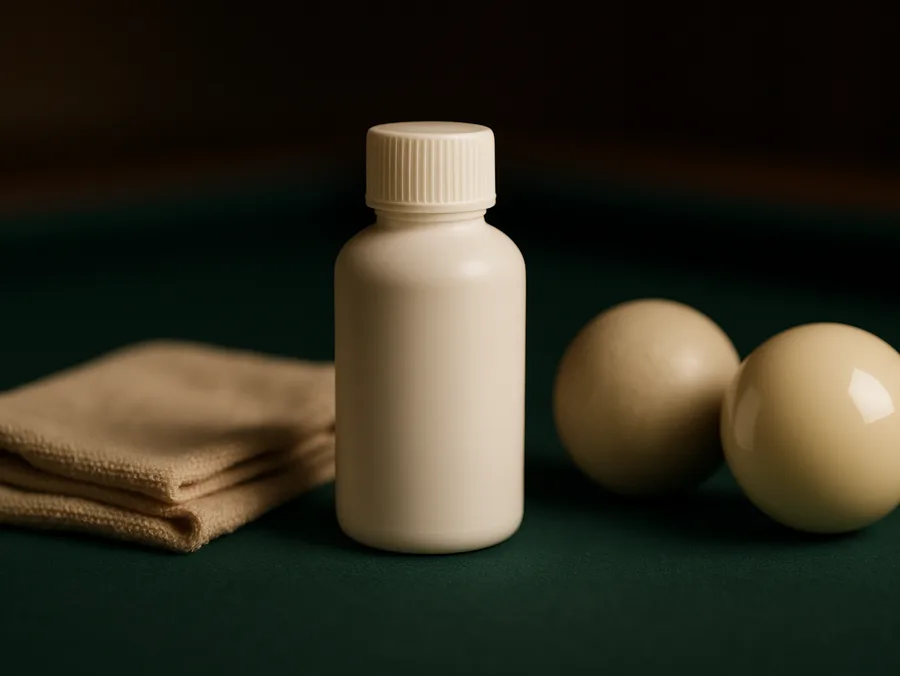
Aramith Billiard Ball Cleaner
Best pool ball cleaner overallAramith's own cleaner, and the one we'd buy first. It cleans and polishes phenolic balls in one pass, and the same bottle goes into a ball cleaning machine or onto a towel. Here's the detail new owners miss: it leaves no silicone behind, so the balls get their gloss back without a slick coating that changes how they throw.
Check price on Amazon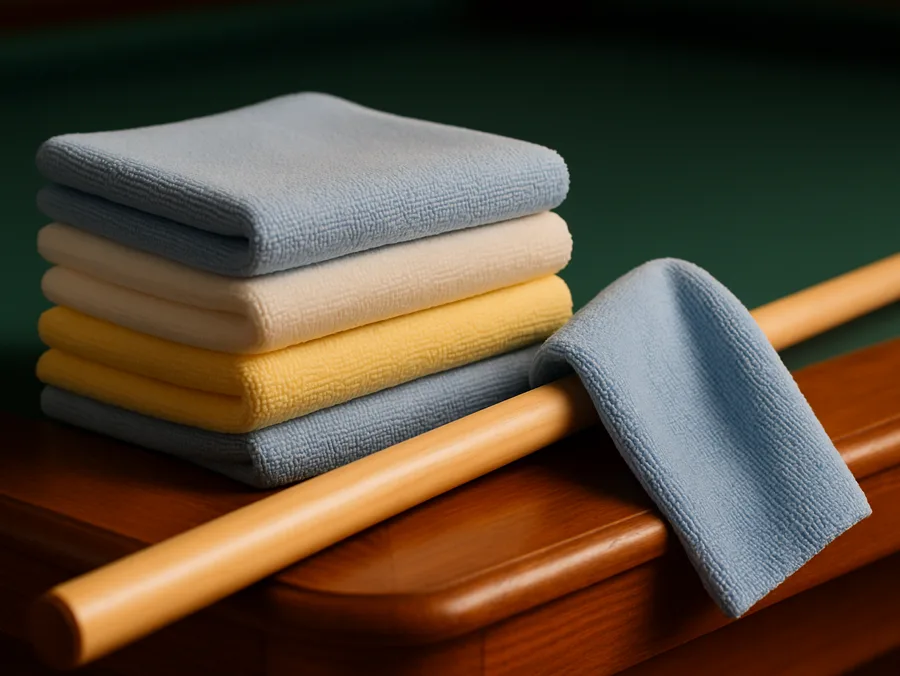
Amazon Basics Microfiber Cloths, 24 Pack
Applying and buffingSoft, non-abrasive and lint free, so the cloth lifts chalk and hand oil without leaving fibers on the ball. Two dozen in a pack means a fresh one for buffing every time, and they go through the washing machine. Keep one by the table and one in your case.
Check price on Amazon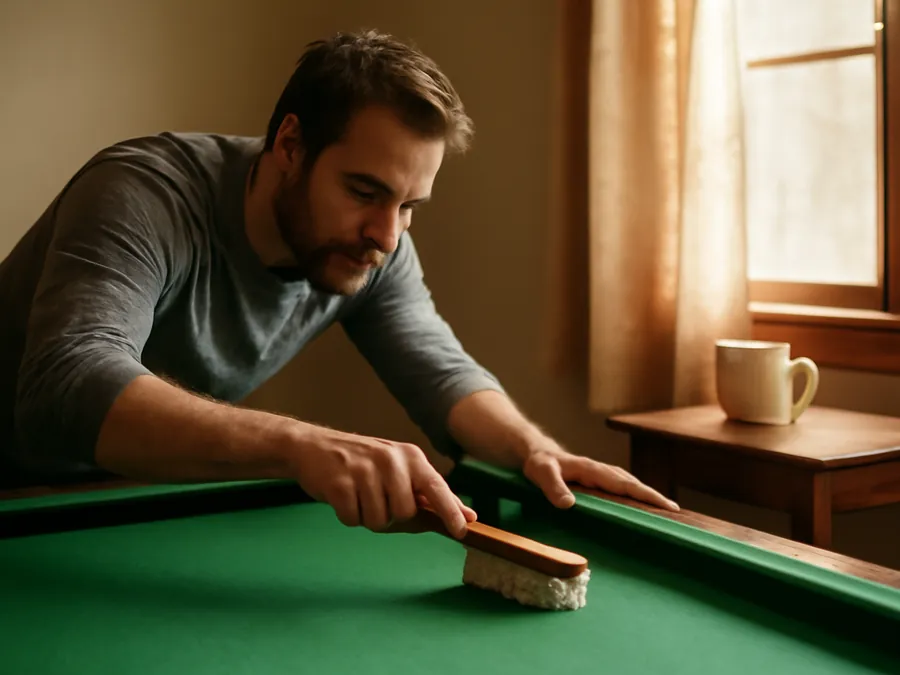
Quick-Clean Pool Table Felt Cleaner Spray
Pool table and felt cleanerFor the cloth, not the balls. Mist it on, wipe it off, and the chalk dust comes up with the foam, so the table is ready to play right away. The maker says it's safe on every grade of cloth. A cleaner table also sends less chalk back onto your balls.
Check price on AmazonFrequently asked questions
What is the best pool ball cleaner?
Aramith Ball Cleaner. Aramith formulated it for its phenolic balls, it cleans and polishes in one step, it is silicone free, and it works by hand or in a ball machine.
What is the difference between Aramith Ball Cleaner and Ball Restorer?
The Cleaner is for routine cleaning and polishing. The Restorer is for very hard spots on balls with heavy chalk and grease buildup, and Aramith says to follow it with the Cleaner and then buff dry. Both are liquids.
Can I clean pool balls with soap and water?
You can, but it is a half measure. The WPA equipment specs allow washing balls with soap and water; Simonis, the cloth maker in the same group as Aramith, says water is not recommended. Soap won't polish the balls either way, so use a ball cleaner and microfiber.
Is there a special cue ball cleaner?
No. Use the same ball cleaner, and the Restorer for stubborn chalk marks. Just clean the cue ball more often than the rest of the set, since it picks up chalk from every shot.
Can I use ball cleaner on the pool table felt?
No. Ball cleaner is a polish for the balls. For the cloth use a billiard brush, a Simonis X-1 or a cloth cleaner made for billiard fabric, such as Quick-Clean spray.
Should I wax my pool balls?
No. Wax lowers throw at first, then wears off unevenly, so the balls play differently from one rack to the next. A ball cleaner gives the shine without that problem.
Does Aramith cleaner work on other brands of balls?
Aramith makes it for phenolic resin, so it suits any phenolic set, whoever made it. For polyester sets, a cleaner sold for all ball types, such as Clean 'n' Shine, is the safer match. No cleaner makes a chipped ball look new.
Related guides
LeaguePool is reader-supported. When you buy through links on this site we may earn an affiliate commission at no extra cost to you. As an Amazon Associate we earn from qualifying purchases.