Snooker Rules: How to Play, Ball Points and Fouls
Snooker uses 22 balls: 15 reds worth 1 point each, six colors worth 2 to 7, and one white cue ball that both players share. You pot a red, then a color of your choice, and keep alternating. Colors come back onto their spots until the last red is gone, then you clear them in order: yellow, green, brown, blue, pink, black. Whoever has more points at the end wins the frame. Fouls don't give ball in hand like pool; they hand your opponent 4 to 7 points.
Everything below comes from the WPBSA's Official Rules of the Games of Snooker and English Billiards (September 2024 edition), which wpbsa.com still lists as the current rulebook in October 2026. The same book governs the pro tour and your local club, so there's no separate UK version.
Snooker rules in 60 seconds
- Decide who breaks first by lot (a coin toss) or any way you both agree. Players alternate the opening shot every frame after that.
- The opening player places the cue ball anywhere on or inside the D and must hit a red first.
- Pot a red and you score 1 and stay at the table. Now nominate a color and pot it for its value. The color comes back out onto its spot.
- Go back to a red. Red, color, red, color: a run of scoring shots in one visit is called a break.
- Miss, or commit a foul, and your opponent comes to the table. With reds still on the table, they always start on a red.
- After the last red (and the color that follows it), the colors are potted in order: yellow, green, brown, blue, pink, black. Now they stay down.
- A foul gives your opponent 4 points, or the value of the ball involved if that is higher, up to 7.
- The frame ends when the black is potted (unless the scores are then level) or someone concedes. Most points wins. A match is a set number of frames.
The rest is detail: what counts as a foul, and the free ball and miss rules that confuse even regular viewers.
Snooker ball points and the order of the colors
| Ball | How many | Points | Spot |
|---|---|---|---|
| Red | 15 | 1 each | Racked in a triangle behind the pink |
| Yellow | 1 | 2 | Right-hand corner of the D, seen from the baulk end |
| Green | 1 | 3 | Left-hand corner of the D |
| Brown | 1 | 4 | Middle of the baulk line |
| Blue | 1 | 5 | Center of the table |
| Pink | 1 | 6 | Halfway between the blue spot and the top cushion |
| Black | 1 | 7 | 12 3/4 in (324 mm) from the top cushion |
| White (cue ball) | 1 | None | In hand at the start; played from the D |
The potting order for the end of the frame is simply the points order, lowest first: the three colors around the D (yellow, green, brown), then the spots up the middle of the table (blue, pink, black).
Snooker points chart: what's left on the table
Each red is worth a possible 8 (1 for the red plus 7 for a black after it), and the six colors add up to 27. So the points still available are the reds remaining times 8, plus 27. Players and commentators use this number constantly, because it tells you when someone needs snookers. The WPBSA uses the same 8-per-red figure when it values a conceded frame in aggregate-score events.
| Reds left | Points available |
|---|---|
| 15 | 147 |
| 10 | 107 |
| 1 | 35 |
| 0 (all six colors left) | 27 |
| Pink and black only | 13 |
| Black only | 7 |
The chart assumes a black after every red. Take a lower color and the real total drops.
The table and the snooker ball set
A full-size table has a playing area of 11 ft 8 1/2 in by 5 ft 10 in, sold as a 12 by 6 foot table. The baulk line runs across it 29 inches from the bottom (baulk) cushion, and the D is a half circle of 11 1/2 inch radius centered on that line. Room size and buying options are in our snooker table guide.
A regulation snooker ball set is 22 balls: 15 reds, the six colors and a white. The rules set the diameter at 52.5 mm, plus or minus 0.05 mm (about 2 1/16 inches), and say the heaviest and lightest balls in a set may differ by no more than 3 grams. There is no fixed weight. Sets sold for American home tables come in other sizes, 2 1/8 inch being common, and some print the point values on the colors. Fine for learning; clubs use 52.5 mm.
To start a frame, the reds go in a tight triangle, base parallel to the top cushion, with the front red as close to the pink as possible without touching it (see how to rack).
How a turn works: the ball on and re-spotting
The ball on is any ball you're allowed to hit first. While reds remain, every red is on for the first shot of your turn. Pot one (or several: two reds in one shot score 2) and a color becomes on. You nominate the color, by saying it or making it obvious, and the referee can ask you to declare it. You never call a pocket.
A potted color is re-spotted. If its spot is taken, it goes on the highest-value free spot; if every spot is taken, as close to its own spot as possible toward the top cushion. Striking before the referee finishes re-spotting is a foul. Reds normally never come back, even a red potted on a foul.
Once the last red and the color after it have been played, the colors become on one at a time, lowest first, and stay down. Fail to pot and your turn ends; your opponent plays from where the cue ball stopped, or from the D if it went in a pocket.
If the cue ball stops touching a ball that is or could be on, the referee calls touching ball. Play away without moving that ball (moving it is a push stroke, a foul); because it counts as on, you don't have to hit anything else.
Snooker foul rules and penalty points
Every foul is worth at least 4 points to your opponent. The WPBSA lists which fouls cost the value of the ball on and which cost the higher of the ball on or the ball involved, which is how a foul ends up worth 5, 6 or 7.
| Foul | Penalty to the opponent |
|---|---|
| Missing every ball | Value of the ball on (minimum 4) |
| Potting the cue ball (an in-off) | Value of the ball on |
| Hitting the cue ball twice, or striking with both feet off the floor | Value of the ball on |
| Playing from in hand outside the D | Value of the ball on |
| Jump shot (cue ball jumping over an object ball) | Value of the ball on |
| Hitting a ball that isn't on first | Value of the ball on or the ball hit, whichever is higher |
| Potting a ball that isn't on | Value of the ball on or the ball potted, whichever is higher |
| Push stroke | Higher of the ball on or the ball concerned |
| Touching any ball with your body, clothing or cue | Higher of the ball on or the ball touched |
| Forcing a ball off the table | Higher of the ball on or the ball concerned |
| Striking before all balls stop, or before a color is re-spotted | Higher of the ball on or the ball concerned |
| Hitting two balls at once (other than two reds) | Higher of the ball on and the two balls |
| Playing at reds in two successive strokes | 7 |
| Failing to declare the ball on when the referee asks | 7 |
| Fouling after potting a red but before nominating a color | 7 |
| Using a ball off the table, or anything else, to measure a gap | 7 |
A worked example: you're on the brown, miss it and clip the pink first. The ball on is worth 4 and the ball hit is worth 6, so your opponent gets 6. If you'd hit the yellow first instead, it would be 4. If more than one foul happens on the same shot, only the highest penalty counts. Points scored earlier in the break stand; nothing potted on the foul shot scores. After any foul, the next player chooses to play from where the balls stopped or make the offender play again.
What is a snooker? Free balls and the miss rule
You're snookered when a ball that isn't on blocks a straight line to every ball that is on, even partly. If you can hit both edges of at least one ball on, you're not snookered, and a cushion can never snooker you. When a player needs more points than are left on the table, laying snookers to force fouls is the only way back: they need snookers.
Free ball. If your opponent fouls and leaves you snookered, the referee calls a free ball: you may nominate any other ball as the ball on. With reds on and the black blocking them, you can play the black as a red, pot it for 1 point (it's re-spotted) and carry on with a color. If the free ball and a red both drop, each scores 1. The one restriction: if you don't pot anything, you may not leave your opponent snookered behind the free ball on every ball on, unless only two object balls remain.
Foul and a miss. You must make a genuine attempt to hit the ball on. If the referee decides you didn't, they call foul and a miss, and your opponent can have the balls replaced and make you play again. If you had a clear, full-ball path and fail twice from the same position, the referee warns you that a third failure hands over the frame. A miss isn't called when the ball on is impossible to hit, or when either player needs penalty points and the miss wasn't intentional.
How a frame ends, and the re-spotted black
- The black goes down. With only the black left, the first pot or foul ends the frame, unless that leaves the scores level.
- With only the black left, a player more than 7 ahead may claim the frame.
- A player concedes. The WPBSA rules only allow it once someone needs penalty points to win.
- The referee awards the frame, for example after the third miss warning.
If the scores are tied at the end, the black is re-spotted, the players draw lots for who plays first from the D, and the next pot or foul settles it. In a genuine stalemate the referee can restart the frame with the scores wiped.
Matches and the 147 maximum break
A frame is one game. A match is a race to a set number of frames, and the length varies by event. The BBC lists the World Championship at best of 19 frames in round one, 25 in round two and the quarterfinals, 33 in the semifinals and 35 in the final. Points don't carry over between frames, so winning one 60 to 59 counts the same as 120 to 0.
The maximum break is 147: all 15 reds each followed by the black (120), then the six colors (27). A higher break is possible in theory when an opponent fouls before any balls are potted and leaves a free ball: that adds a 16th red-and-black pair and a ceiling of 155, but it almost never happens.
Six-red snooker and other short versions
The rulebook includes Six Reds Snooker: normal rules, except no more than five consecutive foul-and-miss calls from the original position, and after potting a red you may not leave your opponent snookered behind your nominated color. The maximum break is 75 (6 x 8 + 27). The WPBSA also allows a simplified game with any number of reds; ten reds (maximum 107) is the usual choice on a 7 or 8 foot pool table, covered in snooker on a pool table.
Snooker vs pool rules: what trips up pool players
| Situation | 8-ball pool (typical rules) | Snooker |
|---|---|---|
| Whose balls | You own solids or stripes | Nobody owns any ball; you play whatever is on |
| Calling shots | Often ball and pocket | Nominate the ball only, never the pocket |
| Penalty for a foul | Ball in hand anywhere | 4 to 7 points to the opponent, who can also make you play again |
| Scratch | Ball in hand | Points, then the cue ball is played from the D |
| Jump shots | Legal with a proper stroke under WPA rules | A foul: the cue ball may not jump over a ball to reach the ball on |
| Potted balls | Stay down | Colors come back while reds remain |
| Who wins | Whoever legally pots the 8 | Whoever scores more points |
Snookered in pool means the same thing: no straight line from the cue ball to any ball you're allowed to hit. In 8-ball it costs less, because a missed hit gives ball in hand instead of points (8-ball rules; for the word's origin, pool vs billiards vs snooker). One habit to drop: after potting a red, don't play at another red. That's a 7-point foul even if you meant it as a safety.
American snooker and playing in the US
American snooker is a separate, simpler game with rules from the Billiard Congress of America, usually played on 10 by 5 foot tables with 2 1/8 inch balls; Wikipedia's summary of the BCA rules has every foul worth 7 points and describes the game as in decline. Organized snooker in the US uses the international rules: the United States Snooker Association (snookerusa.com) runs a national championship and a national tour, and pro results are at wst.tv.
Sources
- WPBSA: Official Rules of the Games of Snooker and English Billiards, September 2024 (equipment, definitions, play, fouls, free ball, miss, six reds)
- WPBSA: Updates to the Rules of Snooker, effective August 2024
- WPBSA rules page (current rulebook, checked October 15, 2026)
- BBC Sport: What is snooker? (World Championship match lengths)
- Wikipedia: American snooker
- United States Snooker Association
Our picks
Links open the current selection and price on Amazon so you can compare real reviews before buying.
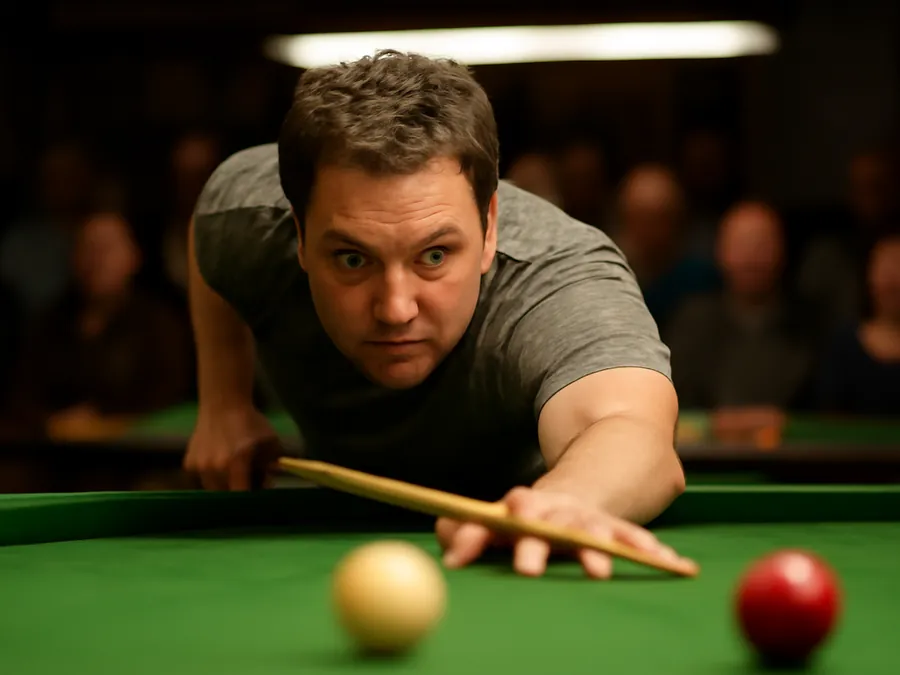
Aramith Premier Snooker Ball Set, 2 1/16 Inch
A full regulation-size setAll 22 balls (15 reds, the six colors and a white) at the standard 2 1/16 inch size, in Aramith's Premier phenolic resin, made in Belgium. Aramith checks each ball against eight criteria including roundness and weight, which is what makes a long red go where you aimed it. Buy this size for a real snooker table; pool tables want a smaller set.
Check price on Amazon
Jian Ying 57 Inch 3/4 Jointed Ash Snooker Cue
A first proper snooker cueA 57-inch, 3/4 jointed cue with an ash shaft, a 9.5 mm tip and a weight of 18 to 19 oz with the mini butt fitted, in a leather case. On a 52.5 mm ball the narrow tip lets you see and strike the exact spot you want, which a 13 mm pool tip hides.
Check price on Amazon
VINTORKY Brass Cross Rest Head
Reaching long shots legallyA cross-style rest head with a removable fitting that screws onto a bridge stick and is small enough to carry in a cue case. The rules allow rests, and on a 12-foot table you'll need one: striking with both feet off the floor is a foul.
Check price on Amazon
MoyanSuper Wooden Wall-Mount Scoreboard
Keeping score through a frameA wooden wall-mounted scoreboard with two slide rails marked 0 to 100, which hangs on two nails. Snooker scores move fast once foul points start flowing, and a board on the wall settles the question of how many points are left before anyone asks.
Check price on AmazonFrequently asked questions
How many red balls are there in snooker?
Fifteen in the standard game, worth 1 point each. Six-red snooker uses six, and the WPBSA rules allow a simplified game with any number of reds, so ten-red sets are common for home tables.
What is the order of the colors in snooker?
Yellow (2), green (3), brown (4), blue (5), pink (6), black (7). That's the order you pot them once the reds are gone. While reds remain, you can choose any color after potting a red.
Do you have to call your pocket in snooker?
No. You nominate the color you're playing, and only when it isn't obvious or the referee asks. Any pocket counts.
What happens if you pot the white in snooker?
It's a foul worth the value of the ball on, with a minimum of 4. Your opponent then plays with the cue ball in hand from the D, or asks you to play again from there.
What is a free ball in snooker?
If your opponent fouls and leaves you snookered, you can nominate any other ball as the ball on. Pot it and it scores as the ball on would (1 point if reds are on) and is then re-spotted.
Are snooker rules different in the UK?
No. The WPBSA rulebook is used worldwide, by the professional tour, the amateur federations and clubs. American snooker is a separate game with its own simpler rules.
Related guides
LeaguePool is reader-supported. When you buy through links on this site we may earn an affiliate commission at no extra cost to you. As an Amazon Associate we earn from qualifying purchases.