
Pool Fouls: Every Foul in Pool and the Penalty
A foul in pool is any shot or action the rules don't allow: scratching the cue ball, hitting the wrong ball first, getting no ball to a rail, touching a ball you shouldn't, and about a dozen more. A foul always ends your turn. What it costs you on top of that depends on the game: ball in hand in 8-ball and 9-ball, a point in straight pool and one pocket, a free shot in blackball.
Below is every standard foul in the World Pool-Billiard Association (WPA) rules in plain English, the penalty game by game, and the handful of rulings people actually argue about, with the places where the APA and CSI (BCAPL) leagues play it differently.
Every standard foul, in plain English
These are the standard fouls in section 3 of the WPA rules. Each game picks which ones apply, but most games use nearly all of them.
| Foul | What it means | How it usually happens |
|---|---|---|
| Scratch or cue ball off the table | The cue ball goes in a pocket or leaves the table | Following the object ball into the pocket; a hard shot that hops the rail |
| Wrong ball first | The cue ball's first contact isn't a legal ball | Clipping an opponent's ball on the way, or the 8 before your group is gone |
| No rail after contact | Nothing is pocketed and no ball reaches a cushion after the cue ball hits an object ball | Soft safeties that barely touch the object ball |
| No foot on floor | Neither foot touches the floor when the tip hits the cue ball | Stretching across the table or sitting on the rail |
| Ball driven off the table | An object ball ends up anywhere but the cloth or a pocket | Jump and break shots |
| Touched ball | Touching or moving any ball except by normal play | A sleeve, bridge hand, chalk or the cue's butt brushing a ball |
| Double hit | The tip contacts the cue ball twice, or is still on it when it reaches a nearby object ball | Shooting through a cue ball that sits a hair from another ball |
| Push shot | Tip contact lasts longer than a normal stroke | Short, shoving strokes in tight spots |
| Balls still moving | Shooting while any ball is rolling or spinning | Rushing after a ball seems to have stopped |
| Bad cue ball placement | Shooting from on or past the head string when ball in hand is limited to the kitchen | Placing the ball on the line instead of behind it |
| Bad play from the kitchen | With ball in hand in the kitchen, the cue ball hits a ball behind the head string before crossing it | Cutting a ball that's also in the kitchen |
| Playing out of turn | Shooting when it isn't your inning | Losing track after a missed call |
| Slow play | Going over the shot clock or time limit an event sets | Tournaments with a clock |
| Rack template foul | A ball hits a removed racking template left on the rail | Leaving the plastic rack sheet on the rail |
Two more sit above these as serious fouls: three consecutive fouls in games that use that rule, and unsportsmanlike conduct, which covers intentional misbehavior like distracting your opponent, moving balls on purpose or miscuing on purpose. If you commit several fouls on one shot, only the most serious one is enforced.
What is the penalty for a foul in pool?
Every foul ends your inning. The rest depends on the game, and this is where most mix-ups start: people carry the 8-ball penalty into games that work differently.
| Game | Penalty for a standard foul | After a scratch | Three fouls in a row |
|---|---|---|---|
| 8-ball | Ball in hand anywhere | Ball in hand anywhere (behind the head string after a break scratch) | Not a rule in 8-ball |
| 9-ball and 10-ball | Ball in hand anywhere; the 9 (or 10) is spotted if it went in | Ball in hand anywhere | Loss of the rack |
| Straight pool (14.1) | Minus one point; cue ball stays where it stopped | Minus one point; ball in hand behind the head string | Minus one for the foul plus 15 more, then a re-rack and a fresh opening break by the offender |
| One pocket and bank pool | Minus one point; cue ball stays | Minus one point; ball in hand behind the head string | Loss of the rack |
| Blackball (WPA) | Opponent gets a free shot | Free shot, cue ball in hand in baulk | Not used; separate loss-of-rack fouls |
| Typical bar 8-ball (house rules) | Often loss of turn only | Ball in hand behind the head string | Not used |
In straight pool, any ball pocketed on a foul is spotted, and a foul on the opening break costs two points. In 9-ball and 10-ball, nothing but the money ball is ever spotted, so balls that drop on a foul stay down and simply don't help the shooter.
Cue ball fouls only vs all ball fouls
This is the biggest difference between the official rules and the leagues most Americans play in.
Under WPA rules, touching or moving any ball by accident is a foul. Your chalk, bridge, sleeve and hair all count, and you're responsible for them. The WPA used to allow events to play "cue ball fouls only", but that option is gone in the rules effective September 2025, as Dr. Dave Alciatore covered in his November 2025 Billiards Digest column.
The leagues kept it. Under CSI rule 1-33, accidentally moving a single object ball isn't a foul unless it affects the shot, meaning a moving ball hits it or rolls through the roughly seven-inch circle around where it sat. If it had no effect, your opponent chooses whether to leave it or put it back. It's still a foul if you:
- touch the cue ball at all,
- move more than one object ball,
- move a ball that then hits another ball,
- touch a ball that's already moving, or
- put the ball back yourself without your opponent's say-so.
APA's foul list works the same way in practice: it's built around the cue ball, and accidentally moving an object ball isn't on it. Touching another ball while you place the cue ball for ball in hand is on it, though.
The practical upshot: if you play league on Tuesday and a tournament on Saturday, keep your hands and sleeves away from every ball, not just the white one.
The fouls people argue about
Double hits on close balls
If the cue ball sits close to an object ball and the tip is still on the cue ball when it reaches that ball, it's a double hit. WPA gives one allowance: if you barely graze the close ball, it's not called. If the two balls are actually frozen (touching), you can shoot straight into the object ball legally. Ask your opponent to agree the balls are frozen before you shoot; until someone declares it, they're assumed not to be touching. Listening for a double "click" is a poor test. The cue ball's path after contact tells you more than the sound does.
No rail with a frozen ball
A ball touching a cushion at the start of the shot isn't "driven to" that cushion unless it leaves and comes back. So a soft tap on a frozen object ball that pushes it nowhere is a no-rail foul unless something else reaches a rail. APA spells it out: after hitting a frozen ball, you have to drive the cue ball to a rail, drive the frozen ball to another rail or into a pocket, or send it into another ball that then reaches a rail or pocket.
Did I hit my ball first?
When the cue ball seems to hit your ball and another one at the same instant, and nobody can tell which came first, WPA rules give it to the shooter. The same benefit of the doubt applies when you hit a legal ball and a cushion together.
Jump shots, scoops and miscues
A jump is legal when you raise the back of the cue and drive the cue ball down into the cloth so it rebounds up. Scooping under the ball is different: CSI and APA make a deliberate scoop a foul, and WPA treats an accidental scoop like a miscue. A miscue on its own isn't a foul under CSI rules, and under WPA rules an accidental miscue that sends the cue ball over a ball counts as a legal jump. Our guide to jumping the cue ball legally covers the technique.
Foot on the floor
One foot has to touch the floor when the tip strikes the ball. Under WPA and CSI rules, sitting on the rail with both feet up is a foul. APA treats it differently: when a bridge is available it is not a foul, though it can be ruled a sportsmanship violation. Use the mechanical bridge instead.
A ball that's still spinning
A ball that's stopped rolling but still spinning in place is in motion, and shooting then is a foul (CSI states it outright). Wait for everything to stop.
Object balls off the table
Under WPA rules, any jumped object ball is a foul. In APA play it isn't: object balls knocked on the floor are spotted, and only the cue ball leaving the table is a foul. The 8 leaving the table loses in both.
Calling a foul: who, and when
A foul has to be called before the next shot starts. After that, WPA, APA and CSI rules all treat it as if it never happened. That one rule settles more disputes than any other on this page.
- In APA play, only the player at the table or the team captain can officially call a foul. Anyone else can suggest one.
- In CSI play, a player in the game or a referee who's been called to the table can call it. Letting an earlier foul slide doesn't stop you from calling the same foul later.
- Before a player who is on two fouls shoots, they must be warned. Under WPA and CSI rules, if nobody warns them, a third foul only counts as a second.
- If you think something might be a foul, get a ruling before the shot. Ask your opponent to watch, or call a referee when there is one.
In casual games, the friendliest version of this is simple: if you foul, say so. In money games it isn't optional; see our notes on money game etiquette.
Are intentional fouls allowed?
Some are part of the game, and some will get you penalized hard. Under WPA rules, deliberately committing a standard foul such as rolling the cue ball up without hitting a rail just earns the normal penalty. In straight pool and one pocket, where a foul costs a single point and the cue ball stays put, that can be the best move when every real shot leaves your opponent an open table. The three-foul rule is what keeps it in check.
Other fouls turn into unsportsmanlike conduct when they're done on purpose: touching or moving a ball, playing out of turn, and miscuing on purpose. Those can cost you the rack or worse, at the referee's call. In blackball, deliberately hitting the wrong ball first is a loss-of-rack foul of its own.
Fouls vs scratches
Every scratch is a foul, but most fouls aren't scratches. A scratch is specifically the cue ball going into a pocket (WPA counts it as pocketed if it touches a ball already in the pocket, too). Some players call any foul a "scratch" and use "table scratch" for missing everything or getting no rail. That's fine at the bar, but the rule books keep the terms separate. Our explainer on what a scratch is in pool covers scratch penalties in every game, and bar rules for 8-ball covers how house rules soften fouls.
Sources
- WPA Rules of Play, effective 2025-09-15 (sections 2, 3 and each game's foul rules)
- APA Official Rules: Fouls
- Official Rules of CueSports International, August 2025 (rules 1-21 to 1-34)
- Dr. Dave Alciatore, "All Ball Fouls", Billiards Digest, November 2025
Our picks
Links open the current selection and price on Amazon so you can compare real reviews before buying.

BCA Official Rules and Records Book
Settling foul disputes at homeMost foul arguments end the moment someone opens a rule book both players agreed on. This is the Billiard Congress of America's book with the common games written out in full. Check the edition year on the listing, since rules get revised.
Amazon price: $14.95 as of 5:23 PM EDT. Price and availability can change; Amazon’s price at purchase applies.
Check price on Amazon
GSE Portable Bridge Head and Stick
Long shots without a foot-off-the-floor foulThe foot-on-the-floor foul happens when a shot is out of reach and you climb onto the rail. This is a 57-inch two-piece wood bridge stick with a screw-on head that gives five cue heights, so you can stay on your feet and still reach.
Check price on Amazon
Aramith Red Circle Cue Ball
Finding where your tip really hitsPushes and miscues start with a tip that isn't landing where you think. The red circle on this regulation Aramith cue ball shows your chalk mark after each shot, so you can see whether you're striking the ball where you meant to.
Check price on Amazon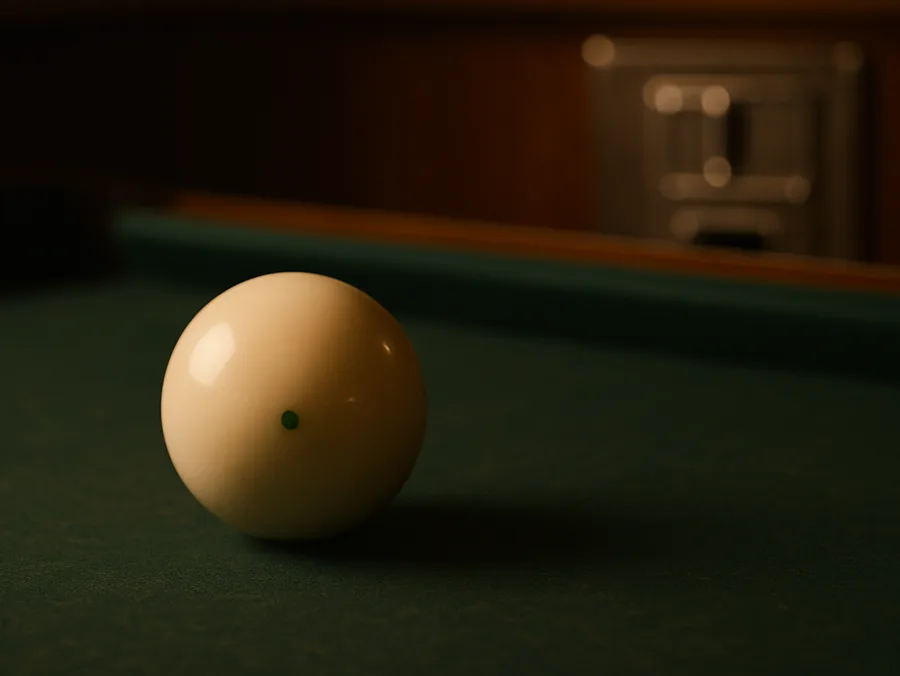
Aramith Magnetic Cue Ball
Coin-op tables at homeBall in hand only works if you get the cue ball back. On coin-operated tables that separate the cue ball with a magnet, this phenolic Aramith ball rolls out of the return after a scratch instead of getting locked away. Check how your table sorts the cue ball before you buy; size-sorting tables need an oversized ball.
Check price on AmazonFrequently asked questions
What is a foul in pool?
A foul is a rule violation during your turn, such as scratching, hitting the wrong ball first, getting no ball to a rail after contact, or touching a ball. It ends your turn and gives your opponent a penalty, usually ball in hand.
What is a foul shot in pool?
It's any shot on which a foul happens: the cue ball is pocketed, misses your ball, hits the wrong ball first, or nothing reaches a rail. The shot counts as played, your turn ends, and your opponent takes the penalty for that game.
Is it a foul if you don't hit any ball?
Yes. Missing every ball means you didn't hit a legal ball first and nothing reached a rail after contact. Under WPA, APA and CSI rules your opponent gets ball in hand.
Is a miscue a foul?
Not by itself under CSI rules. It becomes a foul if something else goes wrong, such as the cue ball missing your ball or hitting the wrong one. Miscuing on purpose is unsportsmanlike conduct under WPA rules.
Is accidentally touching a ball a foul?
Under WPA rules, yes, any ball. In APA and CSI leagues, only touching the cue ball is always a foul; accidentally moving a single object ball usually isn't, unless it affects the shot.
Can you call a foul after the next shot?
No. WPA, APA and CSI rules all say a foul has to be called before the next shot starts, or it's treated as if it never happened.
Does three fouls in a row lose the game?
In 9-ball, 10-ball, one pocket and bank pool it loses the rack, as long as the player was warned after the second foul. In straight pool it costs an extra 15 points. It doesn't apply in 8-ball.
Related guides
LeaguePool is reader-supported. When you buy through links on this site we may earn an affiliate commission at no extra cost to you. As an Amazon Associate we earn from qualifying purchases.