Pool Etiquette: Pool Table Rules Every Player Should Know
Most pool etiquette fits in one sentence: when it's not your turn, sit down, keep still and stay out of the shooter's line of sight. The rest is table care and honesty. Keep drinks and chalk off the cloth, call your own fouls, and don't unscrew your cue or say "good game" until the game is actually over.
Some of this is written into the rulebooks. The WPA world rules list distracting your opponent as unsportsmanlike conduct, CSI's rules make an early "good game" a concession, and the APA's team manual has its own etiquette list. This guide covers the unwritten customs and the written rules behind them, at a bar table and in a league match.
Pool etiquette at a glance
| Situation | Do | Don't |
|---|---|---|
| Opponent is shooting | Sit, stay still, stay quiet, stay out of their line of sight | Chalk, talk, pace, or stand at the end of the table they're looking at |
| You fouled | Say so and hand them the cue ball | Wait to see whether anyone noticed |
| Close hit coming | Ask a neutral third party to watch before the shot | Argue about it afterward with nobody to settle it |
| You have a question | Ask before they get down on the shot | Interrupt once they're in their stance |
| The match is almost over | Stay seated with your cue together until the last ball drops | Unscrew your cue, start racking, or say "good game" early |
| Drinks and phones | Use a side table or shelf | Put anything on the rails or the cloth |
| Chalk | Chalk away from the table; set the cube face up on the wooden rail | Chalk over the cloth or leave it face down |
| After you play | Put the rack, bridge and house cues back | Leave balls scattered and the bridge under the table |
| Win or lose | Shake hands and mean it | Make excuses or celebrate in their face |
When your opponent is at the table
Sit down. It's the single habit that marks someone as a player. The APA's etiquette list says to stay away from the table and out of your opponent's line of sight while they shoot, and not to talk to them while they're shooting. Dr. Dave Alciatore's etiquette handout boils it down to sit, be still, be quiet.
Line of sight is wider than people think. If the shooter is looking down a cut shot toward a corner pocket, the area behind that pocket is in their eyeline, and so is the far rail on a long straight-in. Standing there with your arms folded is distracting even if you never move.
Small movements count too. Chalking loudly, pulling a cue off the wall rack, digging through a case, and starting to stand up during their last shot all register in the shooter's eyeline. Wait until the balls stop.
Sitting still doesn't mean tuning out. CSI's rules say the player in the chair has to pay attention to the game and clearly acknowledge called shots and safeties, and must answer honest questions about the game (who has which group, whether a foul happened) in good faith. Watching closely and staying out of the way are both part of the job.
Sharking: what counts and what the rules say
Sharking is doing anything on purpose to make the other player miss. Talking during their stroke, moving in their line, slow-playing to break their rhythm, a well-timed sigh, a comment meant to plant doubt ("tough shot"). It's poor sportsmanship in any room, and in rated play it's against the rules.
| Rulebook | What it says | Penalty |
|---|---|---|
| WPA Rules of Play, 3.16 | Unsportsmanlike conduct is intentional behavior that brings disrepute to the sport or disrupts the game so it can't be played fairly. The list starts with distracting the opponent and also covers moving balls other than by a shot, miscuing on purpose, playing on after a foul is called, practicing during a match, marking the table, delaying the game and using equipment inappropriately. | Normally the same as a serious foul; the referee can instead warn, call a standard foul, take away a rack, set or match, or eject the player with prizes forfeited |
| CSI (BCA Pool League) rules 1-42 and 1-45 | Intentionally distracting your opponent or interfering with their play is unsportsmanlike conduct. So is anything embarrassing, disruptive or detrimental to others, and offering to gamble with opponents or spectators during your match. | At the referee's discretion, with or without a warning; warnings carry forward through the event |
| APA Official Team Manual | No single sharking rule. Members must exercise good sportsmanship, rooting is fine but not while your opponent is shooting, and verbal abuse (name calling, threats, attempts to provoke or embarrass) is penalized. | Set by the league operator; verbal abuse can forfeit the individual match or more |
Accidental sharking is still rude. Most of it is unawareness: a teammate cheering a shot on the next table, a phone screen lighting up, someone walking behind the pocket. The APA's line on cheering is a good standard for everyone: cheer for your teammate, don't root against your opponent.
If someone is sharking you, the fix is in your own routine: stand up and start over. Our mental game guide covers how to handle it without letting it work.
Call your own fouls
The APA's etiquette list says it plainly: players with integrity call their own fouls and tell their opponent when they have ball in hand, or just hand them the cue ball. Don't wait to be asked. In casual games this is the whole enforcement system, and in leagues it decides whether opponents trust your calls for the rest of the season.
For close hits, settle it before the shot. If you think a hit will be hard to read, ask a neutral player to watch. The APA manual says the call tends to favor the shooter when nobody watched, and that teams who keep calling bad hits without third-party verification can face sportsmanship penalties. Dr. Dave's handout also suggests phone video for a disputed shot.
Ask questions early. CSI's sportsmanship note says the player in the chair can't interrupt once the shooter is down on a shot, so ask about a call or a safety before that. And don't ask pointless questions on obvious shots just to break the shooter's focus; CSI treats that as using the rules in an unsportsmanlike way.
If you're not sure what counts as a foul, common pool fouls lists all of them with the penalties.
Don't concede before the game is over
This one surprises league players because it feels polite. It isn't. Breaking down your cue or saying "good game" while your opponent still has balls to make tells them the game is over, and some rulebooks treat it exactly that way.
| Rule set | What counts as conceding |
|---|---|
| WPA 1.12 | Unscrewing your jointed playing cue while your opponent is at the table in the deciding rack of the match concedes the match |
| CSI 1-43 | Saying "good game" or anything implying the game is over, putting away your cue or accessories, marking the score sheet, or gathering balls to rack before the game ends |
| CSI 1-44 | When your opponent is on the hill, a motion to unscrew your playing cue during their inning loses you the match |
| APA etiquette | Don't break down your cue until your match is over |
So sit with your cue in one piece, let them make the last ball, then shake hands and say "good game." It costs ten seconds and avoids the one argument nobody wins.
Pool table etiquette: looking after the table
Whether it's a bar box or a room's 9-footer, the table belongs to someone else. The habits that keep a host location happy:
- No drinks, food, phones or ashtrays on the table or rails. The APA's host-location list says don't set drinks on pool tables, and PBIA points out that spills and residue ruin cloth, which is expensive to replace.
- Don't sit on the rails or lean your weight on the table. PBIA's etiquette page notes that heavy leaning can knock a table off level.
- Chalk away from the table so the dust doesn't settle on the cloth. Set the cube face up on the wooden part of the rail, never on the cloth. The APA manual allows chalk on the unfelted hard surface of the rail.
- Never mark the cloth, with chalk lines or a wet finger. It's a foul under CSI rule 1-39, a form of unsportsmanlike conduct under WPA 3.16, and a sportsmanship violation in the APA.
- Go easy on hand talc. It ends up on the balls and the cloth. A glove does the same job cleanly; see our hand chalk guide.
- Don't slam balls onto the table, dump the ball tray onto the cloth, or slap balls with your shaft. The APA also asks players not to dig the tip into the cloth on the break.
- Follow house rules on jump and masse shots. PBIA's example of a house rule is a posted sign banning them, and a badly hit jump can damage the cloth.
- Put the rack, bridge and house cues back when you're done.
If your team carries its own bridge in an APA match, the manual says you can only use it if you're willing to share it with the other team. Bringing gear you won't share isn't etiquette, it's an advantage.
Unwanted advice, coaching and cheering
Don't offer advice to an opponent, or to a stranger at the next table, unless they ask. It's on Dr. Dave's list of etiquette basics, and most players hear unsolicited tips as an insult however kindly they're meant.
In leagues, coaching has rules. APA players get coaching time-outs (two per game for skill levels 1 to 3, one for skill level 4 and up), and teammates help only during those. Under CSI's general rules, asking for or receiving help with a shot during your match is a foul, including unprompted help from a teammate or spouse in the crowd, though local leagues can relax that for team play. How pool leagues work explains time-outs and match nights in more detail.
Cheering is part of league night. Cheer your teammate's good shot after it drops, keep it quiet while anyone is down on a shot, and don't cheer your opponent's misses.
Phones and pace of play
Silence your phone and leave it in your pocket while you're playing. CSI's rules go further than most players expect: no earbuds or headphones of any kind during a match, even switched off (hearing aids are allowed), no using your phone for messages or calls during your game in team play, and audible ringers off on the event floor. The first violation is a warning; after that it's a foul.
Be ready when it's your turn. The APA's list asks players to pay attention, have their cue together and table money ready if they're up next, and start as soon as the previous match ends. Taking time on a hard shot is fine. Walking around the table three times on every shot and then disappearing to the bar between racks is not. If you're unsure whether you're slow, ask a teammate to watch.
Bar table etiquette: quarters, challenges and winner stays
Coin-op bar tables have their own customs. They vary by bar, but the common version goes like this:
- The table belongs to whoever is playing on it. If you want to play, put your quarters on the rail (or your name on the chalkboard, if the bar keeps one) and wait your turn.
- The challenger pays for the next game. The winner stays on and plays whoever is next in line.
- The player holding the table usually sets the game. Agree on bar rules before the break; bar rules 8-ball covers the usual house variations.
- Don't win a challenge and then change the terms, such as switching games, demanding doubles, or suddenly asking for a bet. That's a known way to push people off a table.
- On a coin table, whoever paid for the rack has the right to play it. If someone tries to claim a table you've already paid for, get the bartender rather than arguing.
Forum regulars report that quarters on the rail is less common than it used to be, as bars added tables and people carry less cash, so ask the bartender how that bar does it. For playing for money, the stakes etiquette is in our money games guide.
Before and after the match
The APA's etiquette list starts with wishing your opponent good luck before the match and ends with showing respect win or lose. That's the frame. Shake hands before and after. Say something true about a good shot they made. Don't explain why you lost, and don't replay your best rack for them.
Treat the host location as the host. APA host locations can refuse service to anyone, and the APA can't make a bar keep a team. Be polite to the staff, follow the house rules, and buy something if the bar is giving you its tables for the night. For the rest of league night, our league night checklist covers what to bring and how to keep a match moving.
Sources
- WPA Rules of Play (rules 1.12 Concession and 3.16 Unsportsmanlike Conduct)
- Official Rules of CueSports International (sportsmanship note, 1-3, 1-39, 1-41 to 1-45)
- APA: Etiquette
- APA: Conduct during league play
- APA Official Team Manual (PDF)
- Dr. Dave Alciatore: Pool Etiquette handout (PDF)
Our picks
Links open the current selection and price on Amazon so you can compare real reviews before buying.
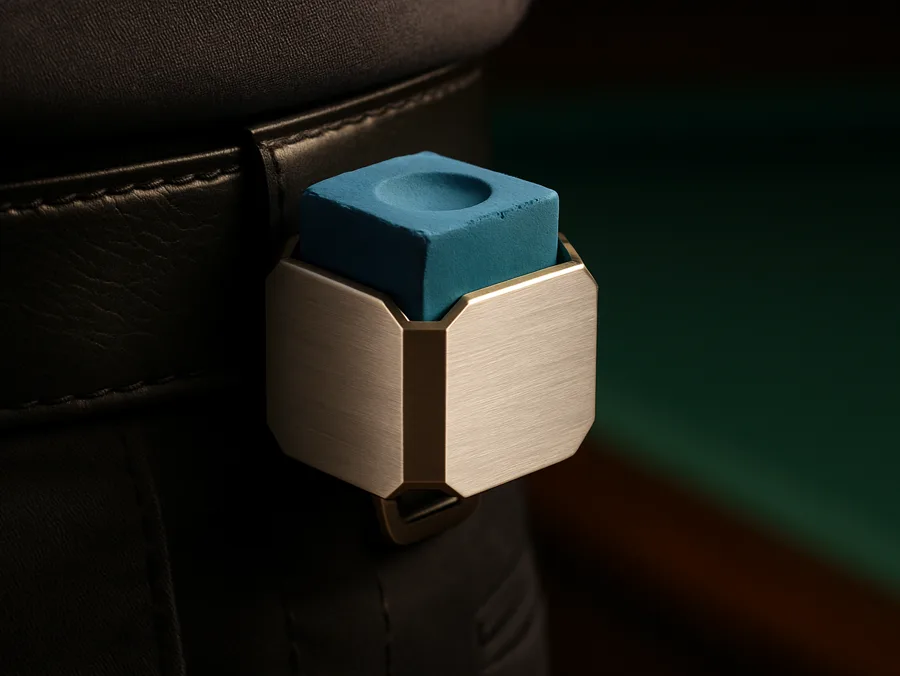
Octagon Magnetic Belt-Clip Chalk Holder
Chalking away from the tableHolds a standard cube on a magnetic clip at your belt or pocket, so your chalk goes where you go instead of sitting on the rail. It weighs 42 grams per the listing. The courtesy part is simple: you chalk while you walk to the shot, off the cloth, and nobody has to hunt for the cube.
Check price on Amazon
Predator Second Skin Billiard Glove
Replacing hand talc on shared tablesA breathable mesh bridge-hand glove with a low-friction surface for the cue to slide on and a non-slip pad at the heel of the thumb. It does the job hand powder does without leaving talc on the balls and cloth. Pick left or right hand (the glove goes on your bridge hand) and size by palm circumference from the listing's chart. CSI rules allow gloves.
Check price on Amazon
GSE Portable Bridge Head and Stick
Long shots without lying on the tableA 57-inch two-piece wooden bridge stick with a screw-on head that offers five cue positions and ABS feet to protect the cloth. It saves you from stretching across the table with a foot off the floor. In an APA match, remember the manual's rule: if your team brings its own bridge, the other team gets to use it too.
Check price on AmazonFrequently asked questions
What is sharking in pool?
Sharking is any deliberate attempt to make your opponent miss: talking during their stroke, moving in their line of sight, slow play to break their rhythm, or comments meant to plant doubt. WPA rule 3.16 lists distracting the opponent as unsportsmanlike conduct, and CSI rule 1-42 does the same.
Where should I stand when my opponent is shooting?
Ideally you sit. Otherwise stand still, away from the table and out of the shooter's line of sight, which includes the area behind the pocket they're aiming at. The APA's etiquette list asks for exactly that.
Is it rude to unscrew my cue before the game is over?
Yes, and it can cost you. Under WPA rule 1.12 unscrewing your cue during your opponent's deciding rack concedes the match, and under CSI rule 1-44 a motion to unscrew your cue while your opponent is on the hill loses the match. Wait until the last ball drops.
Can I say good game before the last ball is made?
Not in CSI play. Rule 1-43 treats "good game" or any hint that the game is over as conceding it. Wait until the game ends, then say it.
Should I call my own fouls in pool?
Yes. The APA's etiquette list says players with integrity call their own fouls and hand their opponent the cue ball without being asked. It's the standard in every league and in friendly games.
Is it rude to give advice during a game?
Unless they asked, yes. Unsolicited advice to an opponent or a stranger usually lands as criticism. In league play coaching has its own rules: APA uses time-outs, and under CSI's general rules receiving help with a shot is a foul.
Can I set my drink or chalk on the rail?
Drinks no: keep them on a side table, never on the table or rails. Chalk can sit face up on the wooden part of the rail, which the APA manual allows, but never on the cloth.
What does putting quarters on a pool table mean?
In a bar it reserves your turn on a coin-op table. Quarters line up on the rail in order, the challenger pays for the next game, and the winner stays on to play whoever is next. Some bars use a chalkboard list instead.
Related guides
LeaguePool is reader-supported. When you buy through links on this site we may earn an affiliate commission at no extra cost to you. As an Amazon Associate we earn from qualifying purchases.