
APA Skill Levels Chart: 8-Ball and 9-Ball Ranks Explained
Your APA skill level (most players just call it their APA rank or APA rating) is a single number that sets how many games you need to win in 8-ball or how many points you need in 9-ball. In 8-ball the scale runs 2 to 7. In 9-ball it runs 1 to 9. Every new member starts as a 3, and the league office moves you from there based on what your scoresheets show.
Below you'll find both handicap charts in full, how the Equalizer reads your matches, the team limits that make captains guard every point, and what to do when your number seems off.
APA skill levels at a glance
The APA keeps a separate rating for each format, so being a 4 in 8-ball and a 5 in 9-ball is normal. The APA doesn't publish a description of each level. The table below is our plain-language read of what the numbers tend to look like on a league night, so treat it as a rough guide, not an official definition.
| 8-ball SL | Rough 9-ball match | What it usually looks like |
|---|---|---|
| 2 | 1 to 2 | Still learning to make balls consistently; runs of two or three are a good night |
| 3 | 3 | Where every new member starts; makes open shots, cue ball control is hit or miss |
| 4 | 4 | Solid bar player; can string a few balls together and plays the odd safety |
| 5 | 5 | Plans two or three balls ahead, plays real safeties, wins racks in few turns |
| 6 | 6 to 7 | Runs out from open tables often; counts as a senior skill level for lineup rules |
| 7 | 8 to 9 | Top of the scale; frequent break-and-runs, and the strongest shooter in most rooms |
One thing that table can't show: the 7 is a wide bucket. A 7 who just crossed the line and a 7 who plays near open-tournament speed get the same race against you, because the 8-ball scale stops there. The 9-ball scale, with nine steps, separates strong players more finely.
The APA 8-ball skill level chart
APA calls this the Games Must Win chart, and a copy is printed on every 8-ball scoresheet. Find your skill level on the left, your opponent's along the top, and read the box where they meet. The first number is how many games you need; the second is what your opponent needs.
| Your SL | vs 2 | vs 3 | vs 4 | vs 5 | vs 6 | vs 7 |
|---|---|---|---|---|---|---|
| 2 | 2-2 | 2-3 | 2-4 | 2-5 | 2-6 | 2-7 |
| 3 | 3-2 | 2-2 | 2-3 | 2-4 | 2-5 | 2-6 |
| 4 | 4-2 | 3-2 | 3-3 | 3-4 | 3-5 | 2-5 |
| 5 | 5-2 | 4-2 | 4-3 | 4-4 | 4-5 | 3-5 |
| 6 | 6-2 | 5-2 | 5-3 | 5-4 | 5-5 | 4-5 |
| 7 | 7-2 | 6-2 | 5-2 | 5-3 | 5-4 | 5-5 |
The pattern is simple once you see it: the gap between the two race numbers always matches the gap between the skill levels. APA's own examples are an SL6 against an SL4 at 5 to 3, and an SL5 against an SL3 at 4 to 2. Look at the 2 against the 7, though. The 7 has to win seven games before the 2 wins two, which is why nobody in an APA room treats a low-rated opponent as a free point.
If your scoresheet chart ever disagrees with a table you found online (this one included), the scoresheet wins.
To look up any pairing fast, or to check a lineup against the 23 rule, use our free APA race calculator.
The APA 9-ball points chart
9-ball doesn't use a race in games. Each skill level has a points target, and the match ends when one player reaches theirs. Balls 1 through 8 are worth one point each and the 9-ball is worth two, so a rack holds 10 points.
| 9-ball SL | Points to win |
|---|---|
| 1 | 14 |
| 2 | 19 |
| 3 | 25 |
| 4 | 31 |
| 5 | 38 |
| 6 | 46 |
| 7 | 55 |
| 8 | 65 |
| 9 | 75 |
Because every ball counts, a lower-rated player scores even in racks they lose. An SL3 who makes four balls and then misses still banks four of their 25. That is the big practical difference from 8-ball, where a rack you lose counts for nothing on the race. APA 9-ball also has no push-out in handicapped play, which surprises players coming from open tournaments. For the game itself, see our 9-ball rules guide.
How the Equalizer sets your APA rating
The Equalizer is APA's handicap system, and the APA does not publish its formula. What the APA does say is that your Local League Office calculates and updates skill levels using your weekly scoresheet data, your win and loss record, results from higher-level tournaments, and the judgment of a Handicap Advisory Committee, plus other considerations it doesn't spell out.
The scoresheet is where your rating really comes from, so it helps to know what the scorekeeper records:
- Innings. An inning is complete when both players have had a turn at the table. Winning racks in fewer innings is the clearest sign of a stronger player.
- Defensive shots, marked for any shot where the shooter had no intent to legally pocket one of their own balls. A deliberate miss marked as a defensive shot doesn't count against the shooter the way a real miss would.
- Games won, time-outs taken, and special events such as an 8 on the break or a break-and-run.
Unofficial write-ups of the formula circulate on billiards forums (the best known describes innings per win, averaged over a player's better recent scores). They may be close, but the APA hasn't confirmed any of them, and they describe an older version of the system. Treat any spreadsheet that claims to predict your next skill level with suspicion.
Two official points matter for new players. Everyone starts at 3, and the current Official Team Manual treats a skill level as established once you have 10 league match scores in that format. If you already have an 8-ball rating, your 9-ball rating starts from it. Strong players who join cold can be placed higher, and the operator can also assign a lowest attainable level so a known shooter can't drift down.
Why your level goes up or down
Your skill level is recalculated as new scores enter your history, so it reflects a trend, not one night. Win efficiently for a few weeks and it climbs. Struggle for a stretch and it can come back down.
The confusing case is the bump that arrives right after a loss. Local APA offices explain it this way: your handicap is built from your better scores, so one loss probably won't drop you, and a close loss played in few innings can still help push you up. The number cares about how you play as much as whether you won.
A rising number is the system telling you your practice is working. It also means tougher races, and that is the whole point of a handicap. Players who fight it by playing badly on purpose rarely enjoy league night for long.
The 23 rule and other team limits
Skill levels also cap who a team can put on the table. In 8-ball and 9-ball Open divisions, the five players a team fields in a night cannot total more than 23. Other formats have their own caps:
| Format | Team skill level limit |
|---|---|
| 8-ball and 9-ball Open (five players) | 23 |
| 3-person 8-ball and 9-ball | 14 |
| Doubles | 10 (check local bylaws) |
| Masters | No limit (no handicap) |
Break the limit and your team gets zero points for the whole team match, not just the match where it happened. A team whose roster can't fit under 23 has to play four players totaling 19 or less and forfeit the fifth match.
A second rule sits on top of that one. Any player rated 6 or higher counts as a senior skill level, and a team can field no more than two senior players in a match. Put up a third and that player forfeits the match.
So the math gets tight fast. Two 7s and a 6 would already break the senior rule, and two 7s alone eat 14 of your 23 points, leaving 9 for three players. That is why honest 2s and 3s get played every week, and why captains spend league night doing lineup arithmetic. Our guide to how pool leagues work covers team nights in more detail.
Time-outs depend on your skill level too
In Open, Ladies and 3-person divisions, players rated 1, 2 or 3 (and unrated new players) get two coaching time-outs per game. Players rated 4 and up get one. Doubles matches allow one per game regardless of level, and Masters allows none. A time-out should take about a minute, and any eligible teammate can coach.
Use them. A minute of advice on a tricky safety or a cluster is worth more to a 3 than to a 6, which is exactly why the rule is built that way.
APA skill level vs Fargo rating
People searching for an APA rank often also want to know how it compares with FargoRate, the rating used by BCA Pool League and many tournaments. There is no official conversion between the two. FargoRate is an open-ended scale where a 100-point gap means the higher-rated player is about twice as strong; FargoRate says most league and tournament players fall between 200 and 700, with pros around 700 to 800. An APA skill level is a local, whole-number handicap built from your scoresheets in your own league area.
Forum posts share rough APA-to-Fargo charts, but they disagree with each other, especially at SL7. If you need a Fargo number, play in an event that reports to FargoRate. Our FargoRate guide explains how that system works, and APA vs BCA compares the two leagues that use them.
Sandbagging, and what to do if your number looks wrong
Sandbagging means keeping your rating low on purpose so you get easier races: dumping games, padding innings, or having deliberate misses go unmarked. Every one of those tricks runs through the scoresheet, which is why the APA stresses accurate scorekeeping on both sides of the table. League offices can override a rating, and higher-level tournaments review skill levels before events. For a former player's inside look at how it's done and how the APA catches it, read APA sandbagging: how players game the handicap.
If you think your own level is wrong, talk to your League Operator, not the opposing scorekeeper. The APA also asks members not to keep their own skill level records, so don't show up with a spreadsheet as evidence. Bring it up with the office and let them look at your history.
How to check your APA skill level
Your current ratings are in your APA Member Services account at league.poolplayers.com, along with stats, standings, schedules and rosters. The same information is in the free APA app (search Pool League in your phone's app store), and your 8-ball and 9-ball levels are printed next to your name on each week's scoresheet. If you play in more than one league area, tell each operator, since an established level follows you.
Mistakes new players make with skill levels
- Assuming a 2 or 3 is an easy win. Look at the chart: a 7 needs seven games against a 2.
- Not marking defensive shots. If you and the opposing scorekeeper skip them, both players' ratings drift.
- Skipping time-outs out of pride. Lower-rated players get two for a reason.
- Reading one loss as a demotion. Ratings move on a trend of better scores, not on a single night.
- Thinking the 8-ball number transfers to 9-ball forever. It only sets your starting point.
If you want the number to climb honestly, track your innings per rack in practice. Our practice drills and safety guide are the fastest routes to fewer trips to the table.
Sources
- APA: The Equalizer Handicap System (starting level, chart rules, 9-ball points)
- APA rules: Team Skill Level Limit
- APA rules: Limited Number of Senior Skill Level Players
- APA rules: Coaching and time-outs
- APA rules: How to Score 8-Ball
- APA: New Official Team Manual notable redlines (2026)
- FargoRate
LeaguePool is not affiliated with or endorsed by the American Poolplayers Association. APA and Equalizer are trademarks of their owner. Check your league's scoresheet and bylaws for the final word.
Our picks
Links open the current selection and price on Amazon so you can compare real reviews before buying.

Aramith Jim Rempe Training Cue Ball
Improving cue ball controlLevels climb when you win in fewer innings, and that comes down to cue ball control more than shot-making. The printed targets on the Rempe ball show exactly where you hit it, so follow, draw and spin stop being guesses.
Amazon price: $52.14 as of 12:30 PM EDT. Price and availability can change; Amazon’s price at purchase applies.
Check price on Amazon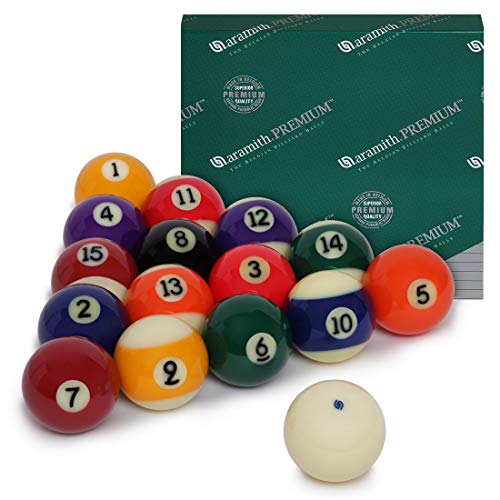
Aramith Premium Belgian Ball Set
Serious home practicePractice on a true-rolling phenolic set at home and the patterns you rehearse behave the same way on league night. Dead, dirty bar-box balls teach you bad habits without ever telling you.
Amazon price: $213.62 as of 12:30 PM EDT. Price and availability can change; Amazon’s price at purchase applies.
Check price on Amazon
Wooden Bead Score Keeper
Tracking races at homeRunning APA-style races at home, a 3 against a 5 or a 2 against a 7, works better when you keep score the way league night does. A bead counter on the wall makes it a habit instead of a guess.
Amazon price: $39.99 as of 12:28 PM EDT. Price and availability can change; Amazon’s price at purchase applies.
Check price on Amazon
The 99 Critical Shots in Pool
Learning the shots that cost inningsEvery extra trip to the table shows up in your rating. Working through the standard shots in this book is a cheap way to stop giving away innings on the ones you already see every week.
Amazon price: $21.31 as of 12:30 PM EDT. Price and availability can change; Amazon’s price at purchase applies.
Check price on AmazonFrequently asked questions
What skill level do new APA players start at?
Skill level 3, in both 8-ball and 9-ball. The APA says all new players start as a 3, though a League Operator can place a known strong player higher. The current team manual treats your level as established after 10 league match scores, so expect movement in your first weeks.
What is the highest APA skill level?
7 in 8-ball and 9 in 9-ball. The lowest is 2 in 8-ball and 1 in 9-ball.
What is a good APA skill level?
A 5 in 8-ball is a strong league player who plans ahead and plays safeties, and a 6 or 7 is among the best players in most rooms. That said, the handicap is built so a 3 can beat a 7, so a good level is mostly an honest one.
Is an APA rank the same as an APA rating or skill level?
Yes. Players use rank, rating, handicap and skill level (SL) interchangeably. The APA's official term is skill level, and there is no separate tier or ranking system for league players.
What is sandbagging in the APA?
Holding your skill level down on purpose, for example by dumping games, padding innings or leaving deliberate misses unmarked, so you get easier races. League offices can override ratings, and tournament skill levels are reviewed before events.
Why did my skill level go up after I lost?
Your rating comes from a run of your better scores, not tonight's result alone, and it weighs how efficiently you play. A close loss in few innings, on top of a few good weeks, can be enough to move you up.
What does skill parity mean in pool leagues?
It means giving players of different ability an even chance to win. In the APA the Equalizer does that by giving the lower-rated player a shorter race in 8-ball or a smaller points target in 9-ball.
Can I see the APA handicap formula?
No. The APA keeps the Equalizer formula private and asks members not to keep their own skill level records. Versions posted on forums are unofficial.
Related guides
LeaguePool is reader-supported. When you buy through links on this site we may earn an affiliate commission at no extra cost to you. As an Amazon Associate we earn from qualifying purchases.