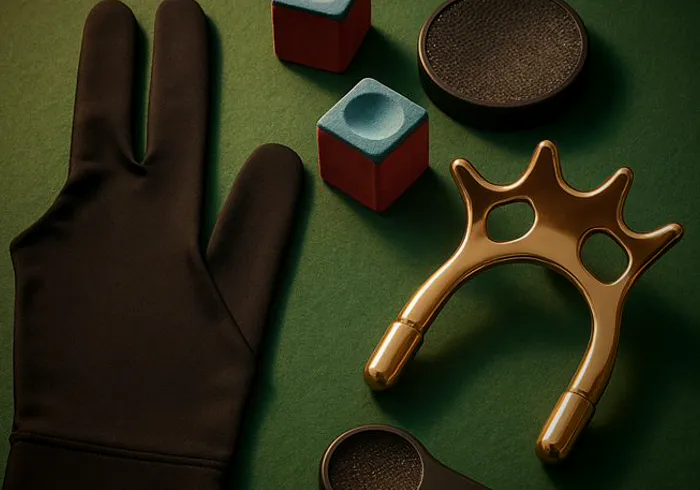
Pool League Gear Checklist: What to Bring on League Night
Pack the night before: your playing cue, a break cue if you own one, two cubes of your own chalk, a tip tool, a glove or towel, joint protectors, and your dues and phone. All of it fits in a 2x2 case. The players who look calm at the table are usually the ones who pack the same case the same way every week.
Below is the full pool league gear checklist, what APA and BCA rules let you use at the table (some of it surprises people), and the prep habits that matter as much as the gear.
The pool league gear checklist
| Item | Must or nice | Why |
|---|---|---|
| Playing cue | Must | Same weight, tip and taper every week. Check the joint and tip before you leave. |
| Break cue or break-jump cue | Strongly recommended | Saves your playing tip from break-speed hits |
| Chalk, two cubes | Must | House chalk is often hollowed out, missing or the wrong color |
| Chalk holder | Nice | Keeps your chalk on you instead of on someone else's table |
| Tip tool | Must | A quick scuff when the tip glazes over |
| Glove or small towel | Must for sweaty hands | A consistent slide on a humid night |
| Microfiber cloth | Must | Wipes chalk and hand oil off the shaft |
| Joint protectors | Nice | Keep the pin and threads clean inside the case |
| Spare tip or a backup shaft | Nice | A tip that pops off mid-match ends your night without one |
| Cue extension or bridge head | Nice | Bars rarely have a decent bridge |
| Dues, membership card, phone and charger | Must | Scorekeeping and stats live in the league app |
| Cash or quarters | Depends on the room | Coin-op tables, and food |
| Water and a snack | Nice | League nights run long; you may sit an hour before you play |
It looks like a lot written out. Packed once, it stays packed, and the only things you touch each week are the chalk, the towel and the dues.
What the league rules let you bring to the table
Gear is part of the rules, and the two biggest leagues handle it differently. Check your local bylaws too, since operators can add their own.
| Item | APA league play | BCA Pool League (CSI rules) |
|---|---|---|
| Break cue | Allowed for breaking; jumping or masse with it only in Masters | Allowed if it meets CSI cue specs |
| Jump cue | Masters divisions only. A regular playing cue may be used to jump. | Allowed if it meets CSI cue specs |
| Bridges and cue extenders | Legal | Extenders legal; no more than two mechanical bridges at once |
| Glove | Not addressed on the APA equipment page | Allowed (rule 1-3) |
| Your own chalk | Not addressed on the APA equipment page | Allowed if it closely matches the cloth color; warning, then foul |
| Training aids, lasers | Banned in league play | Aligning a shot with anything but your own cue, or measuring a gap with equipment, is a foul |
| Earbuds, phone | Check your local bylaws | No earbuds or headphones, even switched off; phone may not be used during your game in team play |
| Cue specs | Not specified on the equipment page | Max 25 oz, at least 40 in long, tip no wider than 14 mm |
Two practical takeaways. In APA, you can't break down your playing cue to jump; jump with the full cue or don't jump. In BCA play, that bright green chalk on a blue tournament cloth can earn a warning, so carry a cube that matches the cloth your league plays on. The full rule differences are in APA vs BCA pool leagues.
Which cue case to carry
A 2x2 hard case (two butts, two shafts) is the league standard: playing cue and break cue, with pockets for the small stuff. Carry a 1x1 only if you'll never own a break cue. A 2x4 or 3x5 makes sense when you carry extra shafts or a separate jump cue, but it's a lot of case to wedge between bar stools.
Players who've been at it a while often strip down for league nights in crowded bars: one player cue and one break-jump cue in a slim tube case, with the expensive cue left at home for pool halls. That's worth thinking about if your league room is packed and your cue is worth more than the bar tab. The case guide covers hard vs soft and sizing: best pool cue cases.
Why a break cue belongs in the case
Breaking with your playing cue slowly wrecks the tip. Break-speed hits compress and flatten a soft or medium tip, which changes how it holds chalk and how it grips the cue ball on spin shots. A dedicated break cue with a hard or phenolic tip takes that abuse instead. If your league allows it, a break-jump cue does both jobs in one slot; in APA play outside Masters, though, you can break with it but not jump with it. See phenolic vs leather break tips for the tip choice.
Chalk and tip habits
Chalk before every shot. A miscue on a routine draw shot in a hill-hill match is almost always a chalk problem or a glazed tip. Carry your own cubes, because bar chalk is often worn into a crater. A magnetic holder on your belt keeps your chalk with you and off the rail. And don't set chalk on the rail as an aiming mark: under CSI rules, marking the table is a foul.
Check your tip under the table light before your first match. If it looks shiny, scuff it lightly so it holds chalk. If the edges have mushroomed over the ferrule, trim and shape it at home, not five minutes before you play. Tip work on league night should be maintenance, never surgery. How to scuff and shape a cue tip covers the technique, and how to chalk a pool cue covers the habit.
Sticky hands: glove, towel or hand chalk
Bar rooms in summer are humid, and a bridge hand that grabs the shaft ruins a stroke. A glove fixes it with no mess and lives in the case weighing nothing; CSI rules allow one outright. A small towel and a wipe-down between racks works for some players. Hand chalk and talc work too, but a cloud of powder on a shared table annoys everyone. Our hand chalk guide covers how to use it neatly, and pool gloves covers fit and which hand (the bridge hand, opposite your shooting hand).
Before your first match
Arrive fifteen to twenty minutes early if the room allows practice. Hit a few long straight-in shots and stop shots to calibrate your stroke, because bar tables roll differently from whatever you practice on. Note the pocket speed, whether the rails play short or long, and any roll-off. Then stop, since some formats restrict practice once matches start: in CSI tournament play, practicing during your match is a foul.
Eat before you play, go easy on the drinks until your matches are done, and keep the phone in your pocket during your set. Know the format before you arrive. A race, a round robin or handicapped points each change how aggressive you should be early, and asking mid-match makes you look unprepared.
In APA play, know the time-out rules too: skill levels 1 to 3 (and new, unrated players) get two time-outs per game, skill level 4 and up get one, and Masters gets none. The coaching itself should take a minute or less. APA skill levels explained covers the ratings.
Etiquette that travels with the gear
Sit still and stay quiet when your opponent is shooting, and stand out of their sightline. Don't set drinks on the rail or chalk over the cloth. Shake hands the same way win or lose. League operators remember the players who keep matches moving, pay dues on time and help newer teammates keep score. More in pool etiquette and how to keep score.
Repack before you leave the bar
Everything goes back in the same pocket every time, before you walk out, not the next morning. Do that and next week's checklist takes thirty seconds instead of a search through last week's jacket.
New to leagues entirely? Start with how pool leagues work, then come back to this list the night before your first match.
Sources
- APA official rules: Equipment
- APA official rules: Coaching and time-outs
- APA: Join the league (teams, Member Services, app)
- CueSports International: Official Rules, used by the BCA Pool League (rules 1-3, 1-4, 1-8, 1-39 and equipment specifications)
Our picks
Links open the current selection and price on Amazon so you can compare real reviews before buying.
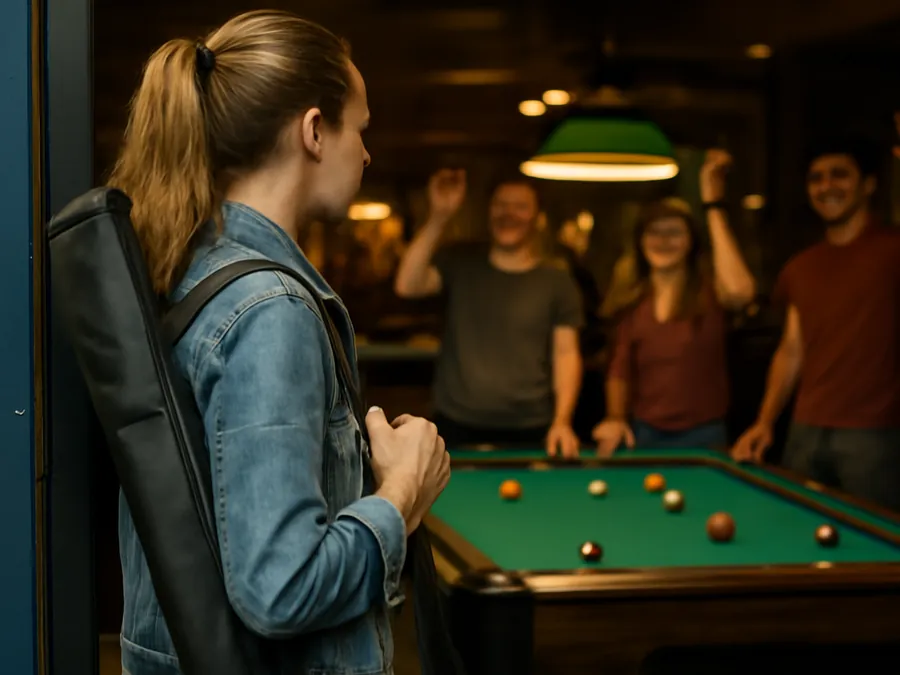
HAN'S DELTA 2x2 Hard Oval Cue Case
Carrying a playing and a break cueHolds two butts and two shafts in divider tubes that run the full length of the case, with a 14 inch pocket and a 6 inch pocket for chalk, glove and tools. At 32 inches long with a shoulder strap, it's easy to tuck beside a bar stool.
Check price on Amazon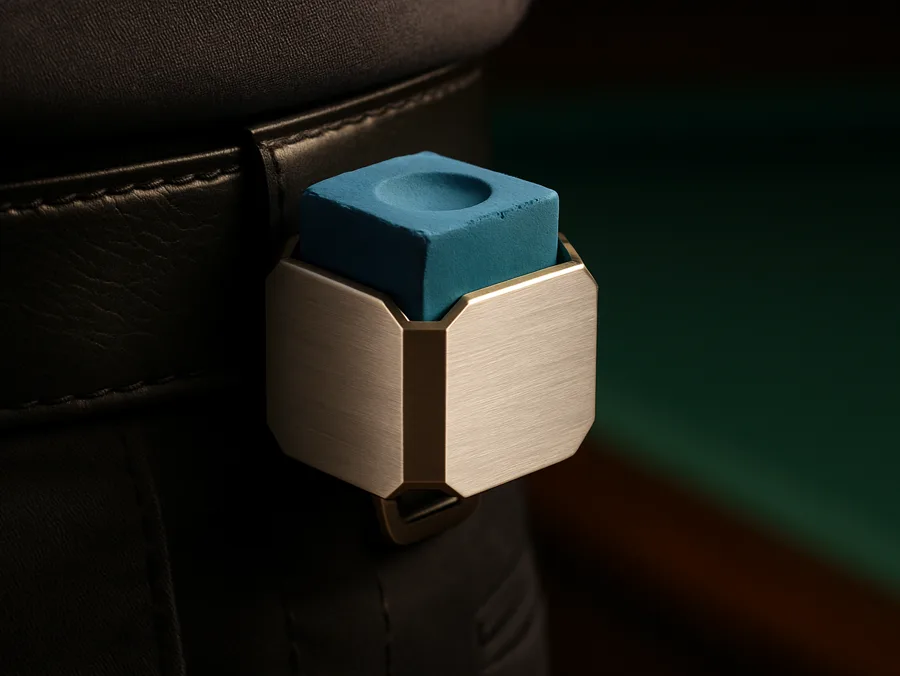
Octagon Magnetic Belt-Clip Chalk Holder
Keeping your chalk on youA light plastic holder with a magnetic belt clip, sized for standard square chalk. It keeps your cube on your hip between shots instead of wandering off down the rail. Premium round or octagon chalk needs its own holder.
Check price on Amazon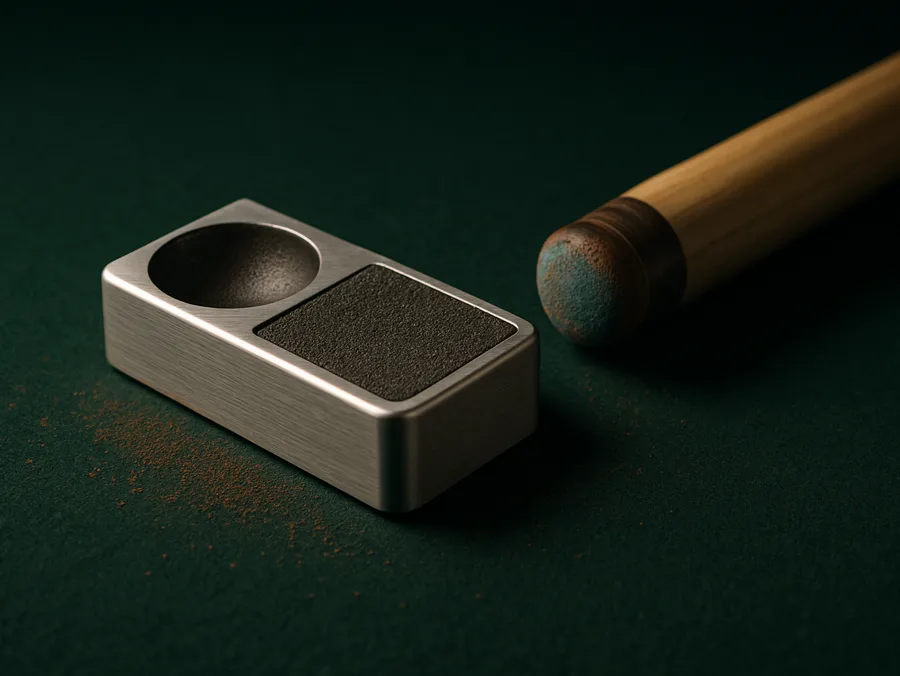
Cue Cube 2-in-1 Tip Shaper and Scuffer
Tip touch-ups between matchesMade in the USA from solid metal and silicon carbide, with a shaper side and a scuffer side. Pick the Nickel radius for the original profile or the Dime for a tighter curve that also keeps the shaper off your ferrule.
Check price on Amazon
Predator Second Skin Billiard Glove
Humid league roomsBreathable mesh with a low-friction surface where the shaft slides and a non-slip pad at the heel of the thumb. Sold in left or right hand and several sizes, so order your bridge hand.
Amazon price: $32.00 as of 3:18 PM EDT. Price and availability can change; Amazon’s price at purchase applies.
Check price on Amazon
McDermott Joint Protector Set, 3/8
McDermott ownersA heavy-duty plastic pair for the butt and shaft that keeps dirt out of the threads in the case. It fits McDermott cues with the 3/8 joint only; for other cues, match the protector to your joint.
Check price on AmazonFrequently asked questions
What should I bring to pool league night?
Your playing cue, a break cue if you have one, two cubes of your own chalk, a tip tool, a glove or towel, joint protectors, your dues and a charged phone for the league app. A 2x2 hard case holds all of it.
Do I really need my own cue for league?
You can play with house cues, but your own cue gives you the same weight, tip and taper every week. That removes one variable, so a miss is about your stroke, not the stick.
Can I use a jump cue in an APA league?
Only in Masters divisions. In other APA divisions you can break with a break cue but not jump with it; you may jump with your regular playing cue, as long as you don't break it down to make it shorter.
Is a glove allowed in league play?
Yes in BCA Pool League play, where CSI rule 1-3 allows a billiards glove. The APA equipment rules page doesn't restrict gloves; check your local bylaws if you're unsure.
Does chalk color matter in league?
Under CSI rules used by the BCA Pool League, your own chalk must closely match the cloth color. The first offense is a warning, the next is a foul. Carry chalk that matches your league's tables.
Can I wear earbuds during a league match?
Not under CSI rules, which ban headphones and earbuds during a match even when they're off (hearing aids are fine). For APA leagues, check your local bylaws.
How early should I show up on league night?
Fifteen to twenty minutes before start time is a good target. It leaves time to warm up on the actual table, check your tip and chalk, and settle in before your first rack.
Related guides
LeaguePool is reader-supported. When you buy through links on this site we may earn an affiliate commission at no extra cost to you. As an Amazon Associate we earn from qualifying purchases.