How to Curve a Cue Ball: Masse and Swerve Shots
To curve a cue ball, raise the butt of your cue, hit down on the cue ball on the side you want it to bend toward, usually a little below center, and stroke smoothly through at the right speed. Hit right of center and the ball first squirts slightly left, then hooks right once the spin grabs the cloth. A small bend with a modestly raised cue is a swerve or semi-masse; a near-vertical cue and a big hook is a full masse.
The shot follows rules you can learn: where the curve ends up pointing, why speed changes where it bends, and why cloth matters. Below is the physics in plain terms, an aiming method from the early 1800s, a practice plan, and what the league rule books say about masse.
How the curve works
When you strike down on the cue ball off center, the spin axis tilts. The ball starts out sliding on the cloth, and while it slides, friction from the cloth pushes it sideways in the direction of the spin. Once the spin and the ball's motion match up and it starts rolling, the curve stops and the ball runs straight. Dr. Dave Alciatore's swerve pages state it simply: swerve only happens while the ball is sliding.
That gives you three controls:
| Change | What the curve does |
|---|---|
| More cue elevation | Sharper curve, and the ball leaves slower, so it bends sooner |
| More speed | Curve starts later; the ball runs farther before bending, but ends on the same final line |
| Farther from center | More spin, more curve (stay inside the miscue limit) |
| Lower on the ball (draw) | Bends later and through a bigger angle than a follow hit |
| Sticky or old cloth | Curves earlier and shorter; slick new cloth lets it run longer first |
One thing surprises beginners: the ball first goes the wrong way. Hit right of center and squirt sends it slightly left before the curve pulls it right. With small curves, aim well outside the blocking ball to allow for that.
Bob Jewett, quoted on Dr. Dave's masse page, adds a cloth tip: on old cloth the cue ball tends to stick when it's driven down, which kills the action and can rip the cloth. A waxed or very clean cue ball behaves more like it does on new cloth.
Swerve, semi-masse and full masse
These are the same physics at different elevations, and players use the names loosely. Americans often say "curve shot"; the British say "swerve."
- Swerve. A modest cue elevation and some low side, to bend the cue ball a few inches around the edge of a ball. This is the one you'll use in league play. It also happens by accident: any english with a raised cue swerves a little, which is why long english shots drift. That side of it is covered in how to use english.
- Semi-masse. A steeper cue and a curve you can plainly see, for getting around a ball that blocks most of the path.
- Full masse. The cue nearly vertical, the stroke driving down through the ball. The cue ball can hook sharply around a ball only inches away, or even curve back toward you. Rarely the percentage shot in a game.
We don't give exact degree ranges because the sources we checked don't agree on them, and the right elevation depends on how close the blocker is and how far you need to go. Dr. Dave's advice is the useful part: use as little elevation as the shot needs, because more elevation raises the risk of jamming the ball into the table, while too little forces you to aim so low on the ball that you miscue.
How to aim a masse: the Coriolis BAR method
In the early 1800s the physicist and mathematician Gustave Coriolis, the same Coriolis whose effect helps explain hurricanes, worked out where a curving cue ball ends up. Dr. Dave calls his method BAR:
- B is the spot where your tip contacts the cue ball.
- A is where the cue's line, extended down through the ball, would hit the cloth.
- R is the spot where the cue ball rests.
- Once the curve finishes, the cue ball travels parallel to the line from R through A.
So you plan the shot backward. Decide the final direction the ball must travel after it curves, picture a line through the cue ball's resting spot in that direction, then choose an aiming line that clears the blocker. Where your cue's vertical plane crosses the R-A line is your aim point on the cloth. Any mix of elevation and contact point that targets that spot gives the same final direction, so pick the most comfortable one.
Two corrections from Dr. Dave's testing. On real cloth the curve usually comes up a little short of the predicted line, so aim for slightly more curve than the method says. And speed doesn't change the final direction, only how far the ball travels before it gets there. Too soft and it bends early into the blocker; too hard and it bends too late and goes long.
Step by step: curving the cue ball around a blocker
- Check the room's rules first, and if it's your own table, know the cloth's condition.
- Chalk thoroughly. A miscue on a steep downward stroke is exactly the improperly executed masse the APA glossary warns can damage a table.
- Decide the final direction and aim line (BAR, above). Aim well outside the blocker to allow for squirt.
- Raise the butt only as much as the curve needs. For a swerve, a little more than normal is often enough.
- Build a high, stable bridge. Dr. Dave lists it as the key to a smooth, fast stroke with an accurate contact point.
- Place the tip on the side you want to curve toward, a little below center for most shots.
- Keep your grip light and stroke smoothly through the ball. Don't stab, and don't scoop under it.
- Judge speed by distance: firmer to carry the ball past the blocker before it bends, softer to bend it early.
If the cue ball goes straight, you were too close to center or too level. If it bends into the blocker, you hit too softly or aimed too tight. If it hops, you used more elevation than the shot needed.
A practice plan that doesn't wreck the cloth
Start with swerve, not full masse. It's the shot you'll use, and it's easier on the table.
- Bend with nothing in the way. Put the cue ball near a long rail and shoot toward the far end with a slightly raised cue and low side. Watch where it starts to bend at three speeds.
- One blocker. Put an object ball a diamond in front of the cue ball, slightly off line, and a target ball a few diamonds beyond. Bend around the edge and hit the target.
- Move the blocker closer. Each time you make it three times running, move the blocker a little closer, which forces more elevation and less speed.
- Only then try steep shots, and keep the reps short.
A marked cue ball shows the spin axis tilt as it travels, which makes the link between contact point and curve easy to see (see our training cue ball guide). Brush the chalk dust off the cloth when you're done.
Masse, jump or kick?
When a ball blocks your path you usually have three options. Here's how to choose:
| Situation | Best choice | Why |
|---|---|---|
| Blocker covers only part of the path, target close behind it | Swerve | Small curve, normal cue, no airborne ball |
| Blocker is a ball or two away and covers the whole path | Jump | Easier to aim than a big curve; see how to jump the cue ball |
| Clear path to a rail, and a miss leaves little | Kick | Most predictable for most players; see kick shots |
| Blocker frozen or very close, room allows it | Semi or full masse | Sometimes the only legal way to hit the ball |
Dr. Dave's example of a small-curve shot makes the case for swerve: a jump there risks the cue ball hitting the object ball while still airborne and leaving the table, which is a foul, while a modest swerve gets around the blocker with the ball on the cloth. Under APA rules below Masters, you can't use a jump cue at all, so a masse or a jump with your playing cue are the only ways over or around a ball.
Is the masse legal? APA, CSI and WPA rules
Yes, under all three. Where it isn't allowed, that's the room's rule, and the room wins.
| Rules | Masse allowed? | Details |
|---|---|---|
| APA (Official Team Manual) | Yes, with your regular shooting cue at every level | General Rule 29: break and jump-break cues may be used for masse or jump shots only in Masters divisions. The manual also says if a host location's house rules prohibit masse and jump shots, house rules prevail. |
| CSI / BCAPL | Yes | Defines a masse as extreme spin from raising the butt, or any attempt to curve around an impeding ball. Under rule 1-34, if you masse around an impeding illegal object ball and it moves during the stroke, that's a foul even if your cue or body moved it. Cues must have a tip no wider than 14mm, weigh 25 ounces or less and be at least 40 inches long. |
| WPA (world rules) | Yes; not mentioned by name | A masse is a normal stroke, so the usual fouls apply: hitting the cue ball twice (3.7) or prolonged tip contact, a push (3.8). Players may switch between break, jump and normal cues (1.4). |
The APA glossary adds a line every room owner agrees with: extreme masse shots, improperly executed, can damage tables and equipment. That's why some rooms post no-masse signs. Ask before you shoot one in a bar or hall, even in a league match where the rules allow it.
Cues for masse: do you need a special one?
Not for swerve or the occasional semi-masse. Your playing cue is fine. A few things are worth knowing, though:
- Dr. Dave notes that masse and jump shots can be harder with some low-deflection shafts, especially maple ones with a soft tip. If your LD shaft won't bend the ball, it isn't only you.
- For power masse, he says most players prefer a softer tip: it grabs the ball and holds it against the slate longer, while a hard tip is more likely to bounce off.
- Dedicated masse cues are shorter, heavier and stiffer with a bigger tip. Bob Jewett describes the artistic-billiards version as roughly 50 inches, 24 ounces, with a soft 14 to 16mm tip. Retail examples we checked: the Action masse cue at 46 inches, 25 ounces with a 14mm soft tip (Ozone Billiards' listing), and the Jacoby masse cue with a 14mm, 27-1/2 inch maple shaft at 19.5 to 20 ounces (Seybert's).
If you play CSI events, check those numbers against CSI's cue limits: a tip wider than 14mm or a cue heavier than 25 ounces isn't legal there. In APA play, the equipment rule lists jump, break and regular shooting cues, and below Masters only the regular cue may masse, so use your playing cue. For jump cues, see best jump cues.
Sources
- Dr. Dave Alciatore: masse shot resources, including aiming, technique, elevation and speed and cue and tip
- Dr. Dave: VEPS GEMS Part XVI, The Masse Shot (Billiards Digest, April 2011)
- Dr. Dave: squirt, swerve and throw effects and swerve factors
- Dr. Dave: low-squirt shafts (masse and jump drawbacks)
- APA Official Team Manual (house rules, General Rule 29, glossary)
- Official Rules of CueSports International (definitions, rule 1-34, cue specifications)
- WPA Rules of Play, January 2026 (1.4, 3.7, 3.8)
Our picks
Links open the current selection and price on Amazon so you can compare real reviews before buying.

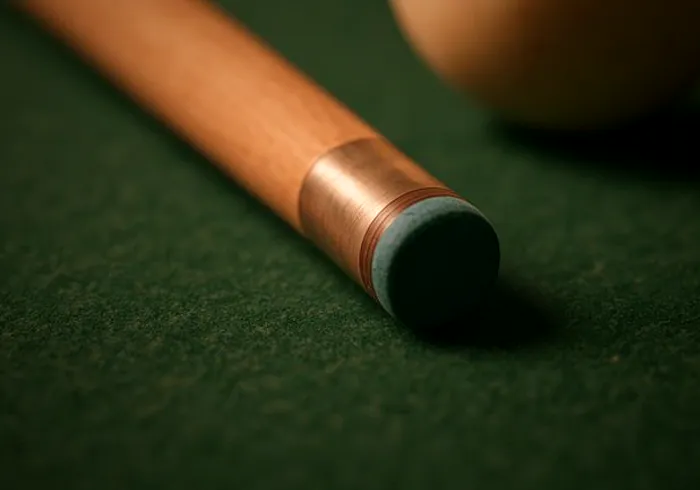
ASKA L2 58-Inch Maple Cue
A cheap cue for masse practiceA plain 19-ounce Canadian maple cue with a 29-inch pro taper shaft, 13mm glued-on hard tip and stainless 5/16x18 joint. Dr. Dave notes masse can be harder with some low-deflection shafts, and this is a plain maple shaft; practicing on a spare cue keeps steep strokes away from your good ferrule. A hard tip grabs less on power masse, so stick to swerve and semi-masse with it, or have it retipped softer.
Check price on Amazon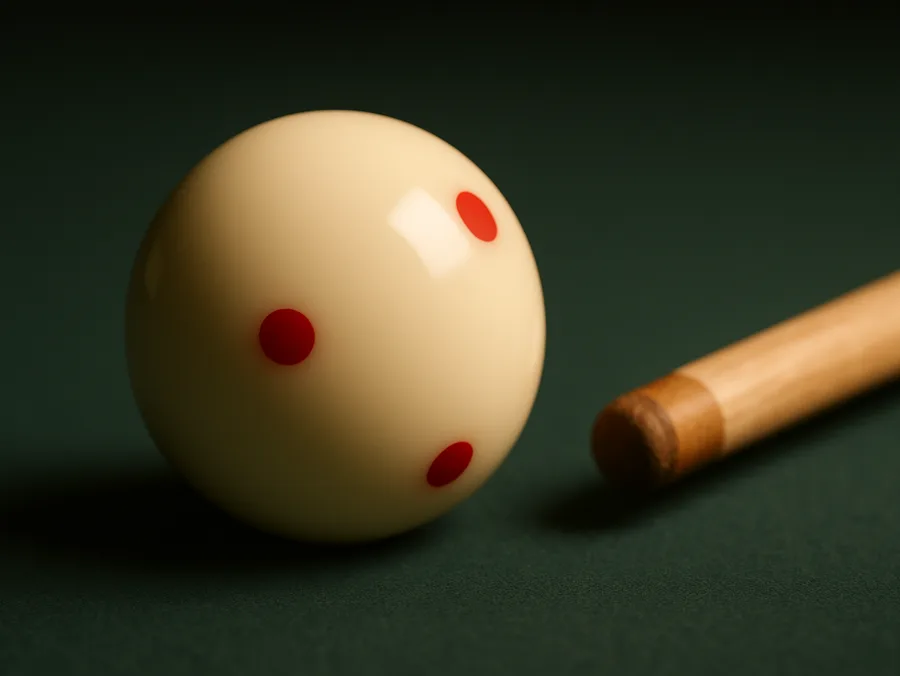
6-Dot Measle Training Cue Ball
Seeing the spin axis tiltA regulation 2-1/4 inch, 6-ounce phenolic cue ball with six embedded dots. Watch the dots as the ball curves and you can see the tilted spin axis that makes a masse bend, and how it settles into a straight roll when the curve ends.
Check price on Amazon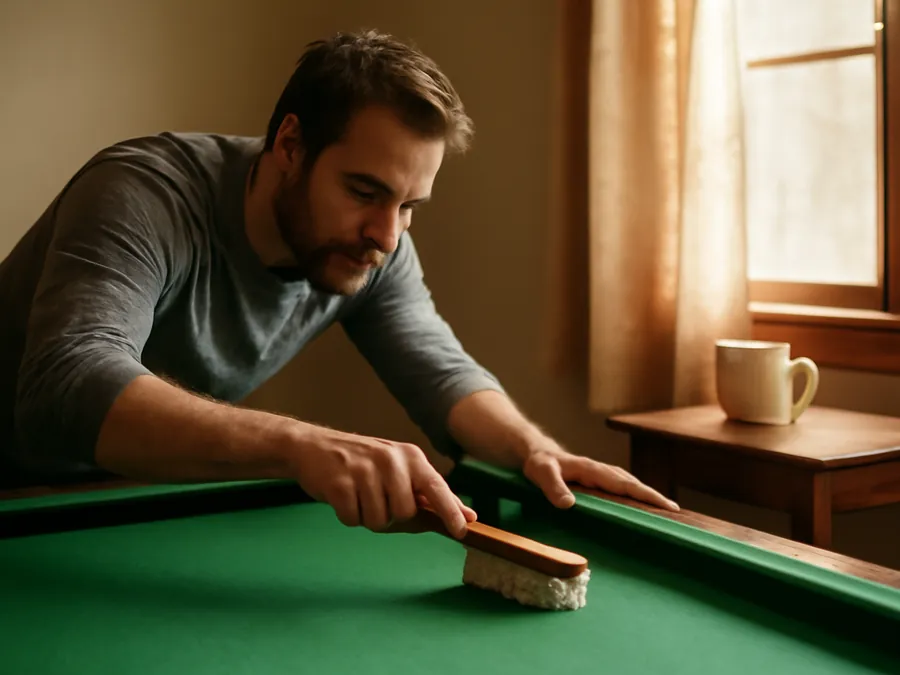
Tiekerbilir Pool Table and Rail Brush Set
Cleaning up after practiceA wooden table brush and a rail brush with dual-length nylon bristles that reach under the cushion lip. Brush the chalk dust off after a practice session so it doesn't work into the cloth.
Check price on AmazonFrequently asked questions
How do you curve a cue ball?
Raise the butt of the cue, hit down on the cue ball on the side you want it to curve toward, slightly below center, and stroke smoothly. Hit right to curve right. Use as little elevation as the curve needs and adjust speed so the bend happens where you need it.
What is a masse in pool?
A shot that curves the cue ball by hitting down on it off center with a raised cue. A small curve is usually called a swerve or semi-masse; a near-vertical cue with a sharp hook is a full masse.
Why does my cue ball go the wrong way first?
Squirt. An off-center hit pushes the cue ball slightly away from the side you struck before the spin grabs the cloth and curves it back. Aim outside the blocker to allow for it.
Is a masse shot legal in APA?
Yes. APA allows masse shots with your regular shooting cue at every level; break and jump-break cues can be used for masse only in Masters. If the room's house rules ban masse shots, the house rules win.
Can a masse shot damage the table?
It can. The APA glossary warns that extreme masse shots, improperly executed, can damage tables and equipment, and worn cloth is the most likely to tear. Chalk every time, use the least elevation that works, and ask before practicing on someone else's table.
Why does my curve happen too early or too late?
Speed and cloth. A softer hit or sticky cloth makes the ball bend sooner; more speed or slick cloth delays the bend. The final direction stays about the same, so change speed rather than aim.
Can I masse with a carbon or low-deflection shaft?
Usually, but some low-deflection shafts make masse and jump shots harder, especially maple ones with a soft tip. Start with small swerve shots and see how much your shaft bends the ball before trying steep ones.
Related guides
LeaguePool is reader-supported. When you buy through links on this site we may earn an affiliate commission at no extra cost to you. As an Amazon Associate we earn from qualifying purchases.