Why Does My Cue Miscue? Causes, Fixes and the Rules
A miscue happens when the tip slides off the cue ball instead of gripping it. The WPA rule book defines it almost exactly that way and names the two usual culprits: a hit too far from center, or not enough chalk on the tip. Nearly every miscue comes down to one of those two, made worse by a tip that has gone slick or flat.
The useful number is the miscue limit. Dr. Dave Alciatore's measurements put it at about half the cue ball's radius from center. Inside that, a properly chalked tip grips. Outside it, nothing helps. The rest of this page is how to tell which side of that line your miscues are on, and what to fix first.
What a miscue is (and what it looks and sounds like)
WPA rule 2.11 describes a miscue as the tip sliding off the cue ball, usually with a sharp sound and a discolored spot on the tip. Dr. Dave's high-speed video adds a detail most players never see: in most miscues the tip slides and then the tip or the side of the shaft hits the ball a second time. That second contact is likely where the ugly slapping sound comes from.
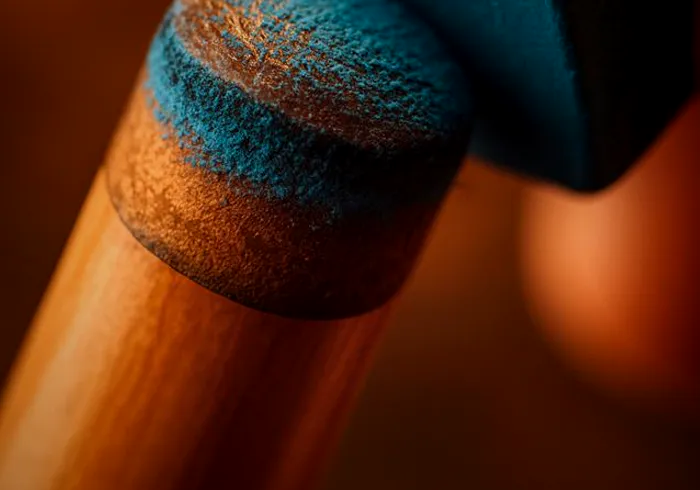
So the evidence is easy to read. Look at the tip right after a miscue. A bright blue smear near the edge tells you where you hit. Then look at the cue ball: a clean chalk mark well out from center says you reached too far, and no mark at all says there wasn't enough chalk to grip.
The miscue limit: how far off center you can hit
Dr. Dave puts the miscue limit at about half the cue ball's radius from center, and he calls that point 100% English. On a regulation 2-1/4 inch ball that works out to about 9/16 inch from center (our arithmetic). His tip-shape page puts it another way: about 30 degrees around the ball, or roughly three to four chalk-mark widths from center, where one chalk mark is about 4mm.
| Tip offset | Roughly | What happens |
|---|---|---|
| 1 chalk mark from center | About 5/32 inch | Safe. Plenty of spin for most position play. |
| 2 chalk marks | About 5/16 inch | Firm spin, still well inside the limit. |
| 3 to 4 chalk marks | About half the radius | The miscue limit. Maximum spin. |
| Past that | The tip slides no matter how well it's chalked. |
Here's the part that should change how you play: near the limit you gain very little extra spin for a lot more risk. Dr. Dave notes that close to the edge you also get more squirt, and a stiff shaft can double-hit or push the ball. Backing off half a tip costs you almost nothing in action and removes most of your miscues. Practical spin is covered in how to use English.
Fix these in order
Work through the list top to bottom. Each step is cheaper and quicker than the next.
- Chalk. Chalk before every shot that uses spin, and look at the tip afterward to make sure the whole contact area is covered, edges included. Brush it on with light strokes; don't grind the cube. Dr. Dave found that once you chalk before every shot, the brand doesn't seem to matter. Technique is in how to chalk a pool cue.
- Tip texture. A glazed, shiny tip won't hold chalk however well you apply it. Tap or lightly scuff it until chalk sticks again.
- Tip shape. A flat tip miscues sooner because you end up striking with its square edge. Restore a dome (how to scuff and shape a cue tip).
- Where you aim. If the tip and chalk are fine, you're hitting past the limit. Aim one chalk mark closer to center.
- Stroke. If you're hitting a spot inside the limit and still miscuing, the tip isn't arriving where you aimed. See below.
Also check for a skid mark. Dr. Dave notes a tip carries a mark after a miscue that can cause another bad hit, so scuff that spot before the next shot.
Why you only miscue on draw shots
Draw is where most players reach past the limit without knowing it. Two reasons. The bottom of the ball is hard to see over the cue, so your idea of "low" drifts lower than you meant. And a jacked-up cue over a rail or ball steepens the angle, so the tip meets the ball at a glancing slope.
Dr. Dave's guidance on elevation is to raise the cue only enough to clear the rail and still hit low enough to avoid a miscue. "Keep the cue level" is the usual advice; "as level as the rail lets you" is the accurate version. Practice with a striped ball or a marked training ball so you can see where the tip actually lands. Our draw shot guide covers the stroke itself.
Why you miscue on English
Side spin miscues usually come from a stroke that steers. If the cue swerves sideways during the stroke, the tip lands farther out than you aimed. A tight grip, a stroke that isn't straight through, and a back hand that swings away from the body all do it. Film a few strokes from the front; if the tip moves sideways at contact, that's your miscue.
Squirt adds to the confusion. At extreme English the cue ball pushes off line, players aim to compensate, and the habit of reaching out for more spin grows. For most shots, one or two chalk marks of English is all the job needs.
Myths about miscues
- Premium chalk raises the miscue limit. It doesn't. Dr. Dave measured no difference in miscue limit between brands. In his test of shots before a miscue after one chalking, some chalks held up longer (Kamui 15 shots, Master 8), which matters only if you skip chalking. Details in premium chalk compared.
- Soft tips let you hit farther off center. Dr. Dave found no difference in miscue limit between soft and hard tips when both are chalked properly. A hard tip that has glazed over does miscue more, because it holds chalk worse. More in soft vs hard cue tips.
- A dime radius prevents miscues better than a nickel. At maximum spin, the contact points of a dime and a nickel crown are less than 1/32 inch apart. Shape matters when the tip is flat, or when it's very small (a 10mm tip needs a dime).
- A low-deflection shaft gives more spin. It reduces squirt; it doesn't move the miscue limit. See low-deflection shafts explained.
Is a miscue a foul?
Not by itself, in any of the three major rule sets. What can make it a foul is a second contact, or doing it on purpose.
| Rules | Plain accidental miscue | When it becomes a foul |
|---|---|---|
| WPA (world rules) | Not a foul. An accidental miscue that lifts the cue ball is treated like a legal jump shot. | A double hit (rule 3.7), or an intentional miscue, which is unsportsmanlike conduct (3.16). Contact by the side of the cue is assumed not to have happened unless clearly visible. |
| APA | Not on the APA list of fouls that give ball-in-hand. | A double hit, or intentionally scooping the cue ball over a ball. |
| CSI / BCAPL | "A miscue is not necessarily a foul" (rule 1-32). An unintentional scoop is treated as a miscue, not a foul (1-34). | When the ferrule or shaft contacts the cue ball a second time (a double hit). |
If a ball drops off a clean miscue under CSI rules, it counts; their ruling calls it a lucky break for the shooter. In a dispute, the call usually comes down to whether anyone saw a second contact, so a referee or agreed-upon watcher on close shots saves arguments. League differences in general are in APA vs BCA pool leagues.
When the tip itself is the problem
If you chalk every shot, aim inside the limit and still slide off, check the tip's condition. A tip that won't hold chalk even after scuffing, or one that's worn down to little more than the ferrule, needs replacing; how long do cue tips last has the signs. A new tip is cheap at a shop and doable at home (how to replace a pool cue tip). And an old house cue with a hard, flat, glassy tip will miscue for anybody, so don't judge your stroke by it.
Sources
- WPA Rules of Play, January 2026 (definitions 2.11, rules 3.7 and 3.16)
- APA official rules: fouls and glossary
- CSI / BCAPL official rules, August 2025 (rules 1-32, 1-34)
- Dr. Dave FAQ: miscues and is a miscue a foul
- Dr. Dave FAQ: tips of English and percentage and maximum spin
- Dr. Dave FAQ: tip size and shape, tip hardness and tip care
- Dr. Dave FAQ: chalk brand comparison
- Dr. Dave FAQ: cue elevation
Our picks
Links open the current selection and price on Amazon so you can compare real reviews before buying.
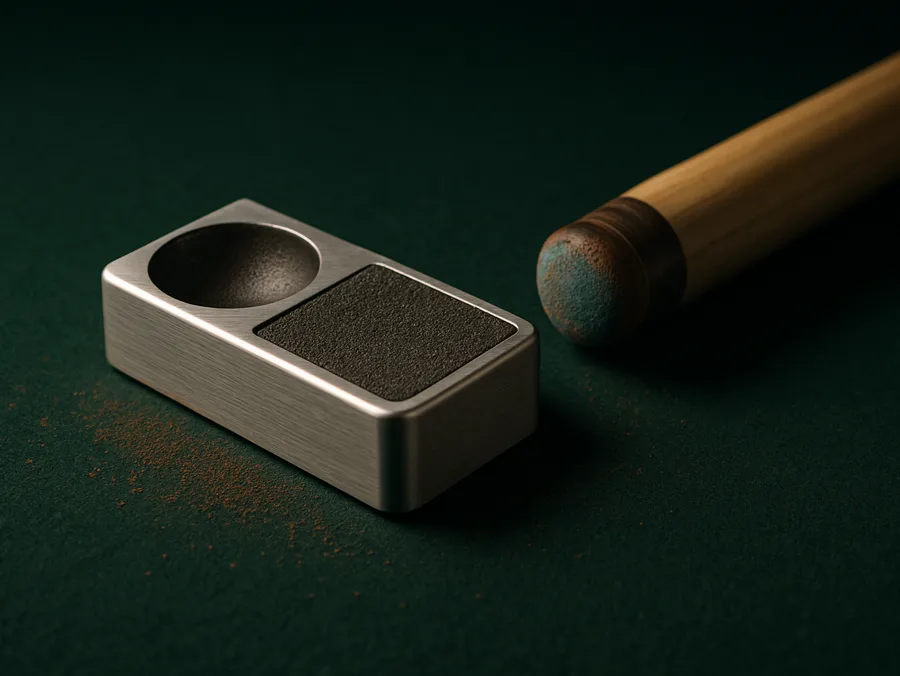
Cue Cube 2-in-1 Tip Shaper and Scuffer
Bringing back a slick tipThe scuffer side lightly roughs the tip so it holds chalk again, and the shaper side puts a nickel or dime dome back on a flattened crown. Those are the two tip problems behind most equipment miscues.
Check price on Amazon
Kamui 0.98 Beta Chalk
Players who forget to chalkIt won't raise your miscue limit (no chalk does), but in Dr. Dave's one-chalking test Kamui lasted 15 spin shots to Master's 8. If you sometimes skip the chalk between shots, that margin is real.
Check price on Amazon
Master Billiard Chalk, 12-Cube Box
Chalking every shotIf you chalk before every shot, Dr. Dave found the brand doesn't seem to matter. A box of 12 means there's always a fresh, unglazed cube at the table.
Check price on Amazon
CUEELF 6-Layer Medium Cue Tip, 14mm
A tip that's past savingWhen the old tip won't hold chalk even after scuffing, a fresh medium layered tip gives you a clean surface and a proper dome to start over with.
Check price on AmazonFrequently asked questions
Why does my cue keep miscuing?
Almost always one of three things: not enough chalk at the contact point, a glazed or flat tip, or hitting past the miscue limit, which is about half the cue ball's radius from center. Fix them in that order before blaming your stroke.
Why do I only miscue on draw shots?
Low hits are hard to judge and often land lower than intended, and a raised cue makes the tip meet the ball at a glancing angle. Aim a little higher, keep the cue as level as the rail allows, and chalk every time.
Is a miscue a foul?
Not by itself under WPA, APA or CSI rules. It becomes a foul if the tip or shaft hits the cue ball twice (a double hit) or if it's done on purpose. An accidental miscue that lifts the ball is treated like a legal jump under WPA rules.
What is the miscue limit?
About half the cue ball's radius from center, or roughly 9/16 inch on a 2-1/4 inch ball. That's about three to four chalk-mark widths. Past it, the tip slides no matter how well it's chalked.
Does expensive chalk stop miscues?
Not if you chalk before every shot. Dr. Dave measured no difference in miscue limit between chalk brands. Some chalks last more shots between chalkings, which helps only if you skip chalking.
Do soft tips miscue less than hard tips?
No, when both are chalked properly the miscue limit is the same. Hard tips miscue more only when they glaze over and stop holding chalk, so they need more frequent scuffing.
What does a blue mark on the edge of my tip mean?
It shows where the tip struck on the miscue. A mark near the edge means you hit with the side of the tip, usually from a flat crown or reaching too far off center.
Related guides
LeaguePool is reader-supported. When you buy through links on this site we may earn an affiliate commission at no extra cost to you. As an Amazon Associate we earn from qualifying purchases.