
Bar Rules for 8 Ball Pool: House Rules and How to Play
Bar rules for 8 ball pool are the house versions of the game: the cue ball goes behind the line after a scratch, other fouls may only cost you your turn, and an 8 on the break usually wins. None of it is written down anywhere official, which is why the same shot gets ruled three different ways in three different rooms.
The core of the game doesn't change. One player takes the solids (1 through 7), the other takes the stripes (9 through 15), and whoever pockets all seven of theirs and then sinks the black 8 in the pocket they called wins. Below is how to play first, then the house rules most bars layer on top, so you know exactly what to ask before a stranger racks. For the official WPA, APA and CSI rule books, see our 8 ball rules guide.
How to play 8 ball pool: the basic rules
- Rack the fifteen balls in the triangle with the front ball on the foot spot (the dot), the 8 in the middle of the third row, and one solid and one stripe in the two back corners. The rest go in at random.
- Flip a coin or lag for the break. The breaker places the cue ball anywhere behind the head string, the line across the table at the second diamond from the head rail. That area is the kitchen.
- If the breaker makes a ball without scratching, they keep shooting. If not, the other player comes up.
- The first player to pocket a called ball after the break gets that group. Until then the table is open: you can hit any ball first except the 8.
- On every shot the cue ball has to hit one of your balls first. After that, a ball has to go in or some ball has to touch a rail.
- Keep shooting as long as you pocket your own balls. Miss, and it's your opponent's turn. Foul, and your opponent gets ball in hand.
- When your seven are gone, call a pocket for the 8 and make it. That's the game.
You lose on the spot if you pocket the 8 before your group is cleared, put it in a pocket you didn't call, knock it off the table, or scratch on the shot that makes it. Those four are losses under WPA, APA and CSI rules alike, and bars keep them too (none of them count on the break itself). For the official wording of every rule, including the break options, the open table and the common myths, see our full 8-ball rules guide. Racking well is its own skill, covered in how to rack pool balls.
What bar rules usually change
Bar rules aren't written down anywhere official. They're house variations passed from player to player, and they shift from one room to the next, sometimes from one table to the next. These are the ones you'll run into most often, next to what the official World Pool-Billiard Association (WPA) rules say.
| Situation | Common bar version | Official rule (WPA) |
|---|---|---|
| Scratch | Opponent gets the cue ball behind the head string | Ball in hand anywhere on the table |
| Other fouls (wrong ball first, no rail) | Loss of turn only; opponent shoots from where the cue ball stopped. Some fouls aren't called at all. | Ball in hand anywhere |
| Balls made on the break | Take what you make: the group you made (or made more of) is yours | Table stays open after the break |
| Calling shots | Either slop counts, or you call everything, kisses and banks included | Call only shots that aren't obvious |
| 8 on the break | Win, unless you scratch (then a loss) | Breaker spots the 8 and plays on, or re-breaks |
| Combinations using the 8 | Not allowed | Allowed as long as the 8 isn't the first ball hit and doesn't drop early |
| Scratch while shooting the 8, 8 stays up | Loss of game | Foul only: ball in hand |
| Safeties | Frowned on in many rooms | Legal; you may call safety |
| Jump shots | Banned in some bars | Legal when you raise the back of the cue and drive the cue ball down; deliberately scooping under it is not |
APA, the biggest amateur league in the US, lands between the two: slop counts, an 8 on the break wins, and any scratch while you're shooting the 8 loses.
The kitchen scratch changes the whole game
This is the bar rule that matters most. With ball in hand anywhere, a scratch is a disaster, because a decent player puts the cue ball exactly where they want it and runs out. From the kitchen, the incoming player has to shoot at something past the line, so a scratch costs far less. That's why league players get bolder in a bar, and bar players who join a league get punished for scratches they used to shrug off.
Take what you make, and slop
Officially, the break never decides your group. Many bars do it the APA way: if only stripes went in, you're stripes. When both kinds dropped, some rooms give you whichever group you made more of and others leave the table open. Calling works the same way. Slop bars count anything that goes in on a legal hit. Call-everything bars make you name ball and pocket, sometimes the kiss or bank too, and a ball that drops some other way ends your turn. A middle ground most players will accept: slop on your group, but the 8 must be called.
Scratch rules in bar pool
A scratch is the cue ball going into a pocket, and knocking it off the table counts the same. In most bars the penalty is the cue ball behind the head string for your opponent, not ball in hand anywhere. Two rulings settle most bar arguments. First, a scratch ends your turn even if one of your balls dropped on the same shot. Second, in most bars a scratch while you're shooting the 8 loses the game even if the 8 stays up, and a scratch on the break that also sinks the 8 is usually a loss too. The official books are gentler on both: WPA and CSI treat a scratch on the 8 with the 8 still on the table as an ordinary foul. Our 8-ball rules page has the full scratch table for WPA, APA, CSI and VNEA, and the scratch explainer covers scratches in every game.
Shooting from the kitchen
With the cue ball in hand behind the head string, you can place it anywhere in that area, but the cue ball has to cross the line before it hits anything. Contacting a ball that sits behind the line first is a foul under WPA rule 3.11. A ball sitting exactly on the head string is playable. If every ball you're allowed to hit is in the kitchen, WPA rule 1.6 lets you ask for the one nearest the head string to be spotted at the foot end of the table. In a bar, ask whether they spot it or make you play it off the far rail.
Pool rules for ball in hand
Ball in hand means you pick up the cue ball and put it where you want before your shot. Under the official and league 8-ball rules you get it anywhere on the table after any foul except a foul on the break (CSI allows anywhere even then). In a lot of bars you only get it behind the head string, and only after a scratch.
- You can keep adjusting the cue ball with your hand or the cue until you shoot. You just can't move it with a forward stroke of the tip (WPA 1.6).
- Don't touch any other ball while you place it. APA lists that as a ball-in-hand foul of its own.
- In APA play, confirm with your opponent that you have ball in hand before you pick the cue ball up. The APA rules say so in as many words.
- Ball in hand doesn't change what a legal shot is. You still have to hit your own group first, then make a ball or get one to a rail.
The best use of ball in hand is rarely the easiest shot on the table. Put the cue ball where you can make a ball and also reach the problem cluster, or the ball that blocks a pocket. Our 8-ball strategy guide goes through it.
Which fouls bars actually call
Official 8-ball has a long foul list, and our guide to common pool fouls walks through every one. At a bar table, these are the ones that actually come up:
- Scratching, or knocking the cue ball off the table.
- Hitting the wrong ball first. That includes the 8 before your group is gone.
- No rail after contact: nothing goes in and no ball touches a cushion after the cue ball hits something.
- Missing everything.
- Double hits and pushes, usually with the cue ball sitting a hair away from an object ball.
- Shooting with both feet off the floor. Sitting on the rail to reach a shot counts. Grab the bridge instead.
Officially, every one of these gives your opponent ball in hand anywhere. Bars often put a real penalty only on the scratch and treat the rest as loss of turn, and some fouls never get called at all. Decide which way your table plays before the break. The league versions, and myths like the three-foul loss, are covered on the 8-ball rules page.
The 8 ball in bar games
The 8 belongs to nobody until one player has cleared their group, and bars keep the official loss rules for it. The house twists are about how you're allowed to make it. Many bars ban using the 8 in a combination at all, a lot of slop bars still make you call the 8's pocket, and some rooms play last pocket, where the 8 has to go in the pocket where your last ball dropped (see last pocket 8-ball rules). When the 8 is on the line, ask about all three before you shoot.
Settle these before the break
Fixing all of this takes thirty seconds. Screenshot this list or print it for the game room:
| Ask | The usual choices |
|---|---|
| Where does the cue ball go after a scratch? | Behind the head string, or anywhere |
| Do other fouls give ball in hand? | Yes, or loss of turn only |
| Slop or call shot? | Slop, call the 8 only, or call everything |
| What does an 8 on the break do? | Wins, or gets spotted |
| Scratch on the 8 with the 8 still up? | Loss, or ball in hand |
| Groups after the break? | Take what you make, or open table |
| Can the 8 be part of a combo? | Yes, or never |
| Jump shots and safeties? | Allowed, or not |
| Last pocket? | Usually no, but ask |
Say it out loud while the rack is still loose. A house rules sheet on the wall beats whatever either of you grew up with. And raise a dispute before the next shot, never after the 8 drops: WPA, APA and CSI rules all treat a foul that isn't called before the next shot as if it never happened, and that habit works at the bar too.
Bar table etiquette: quarters and winner stays
Bar pool runs on a rule no league book mentions: who plays next. Quarters go on the rail or your name goes on the chalkboard, and the winner keeps the table. Beat the winner and the table is yours. Don't jump the list, and don't hit balls by yourself while people are waiting.
New room? Watch a game before you put quarters up, then ask what rules they play. In some rooms the winner sets the rules for the next game, so ask again whenever the table changes hands. The rest of the unwritten code is in our pool etiquette guide, and if money goes on the game, read money game etiquette first. (The table hands back the cue ball after a scratch because coin-op tables use an oversized or magnetic cue ball; see how coin-operated pool tables work.)
3 ball pool rules
Three-ball is a quick betting game, not a version of 8-ball, and no league or WPA rule book covers it. As it's commonly played: rack three balls (usually the 1, 2 and 3) with the front ball on the foot spot, break from the kitchen, and count every stroke, the break included. You stay at the table until all three are down. Lowest total wins. A scratch or other foul adds a penalty stroke, and after a scratch you shoot from behind the head string. Groups often play it with everyone putting in the same stake and ties playing off. For other games with three or more players, see cutthroat and Kelly pool.
Sources
- WPA Rules of Play, effective 2025-09-15 (sections 1.6, 3 and 4)
- APA: How to win a game
- APA: Fouls
- APA: After the break
- Official Rules of CueSports International, August 2025
Our picks
Links open the current selection and price on Amazon so you can compare real reviews before buying.

BCA Official Rules and Records Book
Settling rule disputesThe Billiard Congress of America's rule book, with 8-ball and the other common games written out in full. Keep one in the game room or your case, and agree before the break that the book wins. Check the edition year on the listing, since the rules get revised.
Check price on Amazon
Viking Valhalla 100 Series Irish Linen Wrap Cue
Replacing a warped house cueBar cues are warped and chipped, and everybody shoots with them anyway. This two-piece Valhalla has a hard rock maple shaft and a stainless steel joint, and Viking backs it with a lifetime warranty against warpage, so you get the same hit every game instead of whatever's left on the wall rack.
Check price on Amazon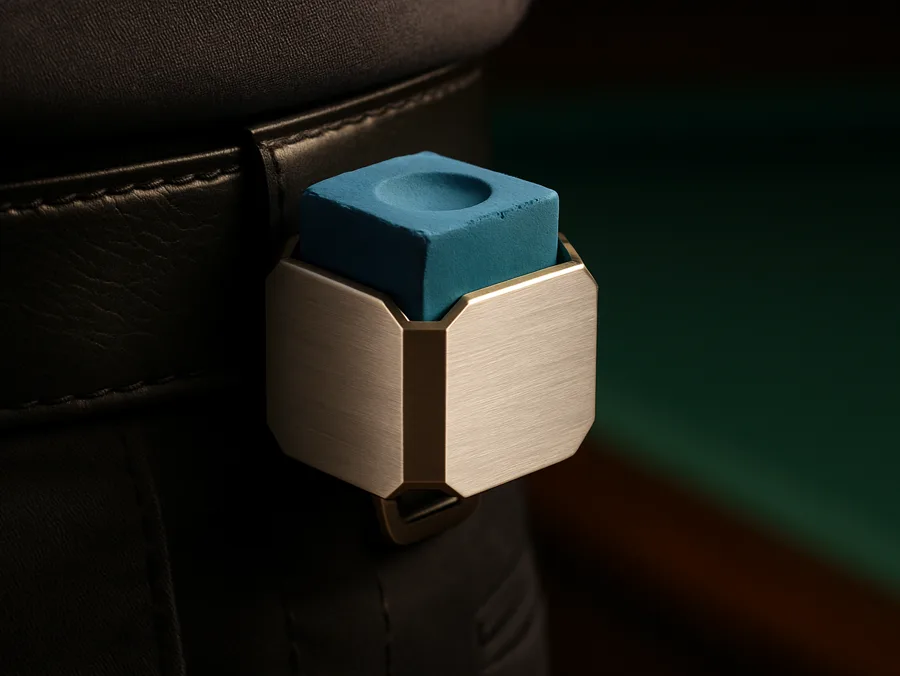
Octagon Magnetic Belt-Clip Chalk Holder
Keeping your own chalk on youBar chalk goes missing or gets ground into a crater. This holder fits a standard cube and clips to your belt with a magnet, so you chalk with your own cube before the shot that decides the game.
Check price on Amazon
Aramith Magnetic Cue Ball
Coin-op bar tables at homeA phenolic Aramith cue ball made for coin-operated tables that pull the cue ball out of the ball return with a magnet, so a scratch rolls back to you instead of getting locked away with the object balls. Check how your table sorts the cue ball first: size-sorting tables need an oversized ball instead.
Amazon price: $32.24 as of 12:50 PM EDT. Price and availability can change; Amazon’s price at purchase applies.
Check price on AmazonFrequently asked questions
What are the basic rules of 8 ball pool?
Break from behind the head string, claim solids or stripes by pocketing one, and hit your own group first on every shot. After contact a ball must go in or touch a rail. Clear your seven, then pocket the 8 in a called pocket to win. Pocketing the 8 early, in the wrong pocket, off the table or on a scratch loses.
What happens if you scratch in 8 ball?
Your turn ends and your opponent gets ball in hand. Under WPA, APA and CSI rules that means anywhere on the table. Under typical bar rules it means behind the head string, shooting out of the kitchen.
Is a scratch on the 8 a loss in bar pool?
In most bars, yes, even if the 8 stays on the table, and always if the 8 drops on the same shot. The official WPA and CSI rules only make it a loss when the 8 goes in. Ask before the game, because some rooms play it the official way.
Is making the 8 on the break a win?
In most bars and in APA, yes, unless the breaker scratches, which loses. Under WPA and CSI rules it isn't a win: the breaker spots the 8 and plays on, or re-breaks.
Do you have to call your shots in bar pool?
It depends on the room. Some bars play slop, where anything that goes in counts. Others make you call everything, including kisses and banks. A common middle ground is slop on your group and a called pocket for the 8. Ask before the first rack.
Is there an official set of bar rules?
No. Bar rules are house variations that change from room to room. The official rules are the WPA world rules, and leagues such as APA and CSI publish their own versions. If a room has a house rules sheet posted, follow it.
How do you start a game of pool?
Rack the balls with the front ball on the foot spot, then flip a coin or lag to decide who breaks. The breaker places the cue ball anywhere behind the head string and hits the rack. In a bar, agree on the house rules before that first break.
Related guides
LeaguePool is reader-supported. When you buy through links on this site we may earn an affiliate commission at no extra cost to you. As an Amazon Associate we earn from qualifying purchases.