Best Pool Cues for Beginners: Your First Pool Stick
The best first pool cue is a 58-inch, two-piece hard maple cue that weighs 19 ounces, wears a 13mm medium leather tip, and comes with a warranty that covers warpage. That spec describes the entry cues from Valhalla by Viking, Players and McDermott Lucky, which Seybert's lists from $112, $137.70 and $135 respectively (checked October 15, 2026). Spend roughly $110 to $200 and you get a pool stick you will not outgrow for years.
Below that, the cheapest single cues and the best-selling Amazon four-packs work, but you trade away tip quality and warranty coverage. This guide covers what to buy, where pool cues for sale are worth buying, and the specs that matter while you learn.
What your first pool cue should be
Here is the whole spec on one screen. Every pick on this page meets it, and anything that misses two or more rows is a house cue, not a first cue.
| Part | What to buy | Why it matters while you learn |
|---|---|---|
| Length | 58 inches | Standard adult length. Shorter only for kids, very short players or a cramped room. |
| Weight | 19 oz (18 to 21 is the normal range) | Middle of the range, so it breaks and shoots without fighting you. |
| Tip | 13mm, medium leather, glued on | Holds chalk, takes a shape, and a shop can replace it. |
| Shaft | Hard rock maple, pro taper | Predictable hit at an entry price. Low-deflection can wait. |
| Joint | Stainless pin (5/16x18 or 3/8x10) or a quality quick-release | Keeps the halves tight so the cue hits the same every shot. |
| Wrap | Irish linen, leatherette or wrapless | Personal taste. Linen suits sweaty hands; wrapless suits a glove. |
| Warranty | Covers warpage | Warp is the way most cheap cues die. A warranty that names it is the best quality signal you can read off a listing. |
Two-piece matters because you will carry this cue. A good two-piece plays every bit as well as a one-piece, and our one-piece vs two-piece comparison explains when a one-piece still makes sense (house cues that never leave the room).
Our beginner picks by budget
Price is the honest way to sort first cues, because each step buys something specific. Brand price ranges below are Seybert's listings checked October 15, 2026; the cards further down show Amazon's live price.
| Budget | Our pick | What the extra money buys |
|---|---|---|
| Lowest cost that still plays | Viper Elite | Maple, Irish linen, Le Pro leather tip, a choice of 18 to 21 oz. Listing warranty is 30 days against defects. |
| Valhalla line: $112 to $220 | Valhalla 100 by Viking | Hard rock maple, stainless joint and pin, adjustable weight, and Viking's lifetime coverage against warpage (one repair or replacement). |
| Players Classic: $137.70 to $216.90; Lucky: $135 to $245 | Players Classic or McDermott Lucky | Nicer wood and finish. Players covers its cues for life, warpage included; Lucky's warranty runs three years and excludes warpage. |
| Step-up spend, past most first-cue budgets | Players HXT15 (low-deflection) | A low-deflection shaft and a Kamui Black tip. Worth it once you use side spin every rack. |
Our default for a new player is the Valhalla. It is the cheapest cue from a billiards maker that puts warpage in writing, and Viking's warranty page is specific: register the cue on Viking's site within 60 days, keep the receipt, buy from an authorized dealer, and a covered Valhalla gets repaired or replaced one time. Tips, ferrules, finish, wrap and bumper are wear parts and are not covered on any Viking.
If your budget is truly tight, our cheap pool cues guide covers the lowest-cost sticks that are still worth owning, including warp-resistant fiberglass options.
Pool cues for sale: where to buy one
Where you buy changes what you get as much as which cue you pick. Here is how the usual places compare for a first cue.
| Where | Good for | Watch out for |
|---|---|---|
| Billiards retailers (Seybert's, PoolDawg and similar) | Brand cues from authorized dealers, so manufacturer warranties apply | Shipping time; weights are sometimes picked at checkout and not listed on the product page |
| Amazon | Fast delivery, easy returns, live prices, real reviews | Mixed sellers. Check that the listing names the maker and the warranty terms |
| Walmart and big-box stores | Seeing a cue in person before you pay | Recreational cues with screw-on tips and no warpage coverage are common; use the spec table above |
| eBay and used cues | Real savings on brand cues | Warranties usually cover only the original owner; roll-test before paying if you can |
| Local pool hall or cue shop | Holding several weights, plus tip work and repairs nearby | Small selection; prices vary by shop |
For a used cue, both Viking and McDermott tie their warranties to the original purchaser with a receipt, so a secondhand cue is bought as-is. Our used pool cue guide lists what to inspect. Shopping "pool cues on sale" works best with brand cues, where a markdown still comes with the full warranty. A discount on a no-name stick with a 30-day policy only lowers the price of the same risk.
Weight: start at 19 ounces
Most pool cues come in 18, 19, 20 and 21 ounces. Start at 19. It is heavy enough to break with and light enough to control soft position shots. Go to 20 or 21 if you are a big player who likes a heavier feel, or 18 if a 19 feels like it drags.
Don't choose by how easy the cue is to lift. Weight shows up in the stroke, not in your hand at the counter. Cues with a weight bolt, such as the Valhalla 100 and the Players HXT15, let you change your mind later without buying again. More detail is in our pool cue weight guide.
Tip size and hardness
Buy 13mm with a medium leather tip. That is the most common size in American pool, it matches what you shoot with at the bar, and it gives a little more margin on off-center hits than a slimmer pro taper.
Hardness is a trade. Soft tips grip and spin easily but mushroom and wear faster; hard tips last and hit crisply but miscue more when chalking is sloppy. Medium splits the difference, which is where a beginner belongs. The one thing to refuse is a plastic-feeling screw-on tip: it skids, will not take a shape, and costs you shots you hit correctly. See the tip size guide and soft vs hard tips when it is time to retip.
Shaft: maple, fiberglass or carbon
Hard rock maple is the right first shaft. It gives honest feedback, it is what most league players learned on, and it is affordable. Its weakness is warp, which is why the warranty row in our spec table matters.
Fiberglass and graphite composite cues (the Viper Graphstrike is the common one) shrug off warp and dings, so they make sense in a damp basement or as a bar cue. Plenty of players find the hit dead next to maple, though. Our fiberglass vs graphite comparison goes further.
Low-deflection and carbon shafts reduce how far the cue ball pushes off line when you use side spin. Predator's own buying guide argues beginners should start on a low-deflection carbon cue. We disagree for a first cue under about $200: until you stroke straight and use english on purpose, deflection is not what costs you balls. Upgrade the shaft when side spin starts costing you position, and read low-deflection shafts explained and whether carbon is worth it first.
How long are pool cues?
A standard pool cue is 58 inches. Players, Viper and Valhalla all list their playing cues at 58 inches, and that suits most adults. Taller players and anyone with a long bridge hand can look at 60-inch cues or an extension.
Short cues exist for kids and tight rooms. GSE, for example, sells one-piece shorties at 36, 42, 48, 52 and 58 inches, weighing 12, 14, 15, 18 and 20 ounces. Our pool cue size guide has a full height chart, and there are separate guides for kids and tall players.
The best-selling Amazon cue sets: fine for a game room, not your first cue
Search Amazon for "pool cue" and the top sellers are multi-packs. HMQQ's packs show about 800 bought in the past month, the GARSEN 6A maple four-pack about 500, and the AKLOT four-pack about 300 (Amazon badges, October 15, 2026). Most are 58-inch cues with 13mm tips in mixed weights (the GARSEN and AKLOT packs include 18, 19, 20 and 21 oz), and the sellers list one-year (HMQQ) or two-year (AKLOT) warranties.
For stocking a home table, a pack is good value, and having four weights on the rack is a cheap way to learn which one you like. As your own first cue, a single cue from a billiards maker is the better buy: you know who built it and the warpage coverage is in writing. Our pool cue sets guide picks the best packs for a game room.
Cheap, beginner or high end: how much to spend
Spend $110 to $200 on a first cue if you plan to play weekly or join a league. Spend less only if you play a few times a year, and spend more only when you know exactly what the extra money fixes. Full brackets are in how much a pool cue costs, and the case for and against high-end pool cues has its own page.
Budget for the extras too. A case keeps the cue from warping in a hot car or leaning in a corner, and a glove and decent chalk do more for a beginner's game than another $100 of cue.
Brand names you'll see when shopping
Searchers type a lot of brand names. Here is where each fits for a beginner, with the page that covers it.
| Brand | Where it fits | For a first cue? |
|---|---|---|
| Valhalla (Viking) | Viking's entry line, hard rock maple | Yes, our default pick. Valhalla guide |
| Players | Wide range of entry cues, lifetime warranty incl. warpage | Yes. Players guide |
| McDermott Lucky | McDermott's entry line; 3-year warranty, no warpage cover | Yes, read the warranty. Lucky guide |
| Viper | Low-cost cues and house cues | On a tight budget. Viper guide |
| Cuetec | Composite-coated and low-deflection cues | Usually a second cue. Cuetec guide |
| Rage | Budget break and jump cues | Later, as a break cue. Rage guide |
| Mizerak, Minnesota Fats | Recreational cues and game-room gear | Judge each one against the spec table |
| Joss, Jacoby, Schon | American-built cues | More than a first cue needs. Jacoby, Schon |
| Balabushka | Collector originals and licensed reproductions | No. Balabushka values |
For the full ranking, see best pool cue brands.
Pool cue parts, ends and accessories
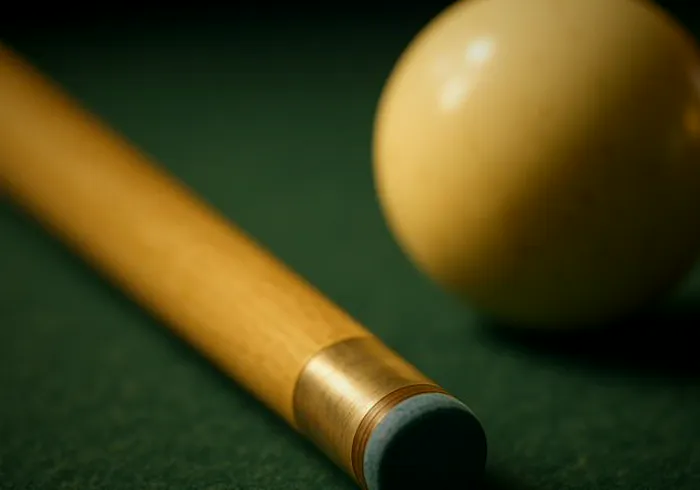
A cue has two halves. The shaft carries the tip (the leather you chalk), the ferrule (the white collar under the tip) and the joint pin or insert. The butt carries the forearm, the wrap where your back hand goes, the butt sleeve and the rubber bumper. If you searched for a "pool cue end", you probably want either the tip end, where tips and ferrules wear and get replaced, or the butt end, where the bumper and on some cues a weight bolt live. Our pool cue parts guide names every piece, and ferrules explained covers that part in detail.
Chalking a pool cue
Chalk before most shots. Brush the chalk across the tip in short strokes, rotating the cue so the edges get coverage, and look for an even thin coat. Don't screw the tip into the chalk cube; that glazes the center and leaves the edges bare, which is where miscues start. Step-by-step photos are in how to chalk a pool cue.
Accessories worth buying with your first cue
- A case or bag. A 1x1 soft case is enough to start; our case guide compares soft and hard.
- A holder at home. Wall mounts and floor stands keep cues upright and off the table edge; see pool cue racks and holders.
- A tip tool for scuffing and shaping, and good chalk.
- An extension, only if you are tall or keep reaching across a big table. Cue extensions covers the options.
Tip and ferrule work is done on a cue lathe. You do not need one; a cue shop retips for a modest fee, and what retipping costs lists typical prices.
Your first week with a new cue
- Roll-test it the day it arrives. Roll the assembled cue on a flat table and watch the gap under the shaft, then roll each half. A small even wobble is normal; a hop or a visible bend goes back while the return window is open. How to tell if a cue is warped shows both checks.
- Screw the joint hand-tight. Overtightening wears threads; loose joints rattle and change the hit.
- Scuff and shape the tip if it arrives flat. A tip that won't hold chalk causes most early miscues.
- Store it in the case or upright in a rack. Never lean it in a corner for weeks or leave it in a hot or freezing car.
- Wipe the shaft after you play. Chalk and hand oils make it sticky; a dry cloth is enough most nights.
The common beginner mistakes are buying on looks, choosing weight in the store, and breaking full power with a soft playing tip every rack. Once you break hard, a cheap dedicated break cue saves your playing tip.
Sources
- Viking Cue: lifetime warranty terms, including Valhalla
- McDermott Cue: warranty terms for McDermott and Lucky cues
- Seybert's: Valhalla cue listings (checked October 15, 2026)
- Seybert's: Players cue listings and warranty text (checked October 15, 2026)
- Seybert's: Lucky cue listings (checked October 15, 2026)
- Predator Cues: 2026 buying guide (manufacturer view on beginner shafts)
Our picks
Links open the current selection and price on Amazon so you can compare real reviews before buying.

Viking Valhalla 100 Series 2-Piece 58" Cue
Best first cue for most playersA hard rock maple shaft with a pro taper, a stainless joint and pin, and a resin ferrule, from a maker that warrants it against warpage. The interchangeable weight system ships at 18 oz, so you can add weight as your stroke settles instead of buying a second cue. Register it with Viking within 60 days to keep the warranty.
Amazon price: $135.00 as of 11:47 AM EDT. Price and availability can change; Amazon’s price at purchase applies.
Check price on Amazon
Players Classic Birds-Eye Maple Cue
Best finish and warrantyGrade A hard rock maple, a 5/16x18 stainless joint collar and double-pressed Irish linen, in 18 to 21 oz at the standard 58 inches. The detail first-time buyers skip is the paperwork: Players backs the cue and shaft for life, warpage included, and the ferrule carries its own guarantee against chipping or cracking.
Amazon price: $179.10 as of 11:47 AM EDT. Price and availability can change; Amazon’s price at purchase applies.
Check price on Amazon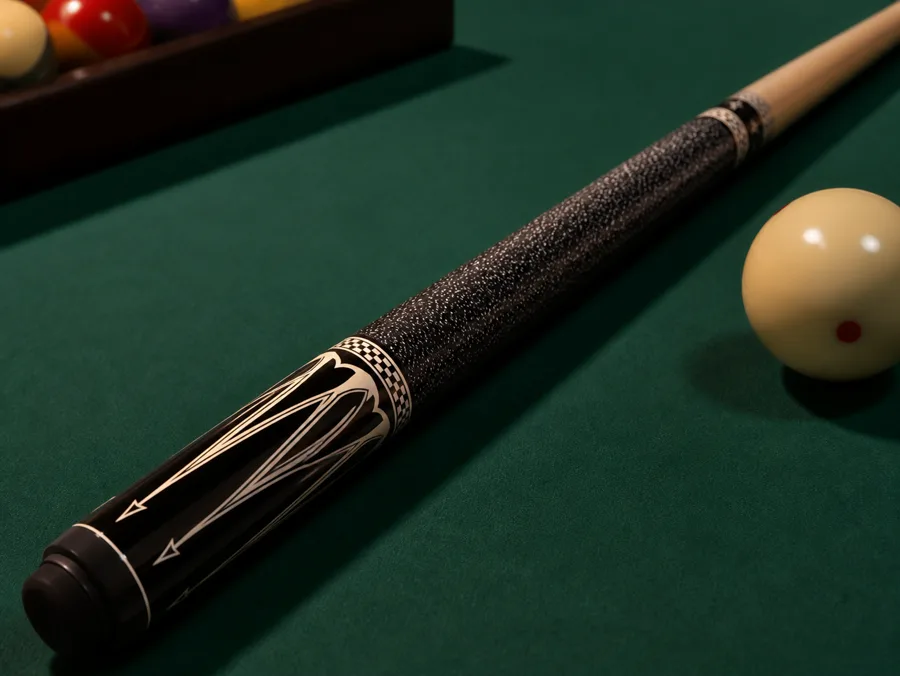
McDermott Lucky L22 Pool Cue
Big-maker cue at an entry priceA 19 oz cue with a 13mm tip, which is the exact spec we recommend for a first cue, designed and sold by McDermott. The warranty is three years and, per McDermott, does not cover warpage, so store it in a case and roll-test it on arrival.
Check price on Amazon
Viper Elite 2-Piece Maple Cue
Tight budgetMaple construction, an Irish linen wrap, a Le Pro leather tip and a pro taper, sold separately at 18, 19, 20 and 21 oz. That tip is the reason it beats most cheap sticks: it grips, holds chalk and can be replaced. The listing warranty is 30 days against defects, so check it for straightness right away.
Amazon price: $47.10 as of 11:44 AM EDT. Price and availability can change; Amazon’s price at purchase applies.
Check price on Amazon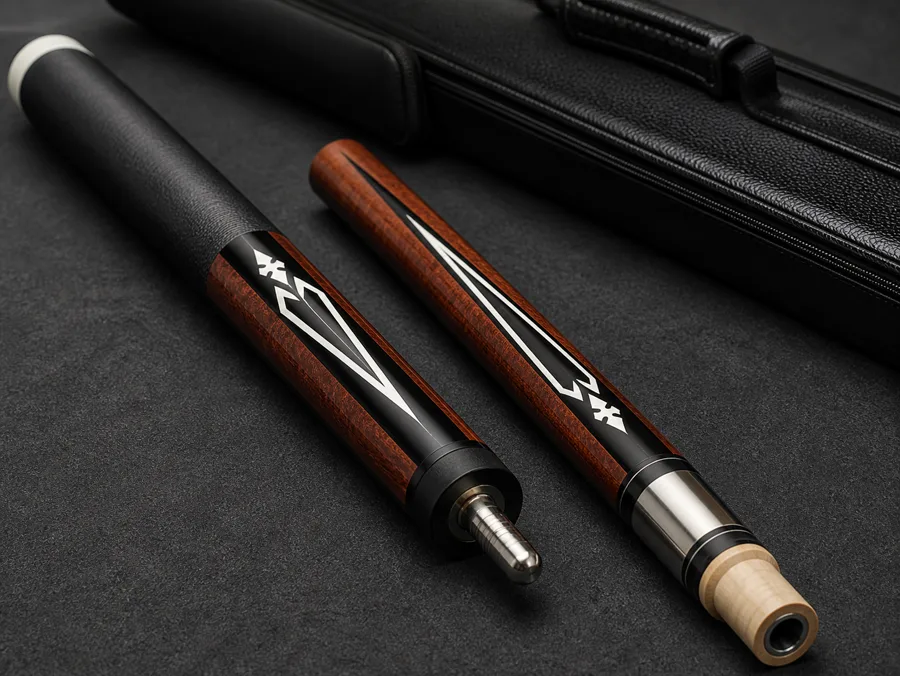
Players HXT15 Two-Piece Cue
Ready to step upA low-deflection playing cue made by PureX with a medium Kamui Black tip, adjustable from 18 to 21 oz, and a lifetime manufacturer's warranty. Buy it once side spin is part of every rack; that is when a low-deflection shaft starts paying you back in position.
Check price on AmazonFrequently asked questions
What is the best pool cue for a beginner?
A 58-inch, two-piece hard maple cue at 19 oz with a 13mm medium leather tip and a warranty that covers warpage. The Valhalla 100 by Viking fits that spec at an entry price; Players Classic and McDermott Lucky are good alternatives.
What is a cue in pool?
The cue, or pool stick, is the tapered stick you strike the cue ball with. It has a leather tip, a ferrule, a shaft, a joint on two-piece cues, and a butt with the wrap and bumper.
How long is a standard pool cue?
58 inches. Short cues from 36 to 52 inches suit kids and tight rooms, and 60-inch cues or extensions suit tall players.
What weight pool cue should a beginner use?
19 oz. It sits in the middle of the normal 18 to 21 oz range. Cues with a weight bolt let you adjust later.
How much should I spend on my first pool cue?
About $110 to $200 at billiards retailers buys a brand cue with a real tip and warpage coverage. Under that works for occasional play; above it buys features most beginners can't use yet.
Should a beginner buy a low-deflection or carbon fiber cue?
Not as a first cue under about $200. Learn a straight stroke on maple first, and upgrade the shaft when side spin starts costing you position.
Is a pool cue from Walmart good enough?
It can be for occasional home play. Check it against the basics: a glued leather tip rather than a hard screw-on tip, a tight joint, a straight roll, and a clear return policy.
Are the Amazon pool cue four-packs good for beginners?
They are good for a home game room and for finding your preferred weight. For your own cue, a single cue from a billiards maker with a written warpage warranty is the better buy.
Is a two-piece cue as good as a one-piece?
Yes. A well-made two-piece plays the same and travels and stores far better. One-piece cues make sense as house cues that never leave the room.
How often should I chalk my pool cue?
Before most shots, and always before any shot with spin. Brush the chalk on in short strokes and cover the edges of the tip, not just the center.
Related guides
LeaguePool is reader-supported. When you buy through links on this site we may earn an affiliate commission at no extra cost to you. As an Amazon Associate we earn from qualifying purchases.