Are Expensive Pool Cues Worth It? Why Cues Cost More
Expensive pool cues are worth it if you want what the money actually buys: hand work, rare woods, a maker's name, a cue that holds its resale value, or a top low-deflection or carbon shaft. They are not worth it as a shortcut to playing better. Once a cue has a straight shaft, a good tip and a tight joint (all sorted by about $400 to $450), extra money stops changing where the cue ball goes.
That's not a knock on premium cues. A $1,500 Schon from a Milwaukee shop that sometimes finishes no cues in a week is a lovely thing to own. You should just know which part of the price is the hit and which part is the object. This page splits the two, shows what each premium price step buys, and says who should spend the money.
Why are pool cues so expensive?
Because most of the cost is labor and materials that sit in the butt. Here's where a premium cue's price goes, and whether each item changes the shot.
| Cost driver | Example | Changes the shot? |
|---|---|---|
| Shaft technology | Low-deflection maple (Predator 314-3, $299 to $359 alone) or carbon (about $425 to $570) | Yes, on side-spin shots |
| Inlays and points | Hightower's published list charges $450 and up for four veneered points and prices inlays one by one | No |
| Exotic woods and materials | Ebony, cocobolo, burls, shell; McDermott adds charges for brass, pewter and abalone | No |
| Small runs and scarcity | Schon Elite editions of no more than 7 cues; LTD runs of 12 or fewer | No |
| Brand and R&D | Testing, pro sponsorships, marketing | Only where it produced a better shaft |
| American hand assembly | Wisconsin and Florida shops vs imported cues | Consistency and repair service, not aim |
| Warranty | Lifetime coverage including warpage at McDermott and Viking | No, but it protects the money |
Retailers selling premium cues argue that better cues improve accuracy, grip and feel. The physics says otherwise for most of that list. Dr. Dave Pool Info quotes the old rec.sport.billiard FAQ: the shaft is the most important part, the tip matters more than the butt, and beyond being solid and the right weight and length there is little the butt does for the cue. The same FAQ says many expensive sticks fail a basic squirt test.
What each premium price step buys
| Price | What you're paying for | Examples (Seybert's, October 15, 2026) |
|---|---|---|
| $400 to $1,000 | American-made construction, a lifetime warranty, often a low-deflection shaft; resale holds up | Viking playing cues (median $450), McDermott (median about $590), Lucasi (median $791) |
| $1,000 to $2,500 | Carbon cues, small-shop handwork, nicer woods and points | Predator (median $1,489), Schon (median $1,196), licensed Balabushka ($688 to $2,426) |
| $2,500 to $9,000 | Limited editions, heavy inlay work, one-of-one customs | Schon Elite up to $3,800; Predator's 30th anniversary limited edition at $8,159 |
| $150,000 | A display piece | McDermott Intimidator |
Notice that playing performance is already complete in the first row. The jump from $500 to $5,000 is almost entirely art, scarcity and name. If you want the cheaper side of this, the price ladder below $450 is in how much a pool cue costs, and the value picks are in best pool cues for the money.
Do expensive pool cues make a difference?
In how they play, barely. Dr. Dave's cue FAQ says it outright: buying an expensive cue will not make you a better player, and a good player can play well with any decent cue that has a decent tip. His low-deflection page adds that even a premium low-squirt shaft gives only a small expected gain in accuracy to a player who already adjusts for squirt.
Where they do differ is everything around the hit. Fit and finish are better. Joints are machined tighter. Warranties are longer at the big American makers. And a good premium cue resells, while a $100 cue is worth close to nothing used. Those are real reasons to pay more. They just aren't balls in pockets. If you want to know which parts of a cue really move the ball, do pool cues make a difference goes part by part.
When an expensive cue is worth it
- You play several times a week, your stroke is settled, and you know the weight, tip and shaft diameter you want. A premium cue built to that spec is a pleasure you'll use thousands of times.
- You use english on most shots and a premium low-deflection or carbon shaft fixes misses you can name. That's the one premium purchase with a measurable on-table effect.
- You care about craft. A cue from a small shop is handwork, like a good guitar or watch. Paying for that is a fine reason.
- You want resale. Cues from makers players actively want, such as Predator, Schon, Mezz and popular McDermott and Viking models, resell far better than generic imports when kept in good condition.
- You'd otherwise buy twice. A weekly player who outgrows a cheap cue in a year and then buys a good one has spent more than buying the good one first.
When it isn't
Skip the expensive cue if you're still learning a consistent stroke, if you play a few times a month, or if you're hoping the cue will fix a miss. A new player's misses come from alignment and stroke, and a $1,500 cue will miss them the same way. It's also a poor buy if it will live in a hot car trunk or a damp basement, or if you'll take it to a bar where it can walk off.
A mid-priced cue plus a good layered tip, a hard case and a few lessons will do more for most players than any premium cue. Our intermediate and advanced cue guides cover the step up when you're ready.
The smart premium buy: spend on the shaft
If you have premium money and want it to show up on the scoresheet, put it in a shaft. A name-brand carbon shaft runs about $425 to $570, and a low-deflection maple shaft about $300 to $360. Fitted to a plain, solid butt you already own, it gives you the part of a premium cue that changes the shot, for a fraction of a $2,000 cue. Match the joint pin first. See best carbon fiber shafts and are carbon fiber shafts worth it.
A quick test of any expensive cue in a shop: ask what's different about the shaft. If the answer is all about the butt (the woods, the points, the inlays), you're looking at a beautiful cue that plays like a good $450 one.
Do expensive cues hold their value?
Some do, and that changes the real cost. A clean used cue from a known maker usually sells for about 50 to 65 percent of its new price (see buying a used pool cue). Lose 40 percent on a $1,200 Predator and you've spent $480 to play it for years. Budget cues resell for little, so their whole price is the cost.
Two cautions. Major makers' warranties stay with the first owner, so the second buyer gets none, which pushes used prices down. And only a few collectible customs rise above their original price. Treat a production cue as something to play, not an investment. For older cues, see are old pool cues worth money.
The most expensive pool cues
McDermott lists the Intimidator at $150,000. The company says its designers started with an 82-pound block of stainless steel and machined it for over a year, with an Italian obsidian sphere at the base. Among cues people actually buy to play, Seybert's top listing on October 15, 2026 was a Predator 30th anniversary limited edition at $8,159.
The most expensive Balabushka cues are originals made by George Balabushka himself between 1959 and 1975. One sold for $45,000 in 1994, and Willie Mosconi's Balabushka went to auction in 2011 with an estimate of up to $100,000. Licensed Balabushka cues sold new today are reproductions with MSRPs of $910 to $1,825. The history and how to tell them apart are in Balabushka cues and values.
Custom cues are a separate decision
A custom cue isn't automatically expensive; McDermott builds one to your stain and wrap from $405. What drives custom prices into the thousands is the same list as above: inlays, rare woods and the maker's name. Pricing, deposits and how to order are in how much a custom pool cue costs.
Sources
- Dr. Dave Pool Info: how to select a pool cue (RSB FAQ)
- Dr. Dave Pool Info: low-squirt shafts, advantages and limits
- McDermott: Intimidator and custom cue price list
- Schon Cues: collections and edition sizes
- Hightower Custom Cues: published option prices
- Seybert's: catalog prices by brand (checked October 15, 2026)
Our picks
Links open the current selection and price on Amazon so you can compare real reviews before buying.

Players Pure X Cue with HXT Shaft
Technology without the premiumA low-deflection HXT shaft with a lightweight polymer core, a Kamui tip and a lifetime warranty that includes warpage, at a fraction of premium money. It buys the part of an expensive cue that moves the ball.
Check price on Amazon
Lucasi Custom+Hybrid LZ2004 Cue
Premium shaft, sensible priceThe Zero Flexpoint low-deflection maple shaft on a Uni-Loc quick-release joint, a soft Kamui Black tip and weights from 18 to 21 ounces, with Lucasi's lifetime warranty. Most of a premium cue's playing benefit, little of the art markup.
Amazon price: $656.10 as of 4:03 PM EDT. Price and availability can change; Amazon’s price at purchase applies.
Check price on Amazon
McDermott G225 with G-Core Shaft and Hard Case
Where expensive starts making senseA U.S.-made G-Series cue with a birdseye forearm, the G-Core shaft, a Navigator Black 13mm medium tip and a 3/8x10 joint, about 19 oz, in a 1x1 hard case. Lifetime warranty including warpage from an authorized dealer, and the McDermott name helps at resale.
Check price on Amazon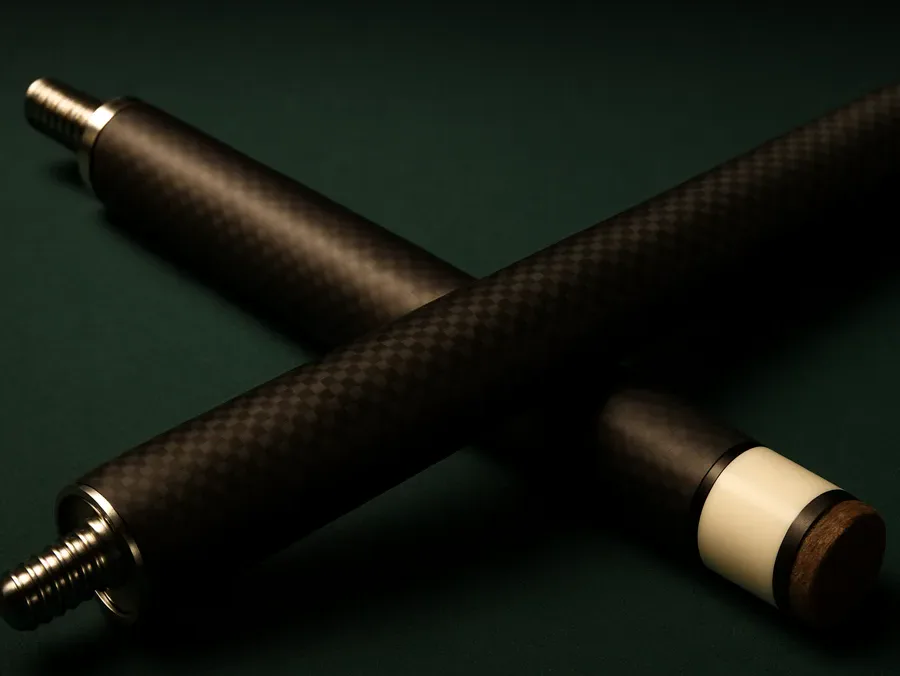
Predator REVO 12.4 Carbon Shaft, Radial
Premium money in the right placePredator's ferrule-less carbon shaft with a low-rise taper and a limited lifetime warranty against warpage. If your butt takes the Radial pin, this is the premium upgrade that changes the shot rather than the look.
Check price on Amazon
Balabushka GB-25 Pool Cue
Buying the look on purposeA licensed GB-series reproduction with the classic Bushka recipe of stainless joint, Irish linen and a maple shaft. You're paying for the design and the name, not a better hit, and that's a fine reason as long as you know it.
Check price on Amazon
GSE 1x1 Hard Pool Cue Case
Protecting an expensive cueBlack leatherette over a hard box with soft lining, bronzed corners and double latches, for one butt and one shaft up to 58 inches. It won't take joint protectors, but it keeps a costly cue out of harm's way between games.
Check price on AmazonFrequently asked questions
Are expensive pool cues worth it?
For players who value craftsmanship, resale or a premium low-deflection shaft, yes. For playing better, rarely: past roughly 400 to 450 dollars the extra money buys inlays, woods and a name rather than a better hit.
Why are pool cues so expensive?
Hand-cut inlays and points, exotic woods and materials, small production runs, American assembly, R&D and the maker's name. Only shaft technology among those changes where the cue ball goes.
Will an expensive cue improve my game?
Not by itself. Dr. Dave Pool Info says buying an expensive cue will not make you a better player. A straight cue with a good tip that you play every time does more than a premium cue you switch to.
What is the most expensive Balabushka cue?
Originals made by George Balabushka top the market: one sold for 45,000 dollars in 1994, and Willie Mosconi's was estimated at up to 100,000 dollars at a 2011 auction. Licensed reproductions list at 910 to 1,825 dollars.
What is the most expensive pool cue in the world?
McDermott's Intimidator, listed at 150,000 dollars. Among playing cues, Predator limited editions reach about 8,000 dollars at Seybert's.
Do expensive pool cues hold their value?
Cues from wanted makers like Predator, Schon, Mezz, McDermott and Viking hold value better than budget cues. A clean used cue usually brings 50 to 65 percent of new, and the warranty doesn't transfer.
Is a carbon fiber shaft worth more than an expensive cue?
For play, usually yes. A name-brand carbon shaft costs about 425 to 570 dollars and changes squirt on side-spin shots, while a pricier butt mostly changes looks.
What are good value pool cues?
Valhalla from about 112 dollars for a first cue, a Players Pure X if you use english, and a McDermott G-Series to buy once. Our best pool cues for the money guide has the details.
Related guides
LeaguePool is reader-supported. When you buy through links on this site we may earn an affiliate commission at no extra cost to you. As an Amazon Associate we earn from qualifying purchases.