Old Pool Cue Values: Are Old Cues Worth Money?
Most old pool cues are worth little more than a usable stick, because most were mass-produced. The ones that are worth real money are made by a known cuemaker, and you can usually tell which group yours is in within an hour. A vintage production cue from a respected maker typically lists with dealers in the hundreds of dollars. Customs from known builders run from several hundred to several thousand, and original Balabushkas and Szambotis sit above everything else.
The best example we found of how far apart those groups are: a Pennsylvania cue dealer listed an early-1970s Doc Frye custom at $2,425 in 2025, in all-original condition. Its second owner had paid $40 for it in 1971. Fifty-odd years did that because of who made it, not because it got old.
Pool cue values by type
These are real prices from vintage cue dealers, not estimates. They're asking or dealer-sold prices, which run above what a private seller usually gets, and they're dated, because the collector market moves. Use them to place your cue in a tier, then price it from sold listings for that maker.
| Type of cue | Examples | Prices we found |
|---|---|---|
| Mass-market, house and import cues | Department-store cues, bar cues, decal-decorated imports, vintage fiberglass | Little. Proficient Billiards listed four vintage Flex-Craft fiberglass cues at $225 for all four, later cut to $150. |
| Vintage production cues from known makers | Adam, Palmer, early Meucci, McDermott, Viking, Schon | 1970 Adam Ambassador $400 (Proficient, 2022). Palmers $500, $850 and $1,850 (Classiccues.com). Jim Rempe Meucci JR-3 $945 and Schon SH101 LTD $935 (Proficient, 2024 to 2025). |
| Customs from smaller or regional makers | Ludwig, Ricco Cervantes, Biagio | $200 to $450 (Classiccues.com under-$1,000 page) |
| Customs from well-known builders | Doc Frye, Rocky Tillis, Ray Schuler, Kersenbrock, Richard Black | $1,200 to $7,000 (Tillis $1,200 and $5,500, Schuler $2,800, Kersenbrock $5,800, a one-of-one Richard Black $7,000 at Classiccues.com; Doc Frye $2,425 at Proficient) |
| Rare factory pieces | A mid-1970s Meucci Originals dice-and-cards prototype | Listed at $6,000, later $4,500 (Proficient, 2024) |
| Original Balabushka and Szamboti cues | George Balabushka (1959 to 1975), Gus Szamboti (1969 to 1988) | Thousands to tens of thousands. One Balabushka sold for $45,000 in 1994; Mosconi's was estimated at up to $100,000 in 2011. |
The Classiccues.com pages carry a 2021 date, so treat those as a few years old. For originals by Balabushka, our Balabushka guide has the full picture, including how to tell an original from the licensed cues sold new today.
Step one: find out who made it
Everything else depends on this. Look at the butt cap, the forearm, the area just above and below the wrap, the joint collar and the pin for a logo, a name, a model number or a serial. Then use the maker's own resources where they exist:
| If it says | Where to identify it |
|---|---|
| McDermott | McDermott's retired-cue page lists every series by year (the A-Series from 1975, B-Series 1976 to 1979 with the clover engraved on every cue, D-Series 1984 to 1990, and so on). Email a photo and McDermott will help identify it. Licensed cues from 1988 to 2007 may not carry the McDermott logo at all. |
| Meucci | The Meucci Originals logo was used until 1990, then a script logo. The factory will tell you what a model originally sold for. Details in our Meucci guide. |
| Viking | The logo style dates it (a window logo before 1989, an oval through 1999, then Viking USA), and Viking's catalog archive goes back to 1974. See our Viking guide. |
| Schon | Schon will identify one of its cues for $30 (Schon guide). |
| Predator | Serials sit on the pin or butt cap, and on the shaft insert or facing. First-generation 314 and Z shafts had none. |
| Balabushka | A cue with his signature on it is almost always a licensed reproduction; originals are generally unmarked. Start with our Balabushka guide. |
| Nothing at all | Not a bad sign by itself. Many customs are unsigned and are identified by joint type, ring work, inlays and wrap. Photograph everything and ask a vintage cue dealer. |
Fancy looks prove nothing. Printed decals that imitate inlay work are common on cheap cues, so a busy design on an unmarked cue is not a reason to get excited.
What makes one cue worth more than another
Meucci's FAQ puts it in three words (age, condition, rarity), and dealers add two more: who owned it and whether it's still original. In practice, this is how they stack up.
- Maker. It sets the ceiling. Nothing else lifts a mass-market cue into collector money.
- Originality. Original shafts, wrap, ferrules and finish. Dealers list how many original shafts come with a cue for a reason: collectors want the cue as it left the maker, and a replacement shaft or a refinish has to be disclosed.
- Straightness and shaft size. Dealers describe the butt and shafts as "straight together and apart" and list each shaft's diameter in millimeters. A shaft sanded thin or bent is the most common value killer.
- Provenance. A cue with paperwork tying it to a champion or a documented collection trades in a different market from an identical cue with no story.
- Rarity. Prototypes, one-of-one pieces and short runs bring the top prices within any maker.
Age alone adds nothing. A 50-year-old budget cue is still a budget cue.
Don't refinish it yet
Here's the honest version of the usual advice. Dealers do refinish vintage cues. Several of the cues in the price table above were sold freshly refinished, rewrapped in period-correct linen, and described that way. But that's a professional choosing a period-correct finish on a cue whose value they already know.
If you don't know what you have, don't sand, refinish, rewrap, retip or polish anything. An amateur refinish can wipe out logos, signatures and the original finish that collectors pay for, and a refinish at a shop costs $190 to $375 or more (repair costs). Wipe it with a barely damp cloth, dry it, and stop there until a dealer or the maker has seen photos. If it turns out to be a player-grade cue you plan to use, our refinishing guide covers doing it right.
How to price an old cue yourself
- Identify the maker and, if possible, the model (above).
- Search sold listings, not active ones. On eBay, filter to sold items. Asking prices on old cues are often far above what anything sells for.
- Match condition. Compare your cue with sold cues that have the same number of shafts, the same originality and similar wear.
- Check dealer listings for the maker to see the top of the range.
- Ask on a cue collector forum or group, with clear photos of the joint, pin, butt cap, rings, inlays and wrap. It costs nothing.
If three sales of the same model cluster together, that's your number. If you can't find any, the cue is either rare enough to need an appraiser or common enough that nobody bothers to list it.
What an appraisal costs
For a cue that might be worth more than a few hundred dollars, a written appraisal pays for itself. Classiccues.com, a vintage cue dealer and appraiser, publishes its fees:
| Service | Fee | What you get |
|---|---|---|
| Appraisal from photos | $150 | Written PDF; noted as not handled in person |
| Appraisal with the cue in hand | $250 plus $50 to $100 return shipping | Cue weighed, rolled and shafts measured; condition graded |
| Authentication, Balabushka or Szamboti | $350 | 25-point checklist; a certificate needs 80 percent |
| Authentication, Palmer, Paradise and others | $175 | Opinion on who made it |
Two tips from that same page. If the cuemaker is still working, send the cue to the maker, who knows best what they'd charge for it today. And experts can disagree on authentication, so for a very valuable cue a second opinion is reasonable.
Where to sell an old pool cue
| Where | Best for | Watch out for |
|---|---|---|
| Vintage cue dealer (outright or consignment) | Known customs and collectible production cues | A dealer pays less than retail; consignment takes longer |
| Cue collector forums and groups | Customs and sought-after production models | Buyers there know values; expect detailed questions |
| eBay | Production models with clear sold-price history | Fees, shipping damage, returns |
| Local sale, pool hall, league | Player-grade cues that aren't worth shipping | Lowest prices, but no shipping |
Write the listing the way dealers do: maker and model, length, weight, each shaft's diameter in millimeters, whether it's straight together and apart, and what's original or replaced. Photos of the joint, butt cap and any inlays do more selling than adjectives.
Ship it properly. The used-cue marketplace Used Cues For Sale requires each piece to be bubble-wrapped separately, packed in a hard case or poster tube so nothing moves, and insured with tracking and signature.
Do pool cues hold their value?
Some do. Cues from makers players actively want, such as Predator, Schon, Mezz and popular McDermott and Viking models, resell better than generic imports when they're kept in good condition. Budget brands resell for little. Collectible customs can rise well above their original price, as the Doc Frye example shows, but that's the exception. Buy a production cue to play with, not as an investment.
Looking for the best value pool cue?
If you searched for a value cue to play with rather than the value of an old one, a used cue from a known maker is often the best value of all. Our used cue buying checklist covers how to inspect one, and best pool cues for the money covers new cues at each price.
Sources
- Classiccues.com: appraisal and authentication fees
- Classiccues.com: Palmer cues, cues under $1,000, other vintage makers and collector cues
- Proficient Billiards: cues for sale and sold listings
- McDermott: retired cues by series and year
- Meucci Cues: FAQ (value factors, original prices)
- Predator: serial number locations
- Used Cues For Sale: packing and shipping standards
Our picks
Links open the current selection and price on Amazon so you can compare real reviews before buying.
HAN'S DELTA 2x2 Hard Oval Cue Case
Protecting a cue that might be valuableSeparate tubes keep original shafts from knocking against the butt, and a hard shell stops the bumps that chip old finishes. Put the cue in one the day you suspect it's worth something.
Check price on Amazon
NEIKO 6-Inch Digital Caliper
Describing a cue for saleBuyers and appraisers want each shaft's diameter in millimeters, and this reads in either inches or millimeters. A shaft that measures close to its original size is a selling point you can prove.
Amazon price: $27.64 as of 4:21 PM EDT. Price and availability can change; Amazon’s price at purchase applies.
Check price on Amazon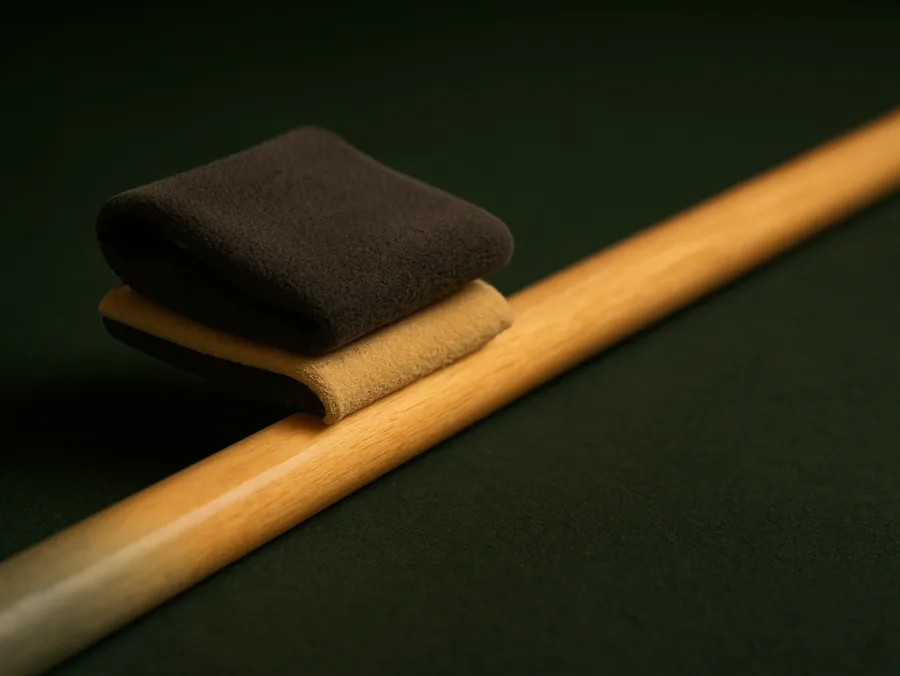
Q-Wiz Shaft Cleaner and Burnisher
Player-grade cues onlyFor an old cue you've confirmed is a player, not a collectible: it lifts chalk and grime and burnishes the shaft without removing wood. Keep it away from anything still waiting on an appraisal.
Check price on AmazonFrequently asked questions
How can I tell if my old pool cue is worth money?
Find the maker first: look for a logo, name, model number or serial on the butt cap, forearm, joint and pin. Known makers and custom cuemakers are where the value is. Then compare sold listings for that maker, or send photos to a vintage cue dealer or the maker.
What are old pool cues worth?
Mass-market cues resell for little. Vintage production cues from known makers have listed with dealers at about 400 to 1,850 dollars, customs from known builders from several hundred to about 7,000, and original Balabushkas for tens of thousands.
Should I refinish an old cue before selling it?
No, not until you know what it is. An amateur refinish can remove logos, signatures and the original finish collectors pay for. Dealers sometimes refinish vintage player cues, but they know the value first and use period-correct materials.
How much does a pool cue appraisal cost?
Classiccues.com charges 150 dollars for an appraisal from photos and 250 with the cue in hand, plus return shipping. Authentication of a Balabushka or Szamboti is 350 dollars. If the cuemaker is still working, ask the maker first.
Where can I find pool cue values?
Sold listings for the same maker and model are the best guide, since asking prices run high. Vintage cue dealers' listings show the top of the market, and makers such as Meucci will tell you a model's original price.
Do pool cues go up in value?
Only some. Customs from known builders and rare pieces can rise well above their original price. Production cues usually sell used for less than new, and budget cues resell for very little.
Is an old Brunswick or bar cue worth anything?
A plain house or bar cue usually isn't worth much beyond its use as a player. Early custom cues built on Brunswick Titlist blanks by makers like Balabushka and Rambow are a different matter and need an expert opinion.
Related guides
LeaguePool is reader-supported. When you buy through links on this site we may earn an affiliate commission at no extra cost to you. As an Amazon Associate we earn from qualifying purchases.