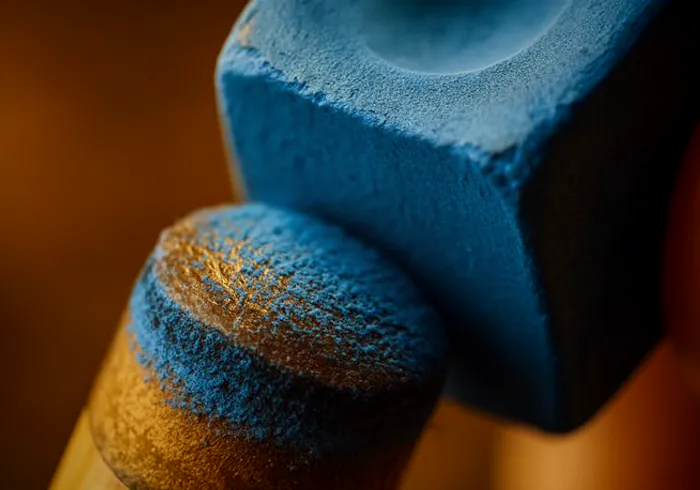
Pool Cue Dimensions and Tip Sizes: Standard Size Chart
A standard pool cue is 58 inches long, weighs about 19 ounces and has a 12.5 to 13mm tip on a 29-inch shaft. That's what you'll find on most house cues, most league cues and most of the best sellers on Amazon. The numbers that vary most from cue to cue are tip diameter and weight, and of those two, tip size is the one people buy wrong.
This page covers both: every standard pool cue dimension in one table, how pool cues differ from snooker and carom cues, what the rules allow, and what an 11.8, 12.5 or 13mm tip actually changes when you're down on a shot.
Standard pool cue dimensions
Here is a full-size American pool cue, part by part. The ranges come from manufacturer spec sheets and the references listed in Sources at the bottom of the page.
| Part | Standard size | Common range |
|---|---|---|
| Overall length | 58 in (147 cm) | 57 to 59 in; short cues 36 to 52 in |
| Weight | 19 oz | 18 to 21 oz for a playing cue |
| Tip diameter | 13mm | 11.5 to 13mm; snooker 9 to 10mm |
| Shaft length | 29 in | 29 to 31 in on two-piece cues |
| Ferrule length | About 3/4 to 1 in | Shorter or none on many low-deflection and carbon shafts |
| Pro taper (straight section behind the tip) | 12 to 14 in | Varies by maker; some run longer |
| Joint collar diameter | About .840 to .855 in | Viking lists .840; McDermott lists .843 and .855 |
| Joint position | Middle of the cue | Snooker cues: about three-quarters of the way down |
McDermott's Lucky L1 is a good example of the norm: 58 inches, 19 ounces standard, a 29-inch maple shaft with a pro taper, a 13mm tip and a 3/8-10 joint. If someone hands you a two-piece cue in a bar, odds are it's within an inch and an ounce of that.
Length and weight: the short version
Most adults should play a 58-inch cue. Predator, which only makes cues from 58 inches up, suggests 59 or 60 inches (or an extension) only for players around 6 ft 6 in and taller, and shorter cues make sense for kids and cramped rooms. Our cue length guide has the height chart and short-cue options.
For weight, 19 ounces is the usual starting point, and Dr. Dave Alciatore's research notes that an ounce either way inside your comfortable range makes little difference. Break cues often run heavier and jump cues much lighter. The cue weight guide covers how to choose and how weight bolts work.
Pool, snooker, carom and specialty cue sizes compared
Pool stick sizes are not universal across cue sports. The biggest difference is at the tip.
| Cue type | Typical length | Typical weight | Typical tip | Joint |
|---|---|---|---|---|
| American pool | 57 to 59 in | 17 to 21 oz (19 most common) | 12 to 13mm | Center, usually steel or composite pin |
| Snooker | 57 to 58 in | 16 to 18 oz | 8 to 11mm, mostly 9 to 10mm | Three-quarter joint, often brass |
| Carom (three-cushion) | About 54 to 56 in | 16.5 to 18.5 oz | 11 to 12mm | Wood-to-wood, no collar |
| Break cue | About 58 in | Often heavier than a playing cue | Often 12.75 to 13mm, hard or phenolic | Center |
| Jump or jump-break cue | Shorter when broken down to jump | Dedicated jump cues can be 13 to 14 oz | Hard phenolic | Center plus a jump joint |
Snooker tips are small because snooker balls are small: 52.5mm against 57.15mm for a pool ball. Put a 13mm pool shaft on a snooker table and it feels like hitting with a broom handle. Going the other way, a 9.5mm snooker cue on a pool table gives you a tiny contact patch on a heavier ball. If you're shopping for that game, see our snooker cue guide.
What the rules allow
Official limits are much wider than what anyone actually plays. The World Pool-Billiard Association's equipment specifications, which also govern most sanctioned events, set these for cues:
- Length: at least 40 inches, with no maximum.
- Weight: no minimum, 25 ounces maximum.
- Tip width: no minimum, 14mm maximum.
- A metal ferrule can be no longer than 1 inch.
- The tip has to be leather or another fibrous or pliable material that can't damage the ball.
So anything wider than 14mm is out at WPA events. (Some break tips are sold oversize, but they're trimmed to the shaft's diameter when installed.) Leagues and bar rules usually say nothing about cue dimensions at all. Snooker's rules set a minimum cue length of 3 feet.
Pool cue tip sizes at a glance
Tip diameter matches the ferrule (or the shaft end, on ferruleless carbon shafts). This chart is the practical summary.
| Tip size | Where you see it | How it plays | Good fit for |
|---|---|---|---|
| 14mm | Break and jump cues, some replacement tips before trimming | Biggest face; legal maximum at WPA events | Breaking, not playing |
| 13mm | Most house cues, most entry and mid-level maple cues | Most forgiving near center ball; most squirt | Beginners, bar players, most 8-ball players |
| 12.5 to 12.9mm | Many carbon shafts (Revo 12.9, Cynergy 12.5, Defy 12.5), many imports | Close to 13mm feel with a little less squirt | Most league players; the safe switch from 13mm |
| 11.8 to 12.4mm | Thinner carbon and low-deflection shafts (Revo 11.8 and 12.4, Cynergy 11.8) | Less endmass and squirt, finer contact point, thinner in the bridge | Players with a repeatable stroke who use a lot of english |
| 10.5 to 11.5mm | Specialty shafts (Cynergy 10.5, Defy 11.5), carom cues | Very low endmass; little margin on off-center hits | Players who've tried thin shafts and want thinner |
| 9 to 10mm | Snooker cues | Sized for 52.5mm balls | Snooker and English pool |
What tip diameter actually changes
Three things, and one thing people expect that it doesn't change.
Squirt
Squirt (also called deflection) is the cue ball pushing off your aim line when you use side spin. Dr. Dave Alciatore's research ties it to endmass, the weight of roughly the last 5 to 8 inches of the shaft. A smaller-diameter shaft carries less wood or carbon at the end, so it usually squirts less. That's the main reason thin tips come on low-deflection and carbon shafts. Our low-deflection explainer goes deeper.
Forgiveness
A larger, flatter tip forgives small alignment errors near center ball: a slightly off hit puts less unintended side spin on the cue ball. That's why 13mm is the beginner's size. On a thin tip, the same small error turns into a bigger change in where the tip meets the ball.
Tip shape and the miscue edge
A tip needs a dome curved enough that you never strike with its edge. Dr. Dave's FAQ cites measurements showing the flattest dome that still works: roughly a quarter-sized radius on a 13mm tip, a nickel on a 12mm tip and a dime on a 10mm snooker-size tip. Any curve rounder than that is fine, so a dime shape works on a 13mm tip too. Shape matters more as tips get smaller. On a 12.5 to 13mm tip, nickel versus dime is barely measurable. Our guide to shaping a cue tip shows how.
What it doesn't change: how much spin you get
A smaller tip does not create more spin on its own. Spin depends on where the tip contacts the cue ball, and for a given contact point every tip size gives the same spin. A thin tip makes it easier to place that contact point precisely and it squirts less, which is why people feel like they get more action. The difference between an 11mm and a 13mm tip is also smaller than most players think.
Best cue tip size for 8-ball
12.5 to 13mm. Bar and league 8-ball is mostly center ball and stun, with some draw, and the bigger tip gives you the most room for error on those shots. If you already play 13mm and like it, there's nothing to fix.
Move down to 12 to 12.5mm if you use side spin often and you're tired of adjusting your aim for squirt. Go below 12mm only after you've hit with one for a few sessions, ideally a friend's cue. 9-ball and 10-ball reward more english for position, so a 12 to 12.5mm shaft makes a little more sense there.
Tip sizes on popular cues and shafts
When a guide says a shaft is 12.4mm, it's describing the tip and ferrule diameter. Here's what common gear ships with, from the makers' spec pages and the Amazon listings.
| Cue or shaft | Tip diameters offered |
|---|---|
| McDermott Lucky cues | 13mm |
| Typical house cue and entry maple cue | 13mm |
| Predator Revo carbon shaft | 11.8, 12.4 or 12.9mm |
| Cuetec Cynergy carbon shaft | 10.5, 11.8 or 12.5mm |
| McDermott Defy carbon shaft | 11.5, 12, 12.5 or 13mm |
| Viking Siege carbon shaft | 12.25, 12.5 or 12.75mm |
| Most budget carbon cues on Amazon | 12.5 or 13mm |
| Snooker cues | 9 to 10.5mm |
Choosing between the three Revo sizes is its own question, covered in our Revo diameter guide. For carbon shafts in general, see best carbon fiber cue shafts.
Buying 13mm cue tips and other replacement tips
Replacement tips come in three types, and they're not interchangeable.
- Glue-on leather tips are what every decent cue uses. They're commonly sold at 13 or 14mm (PoolDawg's tip chart lists most tips at 14mm) and trimmed down flush with your ferrule after gluing. So a 13mm or 14mm tip fits a 12.5mm shaft fine; a 12mm tip will not fit a 13mm ferrule.
- Slip-on tips are a leather tip on a plastic cap that pushes over the end of the shaft. The best-selling kits on Amazon come in 9, 10, 12 and 13mm. They're a fast fix for house cues and kids' cues, but the cap covers your ferrule and adds a sleeve to the end of the shaft, so don't put one on a cue you care about.
- Screw-on tips thread into a matching ferrule, mostly on inexpensive cues. Kits usually come in 12 and 13mm with their own ferrules.
Tip thickness matters too. One popular 13mm kit lists its tips at 5mm thick, and a common rule is to replace a tip once less than about 1/8 inch is left above the ferrule. For brands and hardness, see our guides to the best pool cue tips and soft vs hard tips, and how to replace a cue tip if you're doing it yourself.
How to measure your tip and shaft size
Don't trust the number on the cue. Shafts that have been sanded and cleaned for years lose diameter, and a tip that has mushroomed reads larger than the ferrule underneath it.
- Use a digital caliper set to millimeters.
- Measure the ferrule just below the tip, not the tip itself. On a ferruleless carbon shaft, measure the shaft end right under the tip.
- Take two readings at right angles. If they differ by more than a tenth of a millimeter, the ferrule or shaft end isn't round.
- Measure the shaft again about 12 inches back. If the number is the same, you have a pro taper. If it's noticeably larger, you have a faster or conical taper.
- Measure the joint collar too if you plan to buy a new shaft. A mismatch of a few hundredths of an inch shows up as a step at the joint.
Pool cue shaft sizes: diameter, length and taper
Shaft size means three separate measurements. Diameter is the tip size discussed above. Length is usually 29 inches on a two-piece cue, with 30 and 31 inches offered on some shafts (McDermott sells the Defy in all three, and Predator's Revo comes in 29 or 30). Taper is how the shaft thickens from tip to joint.
A pro taper keeps the same diameter for roughly the first 12 to 14 inches and then widens toward the joint; most two-piece pool cues use it, and it feels identical through your bridge on a long stroke. A conical taper widens steadily from the tip and is common on house cues. If you play a closed bridge, a pro taper with a long straight section feels the most consistent as the cue slides.
You can't fit a shaft just by tip size, though. It also has to match your joint pin and collar. Our joint types guide explains the pins and best replacement cue shafts covers buying one.
Can you change your tip size?
Only downward, and only by small amounts. A tip is trimmed to the ferrule, so the ferrule decides the size. Going from 13mm to 12.5mm on a maple shaft means reducing the ferrule and shaft end, which is lathe work for a cue repair shop, and it changes the taper. Ask the shop whether your shaft has enough wood to do it well. You can't make a shaft bigger. If you want a different size, the usual answer is a second shaft in that diameter, which also lets you switch back.
Sources
- World Pool-Billiard Association: Recommended Equipment Specifications, section 17 (cue sticks)
- Dr. Dave Alciatore: cue tip size and shape FAQ
- Dr. Dave Alciatore: shaft endmass and squirt
- Dr. Dave Alciatore: cue weight FAQ
- Predator: pool cue length by height
- Predator: Revo shaft diameters and tapers
- McDermott: Defy shaft sizes, lengths and joint diameters
- Viking: Siege shaft specifications
- Wikipedia: Cue stick (snooker and carom cue dimensions)
- Wikipedia: Snooker (ball size and minimum cue length)
Our picks
Links open the current selection and price on Amazon so you can compare real reviews before buying.

McDermott Lucky L1 Pool Cue, 13mm, 3/8-10
The standard-size cueThe textbook dimensions in one cue: 58 inches, a 29-inch hard rock maple shaft with a pro taper, a 13mm tip and a 3/8-10 joint, at 19 ounces standard. McDermott's half-inch weight bolt lets you make it lighter or heavier, and a soft case is included.
Check price on Amazon
Kamui Clear Black Soft Layered Tip, 13mm
Replacement tip for 12.5 to 13mm shaftsA layered soft tip sold at 13mm, so it trims down cleanly to a 12.5 or 12.75mm ferrule. Soft tips hold chalk well, which matters more on a smaller tip with less margin at the edge.
Check price on Amazon
Tweeten Le Pro 13mm Cue Tips, 12 Pack
Re-tipping house and league cuesA dozen 13mm tips. If you keep a few cues going for a home table or a league team, a pack is the cheap way to re-tip them all at the standard size.
Check price on Amazon
Pengxiaomei Slip-On Cue Tips, 9/10/12/13mm
House cues and kids' cues onlyForty slip-on tips, ten each in 9, 10, 12 and 13mm, with leather tips on plastic caps. Measure the shaft end first and pick the matching size. Fine for a basement rack of house cues; keep them off a good cue, since the cap covers the ferrule.
Check price on Amazon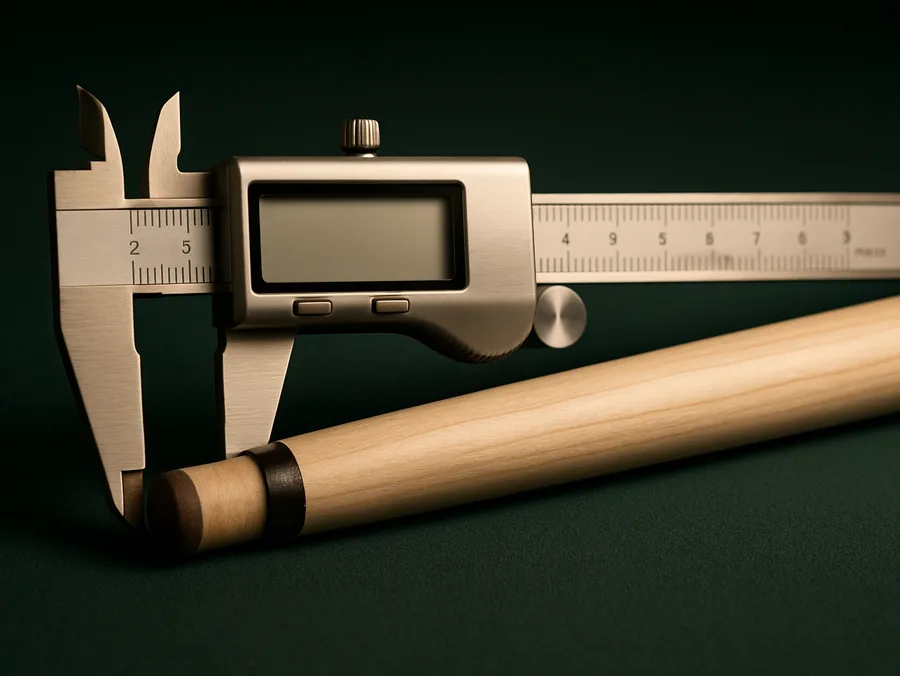
NEIKO 6-Inch Digital Caliper
Finding your real tip sizeReads in millimeters or inches. Measure the ferrule under the tip to learn whether your 13mm shaft is still 13mm, and check the joint collar before you order a new shaft.
Check price on Amazon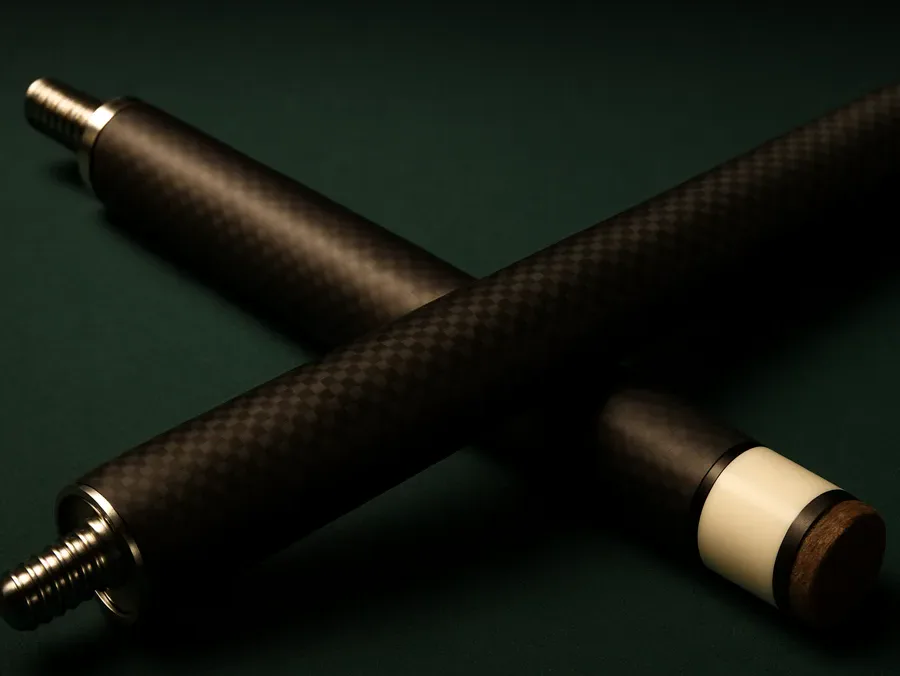
Predator REVO 12.4 Carbon Shaft, Radial
Trying a smaller tipPredator's middle diameter, 12.4mm, on a ferruleless carbon shaft with a low-rise pro taper. It's the usual step down from 13mm for players who want less squirt without going thin. This listing is the Radial pin, so match it to your butt.
Check price on AmazonFrequently asked questions
What is the standard size of a pool cue?
58 inches long and about 19 ounces, with a 12.5 to 13mm tip on a 29-inch shaft. Most adult cues fall between 57 and 59 inches and 18 to 21 ounces.
What are standard pool cue dimensions in centimeters?
A 58-inch cue is about 147 cm long. A 29-inch shaft is about 74 cm, and a 19-ounce cue weighs about 540 grams.
What size tip is on a standard pool cue?
13mm is the traditional American size and what most house and entry-level cues use. Many modern shafts, especially carbon, come at 12.5mm or smaller.
What tip size should a beginner use?
13mm, or 12.5 to 13mm. The larger tip forgives small alignment errors near center ball while you're still building a consistent stroke.
What is the best cue tip size for 8-ball?
12.5 to 13mm for most players. Drop to 12 to 12.5mm only if you use a lot of side spin and want less squirt.
Does a smaller tip give more spin?
No. For a given contact point on the cue ball, every tip size produces the same spin. A smaller tip squirts less and makes the contact point easier to place, which is why it can feel like more spin.
What size are snooker cue tips?
Usually 9 to 10mm, with a full range of roughly 8 to 11mm. Snooker balls are 52.5mm, smaller than 57.15mm pool balls, so the tips are smaller too.
What is the biggest tip size allowed?
14mm under the WPA equipment specifications. The same rules set a 40-inch minimum length and a 25-ounce maximum weight.
Will a 13mm tip fit a 12.5mm shaft?
Yes, if it's a glue-on tip. It gets trimmed flush to the ferrule after gluing. A tip smaller than your ferrule will not work.
How do I find out what size my cue tip is?
Measure the ferrule just under the tip with a digital caliper in millimeters. Measuring the tip itself can mislead you if it has mushroomed.
Can I change my tip size later?
Only smaller, by a little, and a cue repair shop has to reduce the ferrule and shaft end on a lathe. To get a meaningfully different size, buy a second shaft in that diameter.
Related guides
LeaguePool is reader-supported. When you buy through links on this site we may earn an affiliate commission at no extra cost to you. As an Amazon Associate we earn from qualifying purchases.