Best Budget Carbon Fiber Pool Cue Shafts (2026)
The cheapest carbon fiber cue shafts worth buying sit just under $200, and the name-brand ones now start around $425. On October 15, 2026, Seybert's listed the McDermott Defy at $432, the Cuetec Cynergy at $449, the Viking Siege at $450 and the Predator Revo at $549, while a Linc radial carbon shaft sat at $179. That gap of $250 or more is the whole story of this guide.
A budget shaft gets you the parts of carbon that matter most to a league player: it won't warp, it wipes clean with a damp towel, and most of them deflect less than plain maple. What you give up is consistency. One cheap shaft arrives straight and tight, the next has an undersized ferrule and a tip that falls apart in a month. Below is how to tell which one you got, and when the extra money actually buys something.
Where cheap carbon ends and name-brand carbon begins
Prices moved up over the last few years, so older advice about a $250 to $350 middle tier is out of date. A 2022 price list on the AzBilliards forum had the Defy at $355 and the Cynergy at $399. Today the same shafts sell for $430 to $450 at a major retailer, and the Defy starts at $480 on McDermott's own site. The middle tier has mostly emptied out, and what remains is two groups with a real gap between them.
| Tier | Typical price | Examples | What you're paying for |
|---|---|---|---|
| Import budget | About $140 to $200 | Rhino, CUEDESG, Konllen, Linc | Carbon basics: no warping, low friction, usually lower deflection than maple |
| Name brand | About $425 to $480 | McDermott Defy, Cuetec Cynergy, Viking Siege, Jacoby BlaCk | Quality control and warranty, plus more diameters, pins and resale |
| Flagship | About $500 to $600 | Pechauer Rogue II, Predator Revo, Mezz Ignite | Brand pedigree, tightly controlled tapers, strongest resale |
Prices in the table come from Seybert's and PoolDawg listings checked on October 15, 2026. Product cards below show live Amazon prices.
Under about $120 is a different conversation. Some of those are carbon-wrapped composites or hybrids rather than full carbon shafts, so read the listing closely before you assume you're getting the same thing.
Budget carbon shafts compared
These are the shafts on this page, set beside the name-brand benchmark. Specs come from the Amazon listings and McDermott's Defy page.
| Shaft | Tier | Joints offered | Tip sizes | Length |
|---|---|---|---|---|
| Rhino carbon shaft | Budget | 3/8-10 (this listing) | 10.5 to 12.9mm | 30 in, about 4.0 oz |
| CUEDESG carbon shaft | Budget | 3/8x8, 3/8x9, 3/8x10, 5/16x14, 5/16x18, quick release | 10.5, 11.8, 12.5mm | About 29.5 in |
| Cuetec Cynergy | Name brand | Most common pins, including Uni-Loc, Radial, 3/8x10, 5/16x14, 5/16x18 and Mezz | Varies by model | Varies by model |
| McDermott Defy | Name brand | 3/8-10, McDermott QR, 5/16-14, 5/16-18, Viking QR, Radial, Uni-Loc | 11.5, 12, 12.5, 13mm | 29, 30 or 31 in |
| Predator Revo (benchmark) | Flagship | Uni-Loc, Radial, 3/8x10, 5/16x14, 5/16x18 | 12.4 and 12.9mm | Standard |
The pattern is plain: the budget shafts give you fewer lengths and diameters, and each listing covers a narrower set of pins. If you need a 31-inch shaft or an 11.5mm tip, the cheap end of the market probably can't help you.
Why two carbon shafts can deflect differently
Carbon isn't automatically low deflection. Dr. Dave Alciatore's carbon shaft FAQ says plainly that not all carbon fiber shafts produce the same cue ball deflection, and he tested an inexpensive Rhino shaft for one of his videos.
The reason is endmass. His squirt research shows that deflection is set almost entirely by the mass in the last 5 to 8 inches of the shaft. A smaller diameter, a hollow or foam-filled core, and a light ferrule (or none) all cut that mass. Two shafts can both be carbon and still differ in wall thickness and in what sits at the tip end, and that's where the deflection gap comes from.
What this means for a budget buyer: you'll very likely get less squirt than with standard maple, but you can't assume the number matches a Revo. Since squirt depends on the front end, a cheaper shaft with a well-made, light tip end can play better than its price suggests. No maker of the budget shafts here publishes deflection test data, so that part comes down to how it plays for you.
Fit: the joint pin and the collar
Most bad budget-shaft stories start at the joint. Get these three things right before you order.
- Start with the pin. 3/8-10 is common on McDermott and Viking-style butts, 5/16x18 on many imports and Players-type cues, and Uni-Loc or Radial on Predator, Lucasi and many custom cues. If you're unsure, our joint types guide shows how to identify yours.
- Check flat-faced versus piloted. Some listings come in flat and piloted versions of the same pin. Order the one that matches your butt.
- Compare collar diameters. The Rhino and CUEDESG listings both give a joint collar of about 21.5mm. McDermott lists its joint diameters as .843 or .855 inch, which works out to about 21.4 or 21.7mm, and says to measure with a caliper because they vary. A few tenths of a millimeter won't change how the cue plays, but you'll see and feel a small step at the joint if the two don't match.
Spending ten minutes with a caliper on your butt's joint before you buy saves a return later.
Carbon shafts for Viking, Joss, McDermott and Lucasi cues
Most people shopping for a shaft already own a butt, so here is what each common brand needs.
| Your cue | Joint to order | Name-brand carbon option | Budget route |
|---|---|---|---|
| Viking | Viking quick release (a 5/16x18 quick-release pin, .840 inch joint per Viking's Siege spec sheet) | Viking Siege (12.25, 12.5 or 12.75mm), or the McDermott Defy in Viking QR | A 5/16x18 budget shaft threads on, but check the collar diameter and whether it's a quick-release pin |
| Joss | 5/16x14, usually piloted | Defy and Cynergy are both sold in 5/16x14 | CUEDESG lists 5/16x14; confirm flat vs piloted |
| McDermott | 3/8-10 or McDermott quick release | McDermott Defy | Rhino 3/8-10 (this listing) |
| Lucasi, Predator, many customs | Uni-Loc or Radial | Cuetec Cynergy, Predator Revo, Defy | Fewer budget choices; check each listing |
What about a universal pool cue shaft? Some carbon shafts use an interchangeable joint with adapters, so one shaft can fit several butts. That's handy if you own more than one cue, but every adapter adds a joint where play can creep in. If you own one cue, order the shaft in its native pin.
How to inspect a budget carbon shaft the day it arrives
Do this inside the return window. Most of these checks take a minute each.
- Thread it on. It should spin on smoothly and seat flush with no gap and no rocking. Grit, binding or a visible gap means it goes back.
- Roll the assembled cue on a flat table. Carbon doesn't warp, but an insert glued in crooked shows up as a wobble right at the joint.
- Measure the tip end. AzBilliards forum owners of one budget cue found the ferrule smaller than the listed size. A shaft sold as 12.5mm that measures 12.1mm is a different shaft from the one you paid for.
- Check the tip and ferrule. The tip should be centered and flush with the ferrule, with no glue line or overhang.
- Run it through your bridge. Slick is normal for carbon. Tacky or gritty means a poor coating.
- Hit a rack of balls and listen. A rattle or buzz points to something loose inside.
Anything wrong in the first three checks is a return, not a repair. Carbon can't be sanded straight or re-turned the way a wood shaft can, and sanding a name-brand carbon shaft usually voids the warranty (McDermott says so for the Defy).
Plan on a tip swap
Owners in that same forum thread called the factory tip on their budget carbon cue poor and replaced it right away, then described the shaft as noticeably better. That matches the general picture: the tip is where import makers save money, and it's the part that shapes your first impression.
Which tip is best for a carbon fiber shaft? A quality layered leather tip in soft or medium hardness. Carbon shafts are stiff, so many players like a slightly softer tip to keep some feel, but there's no rule. Choose the hardness you already like on wood. Have it installed by someone who works on carbon regularly, because the tip has to be trimmed flush to the ferrule without scoring the shaft. Our guides to cue tips and soft vs hard tips go deeper, and what a retip costs covers the shop side.
Budget around $25 to $50 extra for a good tip and installation, and count it as part of what the shaft costs you.
Shaft diameter and taper
If you're coming from a 13mm maple shaft, 12.5mm is the safe first carbon shaft. It's the size most switchers start with, and it's the size every budget maker offers. Smaller tips (11.8mm, 12mm) trim endmass further, which helps deflection, but they feel thin in the bridge at first and give you a smaller margin on off-center hits. Try a friend's smaller shaft before you buy one. Our tip size guide has the full breakdown.
Taper is how fast the shaft thickens behind the tip. Budget listings mostly just say pro taper, meaning the shaft stays slim for a long stretch before widening. Predator is more specific about the Revo: a low-rise taper with an 8% rise over the first 14 inches. If you slide your bridge a long way on follow-through, a slow taper feels the same along that whole stroke, and that's worth more to most players than shaving another half millimeter off the tip.
Feel, sound and the adjustment period
Carbon sounds and feels different. Some players call it dead or a little hollow next to maple, and a few never warm to it. Expect a couple of weeks of regular play before you judge it, mostly because your aim has been compensating for maple's deflection for years and now it doesn't need to.
One technical caveat from Dr. Dave: because carbon shafts are laterally stiffer, the tip springs back faster and may double-hit on extreme spin shots near the miscue limit. You'll rarely hit those shots in league play, but if you live on maximum english, it's worth knowing.
Not sure carbon is for you at all? Read whether carbon shafts are worth it and wood vs carbon first. A budget shaft is also the cheapest way to find out: if you hate it, you're out $150 instead of $500.
Budget carbon or a low-deflection maple shaft?
Low-deflection maple shafts, such as the Lucasi Zero Flexpoint or Predator's 314, also cut squirt, and they keep the feel of wood. They do warp and need sanding and sealing like any maple shaft. Pick carbon if your cue lives in a car trunk or a humid bar, or you hate maintenance. Pick LD maple if you love the wood hit and keep your cue indoors. Our low-deflection shafts guide compares the maple options.
Shaft only or a complete carbon fiber pool cue?
If your current butt is straight and you like its weight and wrap, a shaft is the cheaper way into carbon. A complete carbon fiber pool cue makes sense when your butt is a house cue or doesn't take a common pin. Name-brand complete cues cost much more than a budget shaft: PoolDawg lists Cuetec's Cynergy cues at $695 and up. Low-priced complete carbon cues exist from import brands, but quality varies just as it does with shafts, so the same inspection steps apply. For complete cues, see our Cuetec Cynergy guide and best pool cues for the money.
When the name-brand shaft is worth the extra money
Spend the extra $250 to $350 in four situations:
- You compete for money or ranking points and want a shaft you can replace with an identical one if it's lost or broken.
- You expect to sell or trade it. Name-brand carbon holds value on the used market. Import shafts barely resell.
- You need an unusual size: an 11.5mm tip, a 31-inch length, or a pin the budget makers don't sell.
- You want warranty support from a company with a service department. McDermott, Viking and Cuetec each run a registration-based warranty program, and Viking and Cuetec require you to register.
Otherwise, buy a budget shaft, inspect it the day it arrives, and spend part of the savings on a good tip. Our best carbon fiber shafts guide covers the name-brand options if you decide to go that way.
Sources
- Dr. Dave Alciatore: advantages of carbon fiber shafts
- Dr. Dave Alciatore: how shaft endmass affects squirt
- McDermott: Defy carbon fiber shaft specifications
- Viking: Siege carbon fiber shaft specifications
- Seybert's: carbon fiber shaft listings and prices (checked October 15, 2026)
Our picks
Links open the current selection and price on Amazon so you can compare real reviews before buying.

RHINO 3/8-10 Carbon Fiber Pool Cue Shaft
Best price to performanceA 30-inch pro-taper carbon shaft of about 4 ounces on a stainless 3/8-10 joint, which fits the common McDermott and Viking-style pin. Rhino offers tips from 10.5 to 12.9mm, so you can order the diameter you actually play. Measure your collar first: the listing gives about 21.5mm.
Check price on Amazon
CUEDESG Low-Deflection Carbon Fiber Shaft
Most joint optionsFoam-filled carbon in 10.5, 11.8 or 12.5mm, sold with 3/8x8, 3/8x9, 3/8x10, 5/16x14, 5/16x18 or quick-release joints. If your butt has an odd import pin, this is the budget shaft most likely to fit it.
Check price on Amazon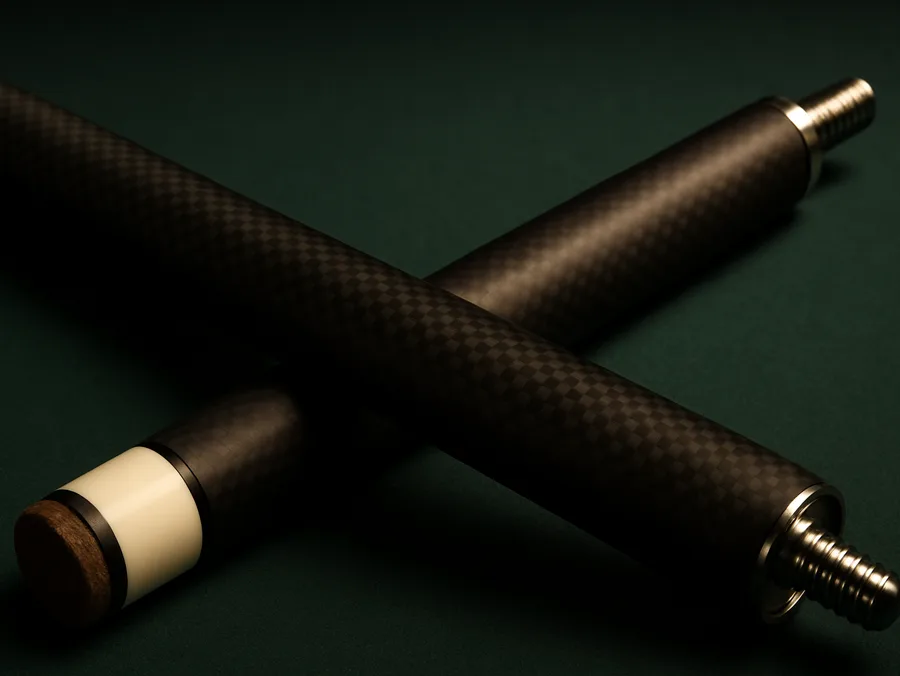
Cuetec Cynergy CT-15K Carbon Shaft
Carbon without the gambleThe name-brand step up: Cuetec makes the Cynergy in most common pins and backs it with a registration-based warranty. You pay well over twice the budget price for consistency and resale. This link is the 12.5mm in 3/8x10; Cuetec lists other pins separately.
Check price on Amazon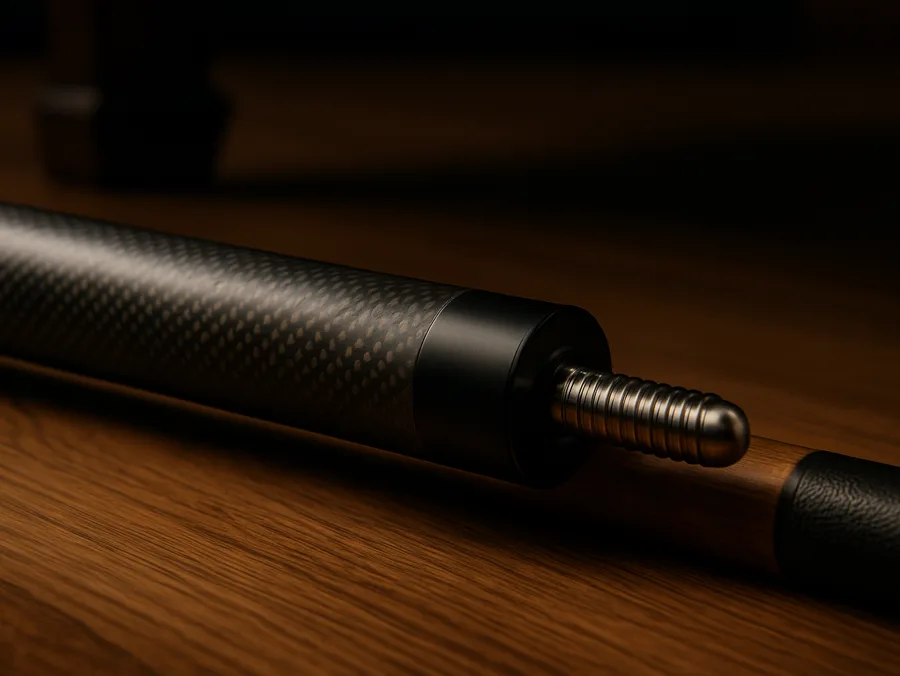
McDermott Defy 12.5mm Carbon Shaft, 3/8x10
Carbon with a lifetime warrantyMcDermott offers the Defy in 11.5 to 13mm and 29 to 31 inches and lists two joint diameters, so it can match your butt closely. Don't sand it: McDermott says sanding voids the lifetime warranty.
Check price on Amazon
Kamui Clear Black Soft Layered Tip, 13mm
The tip swapA layered soft tip to replace the factory tip a budget shaft usually ships with. It comes at 13mm and gets trimmed down to your ferrule, so have a shop that works on carbon install it.
Check price on Amazon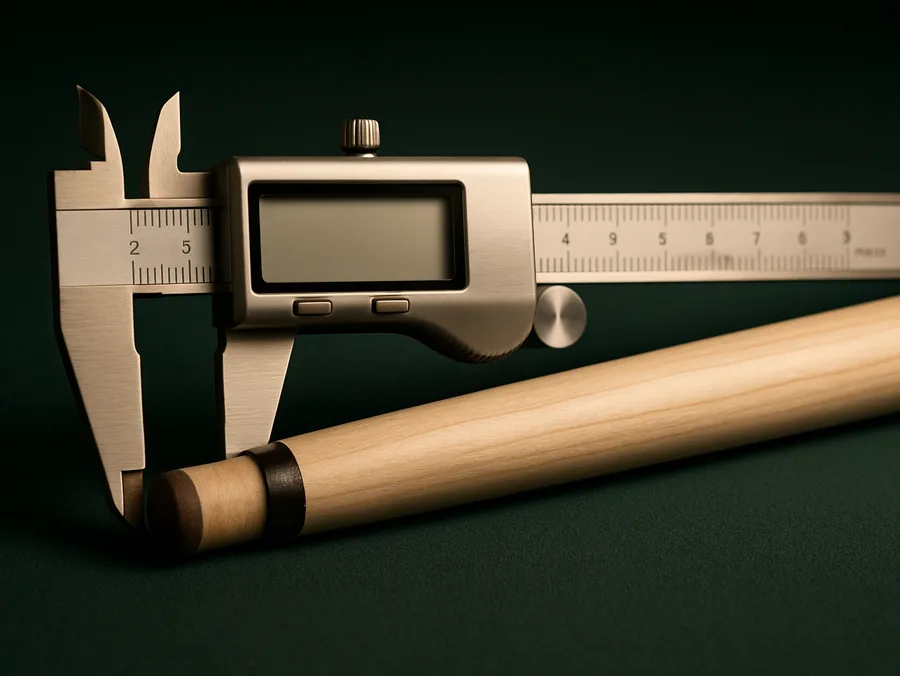
NEIKO 6-Inch Digital Caliper
Checking what you gotMeasure your joint collar before you order and the tip end when the shaft arrives. If a 12.5mm shaft measures 12.1mm, you know to send it back while the window is open.
Check price on AmazonFrequently asked questions
What is the cheapest carbon fiber pool cue shaft worth buying?
Full carbon shafts from import brands such as Rhino and CUEDESG, which sell for roughly $140 to $200 depending on the listing. Below that, check carefully whether the shaft is full carbon or a composite. Buy where returns are easy and inspect it the day it arrives.
Are cheap carbon fiber shafts any good?
Many are. You get the main carbon benefits: no warping, easy cleaning and usually lower deflection than plain maple. The tradeoff is inconsistent quality control, especially at the joint and ferrule, plus weaker factory tips and almost no resale value.
How much does a name-brand carbon shaft cost?
On October 15, 2026, Seybert's listed the McDermott Defy at $432, the Cuetec Cynergy at $449, the Viking Siege at $450, the Jacoby BlaCk at $475, the Pechauer Rogue II at $510 and the Predator Revo at $549.
Do budget carbon shafts deflect as little as a Revo?
Not necessarily. Dr. Dave's testing shows carbon shafts differ in deflection because squirt depends on the mass in the last 5 to 8 inches of the shaft. Most budget shafts still deflect less than standard maple, but none of them publish test numbers.
Will a budget carbon shaft fit my cue?
Only if you order the right pin and the flat or piloted version that matches your butt. Also compare collar diameters: budget listings often give about 21.5mm, while McDermott lists .843 or .855 inch (about 21.4 or 21.7mm), so a small step at the joint is possible.
What tip should I put on a carbon fiber shaft?
A quality layered leather tip in the hardness you already like, often soft or medium. Have it installed by someone who works on carbon so the tip is trimmed flush without scoring the shaft.
What is the best carbon fiber pool cue shaft for the money?
For most league players, a well-inspected budget shaft such as the Rhino or CUEDESG with a better tip installed. If you want warranty support and resale value, the McDermott Defy and Cuetec Cynergy are the lowest-priced name-brand options at major retailers.
Are carbon fiber pool cues better than wood?
They're more stable and easier to keep clean, they won't warp, and many deflect less than standard maple. Wood still wins on feel for some players, costs less, and can be sanded and re-turned. Low-deflection maple shafts sit in between.
What carbon shaft fits a Viking cue?
Viking cues use a 5/16x18 quick-release pin. Viking's own Siege shaft fits, and McDermott sells the Defy in Viking quick release. A generic 5/16x18 shaft may thread on, but check the collar diameter before you buy.
What size carbon shaft should I get?
12.5mm if you're coming from a 13mm maple shaft. Smaller diameters reduce deflection further but feel thin at first, so try one before you buy it.
Related guides
LeaguePool is reader-supported. When you buy through links on this site we may earn an affiliate commission at no extra cost to you. As an Amazon Associate we earn from qualifying purchases.