Can You Put a Pool Table on Carpet?
Yes, you can put a pool table on carpet. The catch is the foam pad under the carpet: a slate table's weight crushes it over the first weeks, unevenly, so the table drifts out of level and needs leveling again once it stops sinking. Low-pile carpet on a thin, firm pad is close to a hard floor. Thick plush or shag on a deep pad is the hard case.
The carpet pays a price too. Legacy Billiards notes that crushed padding doesn't recover, so the dents are there for good if the table ever moves.
What happens when a pool table sits on carpet
A slate table rests its whole weight on four or six small feet. On a hard floor, those feet stay put. On carpet, they press into the pile and the foam pad underneath, and the pad keeps compressing for a while. Each foot sinks a slightly different amount, because the pad is never perfectly even and the weight isn't spread perfectly evenly over the legs. The table that was level on delivery day slowly isn't.
How long that takes depends on the carpet, the pad type and the pad's thickness. Legacy Billiards says it takes a few weeks for padding to reach its final thickness. GameTablesOnline says compression can start within days and full settling can take a few weeks or a few months. Pool Table Portfolio, writing about new installs in general, says the pad, subfloor and joists keep compressing over the first six months. Nobody gives a fixed number, so plan on checking until the table proves it has stopped.
Which carpet works under a pool table
| Floor covering | How a table does on it | Our take |
|---|---|---|
| Low-pile, tightly woven or commercial-style carpet on a thin, firm pad | Settles quickly and holds level well | The best carpet choice. Commercial weaves also hide the foot traffic around the table. |
| Standard cut-pile carpet on a thick foam pad | Settles for weeks, needs several leveling rounds | Workable with patience and rigid pads under the legs |
| Plush or shag | Sinks the most and keeps flexing | Expect more frequent leveling. Consider plywood or carpet tiles under the table. |
| Carpet tiles | No separate pad and no stretching | Good under a table, and easy to replace if one stains |
| Area rug over a hard floor | Thin rug settles fast; a rug pad adds sink | Fine, if it's big enough (see below) |
If you're carpeting a room for a table, buy good quality. Once a slate table is standing on it, replacing it means moving the table.
How long to wait, and when to relevel
- Delivery day: the installer levels it, or you do. Legacy Billiards suggests waiting two or three days after the slate's weight goes on the carpet before leveling, so expect the day-one level to drift.
- The first weeks: check every week or so. GameTablesOnline's routine is to keep checking until several weeks pass with no change.
- Once it stops moving: check every 6 to 12 months, which is Black Label Billiards' interval, and they add that carpet calls for more frequent checks than a hard floor.
- If you ever shift the table to a new spot, the clock starts over.
A slow roll test is enough to tell you whether anything has changed; the full method is in how to level a pool table. When you book an install on carpet, ask whether the installer will come back for a touch-up after it settles and what that visit costs.
Leveling a pool table on carpet
Shims slid under a foot on carpet keep sinking with the foot, and soft shims compress on top of that. That's why so many carpeted tables never seem to stay level. Two fixes help:
- Put a rigid, wide base under each foot first: heavy-duty furniture coasters or caster cups, or a hard leveling pad. It spreads the load over a bigger patch of pad, so the foot sinks less and more evenly, and it gives the leg leveler a flat surface to turn on.
- Do the fine adjustment with the leg levelers above that base rather than with stacks of shims buried in the pile.
Check with a machinist level, not a carpenter's level. The drift from settling is small, which is exactly the range a carpenter's bubble misses; our guide to pool table levels shows the difference in numbers. On very soft carpet, a sheet of plywood under the whole table footprint makes a stiffer platform. Black Label Billiards suggests plywood underlayment for slightly uneven floors in general. It works, but it's a visible step and a trip hazard at the edges, so we'd try coasters first.
Protecting the carpet
The dents are permanent. Legacy Billiards says crushed padding doesn't return to its original shape, so choose the table's position before it goes down and treat that patch of carpet as committed.
- Coasters or cups under the legs spread the load, limit the dent to a neat circle and keep the feet from grinding the fiber when the table gets bumped.
- Stained wood legs can bleed onto carpet. A rubber or plastic protector under each leg stops it.
- Moving the table in: lay a tarp or heavy cloth over the carpet and roll the dolly on that, as Legacy recommends, so you don't leave a track from the door.
- Never drag a slate table across carpet. It stresses the frame and can knock the slate seams out of line. A move of more than a few feet means taking it apart; see how to move a pool table.
- A cover keeps carpet fiber and dust that the room kicks up off the cloth. See pool table covers.
Putting new carpet under an existing pool table
Wall-to-wall carpet is stretched as it's installed, and it can't be stretched under a table that's standing on it. The options, best first:
- Have the table taken down and moved out, lay the carpet, then have it rebuilt and releveled. It costs a mover's fee, but it's the only way to get a properly stretched carpet and an untouched table. See pool table moving cost.
- Use carpet tiles under the table. They need no pad and no stretching, so they can go in one leg at a time with the table lifted slightly, followed by a releveling.
- Lift one end at a time while the carpet is rolled under. Legacy describes installers doing it this way. It risks the table, and they call it "not the best possible solution."
- Carpet around the legs and leave the floor under the table as it is. Easy, until the day the table moves.
A rug under a pool table
A rug on a hard floor protects it from dropped balls, softens the noise and frames the table. The rule that matters is size: the rug has to be big enough that a player is never standing with one foot on it and one off while shooting. That means the rug should cover the table plus most of the cueing space around it, so work it out from the room clearance in how much room you need for a pool table. Put the rug down before the table, because moving it afterward means lifting the table.
Laminate, vinyl plank, hardwood and concrete
BestLaminate, a flooring retailer, says pool tables over 500 pounds can cause problems for laminate, mostly at the locking joints between planks. Its suggestions: a thicker plank rated AC4 or higher, rubber coasters made for heavy objects under the legs, and for tables over 500 pounds, a laminate "island" bordered by moldings under the table. Most slate tables are well over that weight (see how much a pool table weighs), so check the flooring maker's guidance for your floor before the table goes in.
Hardwood holds level better than carpet, but it moves a little with humidity and bare table feet can dent it, so use pads. Concrete and tile are the easiest floors of all: no settling and no flex. Upper floors raise a different question (whether the floor can carry the load), covered in can you put a pool table upstairs.
If you're choosing the floor
For a slate table, our order is concrete or tile, then hardwood, then low-pile carpet or carpet tiles, then thick plush. On carpet you're trading a few extra leveling sessions for a warmer, quieter room, and for most home players that's a fair trade. Just don't book the final leveling for the day the table arrives.
Sources
- Legacy Billiards: carpeting and pool tables (pad compression, waiting period, moving onto carpet)
- Black Label Billiards: first-time pool table owner (check interval, carpet)
- GameTablesOnline: carpet or hardwood floors (settling time, check routine)
- BestLaminate: laminate and heavy objects (500 lb guidance)
Our picks
Links open the current selection and price on Amazon so you can compare real reviews before buying.

Heavy Duty Furniture Coaster Cups
Spreading leg weight on carpetWide, rigid cups under each foot spread the load over more of the pad, so the legs sink less and more evenly, and the levelers turn on a flat surface instead of in the pile. Measure your feet before you buy.
Check price on Amazon
12-Inch Master Precision Machinist Level
Checking level as the carpet settlesRated to 0.02 mm per meter, so it shows the small drift a settling carpet causes well before a carpenter's level does. Worth owning on carpet, where you'll check more than once.
Amazon price: $58.40 as of 1:31 PM EDT. Price and availability can change; Amazon’s price at purchase applies.
Check price on Amazon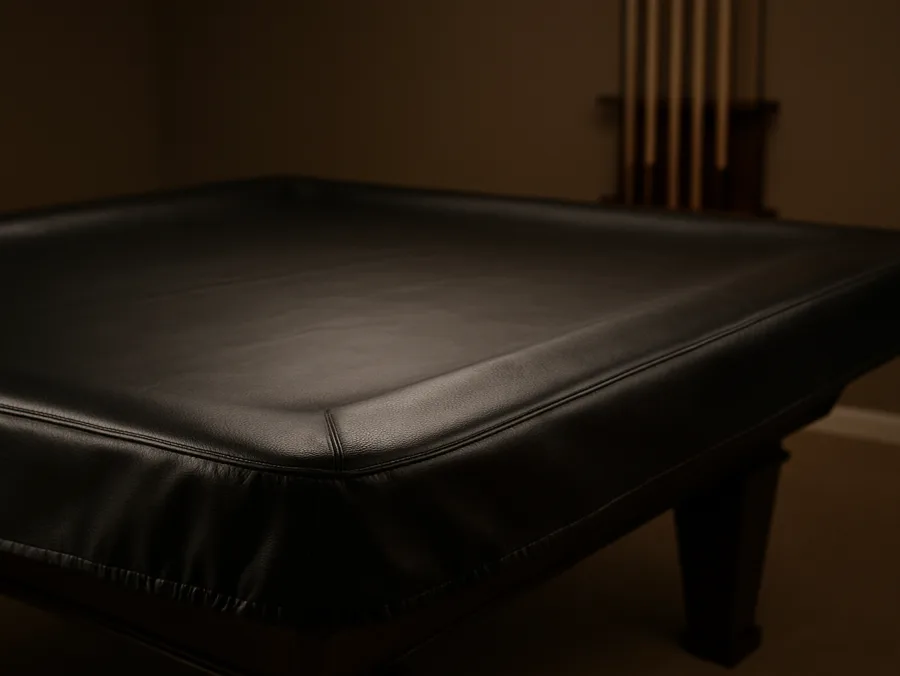
POMER Fitted 8-Foot Table Cover
Keeping carpet fiber off the clothOxford fabric with a waterproof coating, sized 100 by 56 by 32 inches for an 8-foot table, with a drawstring hem. In a carpeted room it keeps fiber and dust off the cloth between games.
Check price on AmazonFrequently asked questions
Can you put a pool table on carpet?
Yes. Low-pile carpet on a firm pad works well. Expect the table to settle into the pad over the first weeks, so it will need leveling again once it stops moving, and expect permanent dents under the legs.
How long does a pool table take to settle on carpet?
Sources range from a few weeks to a few months, depending on the carpet and pad. Legacy Billiards suggests waiting two or three days before the first leveling, then rechecking until several weeks pass with no change.
Will a pool table ruin my carpet?
It leaves permanent dents where the legs stand, because crushed padding doesn't recover. Coasters keep the damage to small neat circles. Avoid dragging the table, which tears fiber.
Is carpet or hardwood better for a pool table?
Hardwood holds level better because it doesn't compress. Carpet works fine but needs more leveling checks, especially in the first months.
Should I put plywood under a pool table on carpet?
Only on very soft or thick carpet. A plywood sheet under the footprint stiffens the base, but rigid coasters under each leg do most of the same job without the raised edge.
Can you put a pool table on a rug?
Yes. Put the rug down first and make it big enough that players never stand half on and half off it while shooting.
Can you put a pool table on laminate or vinyl plank?
Often, with care. BestLaminate warns that tables over 500 pounds can stress laminate's locking joints and suggests AC4 or higher planks, rubber coasters and, for heavy tables, an island of flooring bordered by moldings. Check your flooring maker's guidance.
Related guides
LeaguePool is reader-supported. When you buy through links on this site we may earn an affiliate commission at no extra cost to you. As an Amazon Associate we earn from qualifying purchases.