
Valley vs Diamond Pool Tables: Bar Box Differences
A Valley and a Diamond are both 7-foot slate bar tables, but they don't play alike. The Diamond is a slightly bigger table (a 40 by 80 inch bed) with tighter, deeper-shelved pockets and fast Simonis cloth, so it plays like a shrunken 9-footer. A stock Valley Panther has more forgiving pockets, slower cloth and a magnetic cue ball, and it's the table most American bar leagues actually play on.
If your league night moves between the two, or you're choosing one for the basement, the details below are what change: pockets, cloth, cue ball, rails, which leagues use which, and what each costs.
Valley vs Diamond, side by side
The 7-foot coin-op models, from the makers and a Valley dealer's spec sheet:
| Valley Panther 7 ft | Diamond Smart Table 7 ft | |
|---|---|---|
| Outside size | 93 x 53 in, 31 in high | 94 x 54 in, 32 in high |
| Playing area | Not published (players measure about 39 x 79 in on many) | 40 x 80 in |
| Weight | 710 lb | 800 lb |
| Slate | One-piece imported slate | Slate (thickness not published) |
| Rails and rubber | Poplar rails, five-bolt system, dual-density rubber by D&R Championship | Diamond rails, Black Diamond K55 cushions |
| Cloth from the factory | Valley Teflon Ultra by Championship | Simonis wool/nylon |
| Cue ball separation | Magnet; cue ball same size and weight as the object balls | Optical sensor and solenoid (the Bird House) |
| Other sizes | 6.5 ft (88 in) and 8 ft (101 in) | 8 ft and 9 ft |
| Built in | Richland Hills, Texas | Jeffersonville, Indiana |
Note how Valley names its sizes by the cabinet length, not the bed. A "6.5-foot" Valley is 88 inches long outside. That's one reason a Diamond 7-footer feels roomier than the Valley at the corner bar: it is.
Why they play so differently
Pockets
This is the one players notice first. The mouth size alone doesn't explain it. What matters is the shelf (how far a ball travels past the cushion nose before it drops) and how the jaws are angled. Players on the AZBilliards forums describe Diamond pockets as tighter with much deeper shelves, so a ball that brushes the jaw at speed rattles out. Valley pockets take that same ball. Valley's own product page for the coin-op Panther calls its pockets "large" and pitches them for faster play, which makes sense for a bar owner: quicker games mean more quarters.
We couldn't confirm a stock Valley corner pocket size. Forum posters who measured disagree, from 4 1/2 inches to about 5 1/4. Diamond offers five pocket sizes without publishing them, so a Diamond in one room can be tighter than the next.
Cloth
A Diamond comes on Simonis, a fast worsted cloth that rolls true at slow speeds. Valley's factory cloth is a Teflon-treated Championship cloth built to survive bar spills, and players who shoot on both consistently describe Valleys as slower. Some bar Valleys still carry older napped cloth, which is slower again. Cloth alone accounts for a lot of the speed difference, and a Valley with fresh Simonis plays noticeably closer to a Diamond.
The cue ball
Current Valleys sort the cue ball with a magnet, so they use a magnetic cue ball that's the same size and weight as the object balls. Older Valleys used an oversized cue ball. Diamond's Smart Table reads the cue ball with an optical sensor, so it doesn't need a special ball. Players who've used both say the older heavy and oversized cue balls draw less and push through object balls more. Our coin-op guide explains each separation system.
Rails
Players who've worked on both report that Valley rails bolt through the sides of the cabinet while Diamond 7-foot rails bolt through the slate, and that loose rail bolts are common on older bar Valleys. A loose rail plays dead. Diamond rails have the opposite complaint: older ones were called too lively, and long-time players say the pre-2010 "red label" Diamonds tended to bank short.
Which leagues play on which
This changes more than people think, so check your own league.
- APA: most APA matches, including the APA International Championships, are played on Valley-Dynamo tables, according to Valley-Dynamo's history. The APA itself has no rule on table brand or size; your division plays on whatever the host bar owns. Diamond Billiards appears among the APA's listed sponsors.
- VNEA: Valley created and owns the Valley National 8-Ball League Association, so VNEA play is Valley country.
- BCAPL, USAPL and CSI events: since June 2022 the official table for all CSI, BCA Pool League and USA Pool League events has been the Predator Apex, not Diamond or Valley. Local weekly leagues still play wherever the bars are.
- Pool rooms and tournaments: many rooms run Diamond 7, 8 and 9 foot tables, and Diamond says its Professional table has been used in more than 500 major tournaments.
If you play in a bar league, the Valley is your real exam. If you play tournaments in pool rooms, get hours on a Diamond.
Switching between them on league night
Going from a Valley to a Diamond:
- Shoot your first few shots at pocket speed. Balls you'd fire in on a Valley get rejected by deeper shelves, especially down the rail.
- Shorten your position. Faster cloth sends the cue ball farther on the same stroke.
- Shoot three or four test banks before the match. Rail response varies by table age and rubber, and older Diamonds have a reputation for coming up short.
- Expect the table to sit about an inch taller (32 inches against the Panther's 31).
Going from a Diamond to a Valley, it runs the other way. Add a little stroke to move the cue ball on slower cloth, trust the pockets on firm shots, and allow for less draw if the table still uses an older heavy or oversized cue ball.
One lag up and down the table on any unfamiliar bar box tells you most of what you need. Do it before the coin toss, not after you've overrun position on the first rack.
Can you make a Valley play like a Diamond?
Closer, yes. The same, no. Owners who've tuned bar Valleys usually do some of these:
- Recloth in Simonis or another worsted cloth. The single biggest change.
- Fit aftermarket rails. Ridgeback rails are the best known, and Valley-Dynamo bought Ridgeback in 2022 and moved production to Texas.
- Have a mechanic tighten the pocket facings, especially the side pockets.
- Tighten every rail and corner casting bolt.
- Use a regulation-weight cue ball the table can still separate, such as a magnetic ball on a current Panther.
What you can't change is the cabinet size, the slate shelf at the pockets, or the rail mounting. A tuned Valley is a better practice table for Diamond players than a stock one, but if your target is a Diamond tournament, nothing beats time on a Diamond.
Buying one for home
Used Valleys are among the best cheap slate tables you can buy. Our Valley value guide puts worn ones at about $200 to $500, playable ones at roughly $400 to $1,000, and tables with upgraded rails and new cloth, or a dealer refurb, at about $1,000 to $1,700. New Valley Panther coin-ops list for about $6,100 to $8,100 at one large retailer. Most can be set to free play.
Diamonds are harder to price. Diamond doesn't publish table prices (it sells through dealers and quotes each table), and used Diamond 7-footers come up less often than Valleys. We found no reliable used-price data, so get a dealer quote and compare it with local sold listings. A Diamond also weighs about 90 pounds more and needs more room: Diamond's own minimum for its 7-footer is 14.5 by 18 feet.
Our advice: buy the table your league plays on. If you play VNEA or bar APA, a refurbished Valley with good rails and new cloth is the smart money. If you play pool-room tournaments, save for a Diamond. Either way, plan the move (both are 700-pound-plus tables) and read best bar box pool tables for the alternatives, including slate home tables in the 7-foot size.
A short history of each
Valley started in a garage in Bay City, Michigan (RePlay Magazine dates the company to 1935) and began building six-pocket coin-op pool tables in 1954. After a 1999 merger with Dynamo and Tornado it moved to Richland Hills, Texas, spent 2003 to 2009 under Brunswick ownership, and is now Valley-Dynamo, still in Texas.
Diamond is much younger. A group of pool players from Louisville, Kentucky founded it in 1987, and it builds every table at its plant in Jeffersonville, Indiana. It makes coin-op Smart Tables and the Pro-Am and Professional home and pool-room tables. For how Diamond compares with Brunswick's Gold Crown, see Diamond vs Brunswick.
Sources
- Valley-Dynamo: Panther ZD-12X coin-op table
- Valley-Dynamo: Panther home table
- Valley Panther ZD-11 dealer specifications
- Diamond Billiards: Smart Table specifications
- Diamond Billiards: R9 Bird House cue ball separator
- Diamond Billiards: company history
- RePlay Magazine: Valley founder Earl Feddick (1935 and 1954)
- Wikipedia: Valley-Dynamo (APA, VNEA, ownership)
- CSI: Predator Apex named official table (2022)
Our picks
Links open the current selection and price on Amazon so you can compare real reviews before buying.
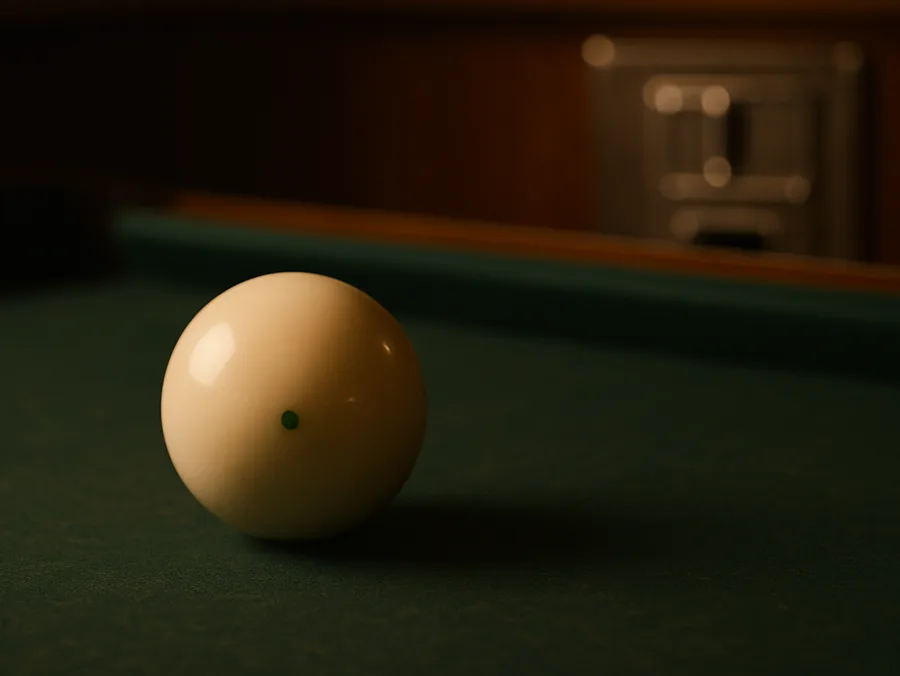
Aramith Magnetic Cue Ball
Valleys with a magnetic separatorA phenolic cue ball made for coin-op tables that sort the cue ball by magnet. If a standard cue ball vanishes into the ball box every time you scratch on your home Valley, this is the fix, and it plays far closer to a regular ball than the old oversized ones. Check which separator your table has first.
Check price on Amazon
Accuplay 20 oz Pre-Cut Cloth for 7 ft Tables
Reclothing a used ValleyA 75 percent wool, 25 percent polyamide cloth cut for 7-foot tables, with a 48 by 88 inch bed piece and six rail strips. Tired bar cloth is the first thing that makes a used Valley play slow. Measure your slate first, since bar table beds vary.
Check price on Amazon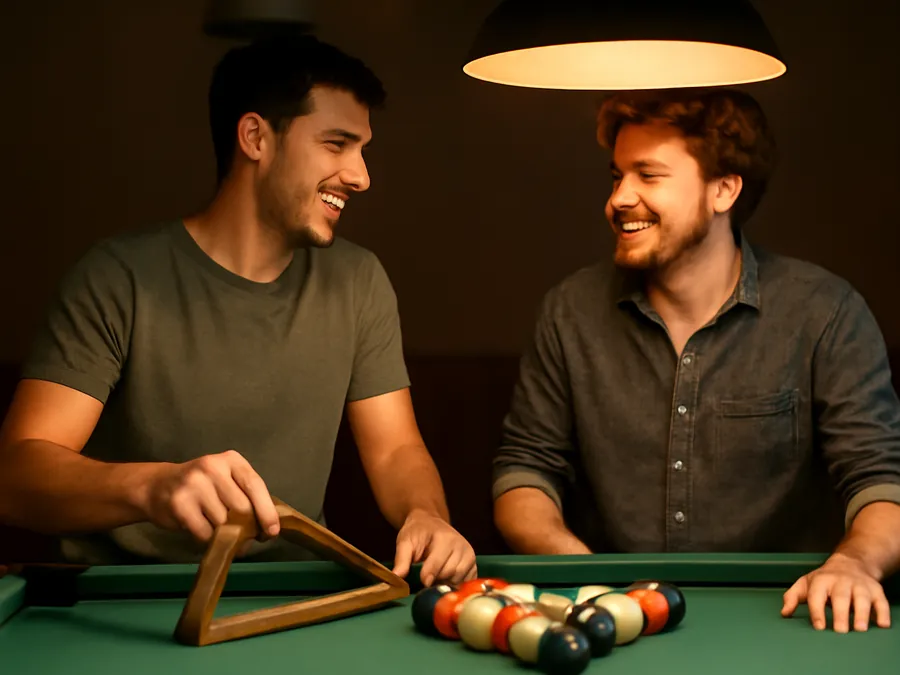
Aramith Red Circle Cue Ball
Practicing on a Diamond-style regulation ballA regulation 2 1/4-inch phenolic cue ball with a red circle that shows where your tip hit, so you can check whether your center ball is really center. Use it on a home table without a separator, or carry it for practice; it won't return on a magnetic coin-op.
Check price on Amazon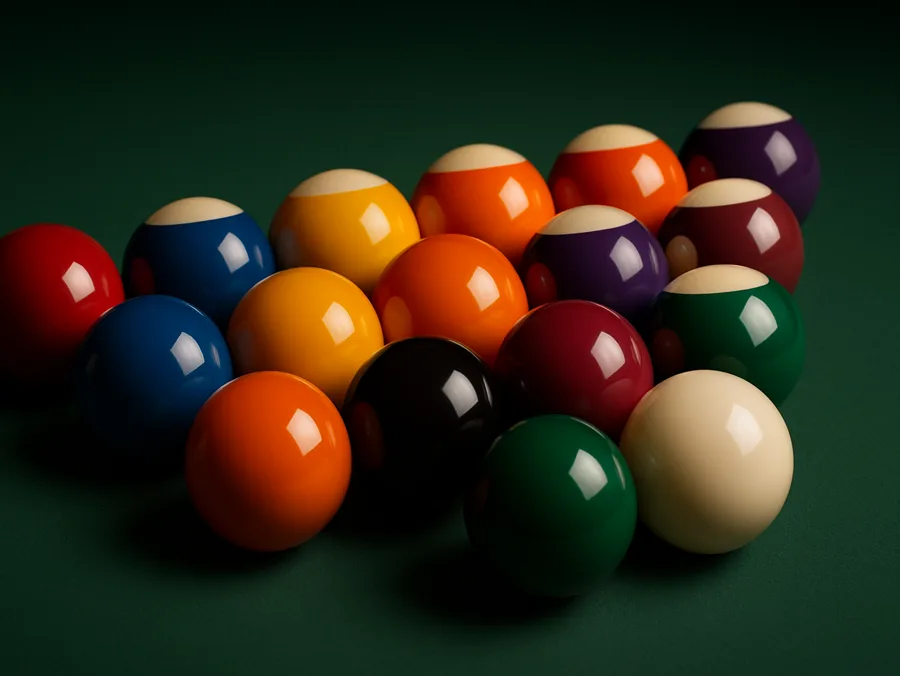
Aramith Crown Standard Ball Set
Replacing worn bar ballsA full 16-ball set of regulation 2 1/4-inch phenolic balls. Worn, chipped bar balls change how a table plays as much as cloth does. On a magnetic-separator Valley, pair it with a magnetic cue ball instead of the white one in the box.
Check price on Amazon
Casemaster Q-Vault Classic 2x2 Hard Case
Hauling cues to league nightA hard resin shell under a leatherette cover, a soft cloth lining, two pockets for chalk and tip tools, and a handle plus shoulder strap. League play means your cue rides to a different bar every week, and a hard shell is what saves a shaft from a car door.
Amazon price: $73.04 as of 4:44 PM EDT. Price and availability can change; Amazon’s price at purchase applies.
Check price on AmazonFrequently asked questions
Are Diamond tables harder than Valleys?
Yes for pocketing. Diamond pockets have deeper shelves and reject balls that hit the jaws at speed, while Valley pockets are more forgiving. Many players find position play more predictable on a Diamond, though, because the cloth and rails respond consistently.
Do APA leagues use Valley or Diamond tables?
Most APA matches, including the APA International Championships, are played on Valley-Dynamo tables. The APA has no rule on table brand, so your division plays on whatever the host bar owns.
What table does BCAPL use?
Since June 2022 the official table for all CSI, BCA Pool League and USA Pool League events has been the Predator Apex. Weekly local leagues play on whatever tables the host locations have.
Is a Diamond 7 foot table bigger than a Valley?
Slightly. Diamond lists a 40 by 80 inch playing area and a 94 by 54 inch cabinet. A Valley Panther 7 foot cabinet is 93 by 53 inches, and players measure many Valley beds at about 39 by 79.
How long has Valley made bar pool tables?
Since 1954, when the Bay City, Michigan company began building six-pocket coin-op tables, according to RePlay Magazine. Valley-Dynamo now builds them in Richland Hills, Texas.
Why does the cue ball feel different on a Valley?
Valleys use a cue ball the table can sort out after a scratch. Current tables use a magnetic ball the same size and weight as the object balls; older ones used an oversized ball, which draws less and pushes through more. Diamond Smart Tables use an optical sensor instead.
How much is a used Valley or Diamond bar table?
Used Valleys run about $200 to $500 worn, $400 to $1,000 playable and $1,000 to $1,700 with upgraded rails or a dealer refurb. Diamond doesn't publish prices and used ones are scarcer, so get a dealer quote.
Related guides
LeaguePool is reader-supported. When you buy through links on this site we may earn an affiliate commission at no extra cost to you. As an Amazon Associate we earn from qualifying purchases.