Best Pool Cue Wax and Shaft Sealers
The best pool cue wax for most maple shafts is a wax made for cue shafts, applied thin to a clean, burnished shaft and buffed until you can't feel it. Chem-Pak's Q Wax (carnauba) and McDermott's Silky Shaft Wax (olive oil and beeswax) are the two easiest to find. Cue wax is for wood. Predator says wax leaves a film on its carbon shafts that affects cue ball action, and McDermott and Cuetec rule out treatments on theirs.
Wax is also optional. A clean, well-burnished maple shaft plays fine without it. What wax adds is a thin layer that keeps sweat and grime on the surface, where a wipe takes them off.
Best cue waxes and shaft sealers compared
| Product | Base (per the maker or seller) | Type | Notes |
|---|---|---|---|
| Chem-Pak Q Wax | Carnauba | Paste wax | Made in the USA; sold to repel moisture and dirt |
| McDermott Silky Shaft Wax | Olive oil and beeswax | Soft wax | McDermott says it cleans, seals and conditions wood in one step, with no residue |
| McDermott Ultra-Glide | Not listed | Liquid conditioner | Seals pores; a few drops on a cloth, buffed for 30 seconds. In McDermott's Shaft Care Kit |
| Longoni Special Cue Wax | Natural components including beeswax | Wax | For wooden shafts, after cleaning |
| Longoni Cue Wax | Not listed | Cleaner and conditioner in one | Made in Italy; sold as leaving no residue |
| Molinari Cue Wax | Not listed | Wax | Sold as an ultra-thin coating that seals the pores |
| Tiger Hard Wax, Guardian Shaft Wax | Not listed | Wax | Made for wood cue shafts |
We link the first three below; the rest are billiard-shop brands. Most sellers don't publish full ingredient lists, so "not listed" means exactly that.
What cue wax actually does
Bare maple takes in what your bridge hand leaves on it. Wax fills the surface pores and leaves a hard, thin layer on top, so sweat and chalk sit on the wax and wipe off instead of soaking into the wood. That's how every cue wax maker sells it: Q Wax to repel moisture and dirt, Molinari to seal the pores, McDermott to clean and seal.
It doesn't clean a dirty shaft by itself (Longoni's and McDermott's cleaner-waxes aside) and it doesn't fix raised grain. Those are cleaning and burnishing jobs, and the order matters: clean, smooth if needed, burnish, then wax. McDermott's own instruction for Silky is to use it after cleaning and burnishing.
Players who skip wax aren't wrong. A shaft you wipe after every session and burnish when it drags is already smooth. Wax is worth it if you sweat, play in a humid room, or want more time between deep cleans.
Carnauba, beeswax or a liquid conditioner
- Carnauba (Q Wax) is a hard plant wax. It buffs to a dry, firm layer, which is the feel most players want under a bridge hand.
- Beeswax blends (McDermott Silky, Longoni Special) are softer and go on more easily by hand. Silky adds olive oil. One caution: Tiger says its pure beeswax needs a lathe to burnish into a shaft and doesn't recommend it by hand, so stick with blends sold as cue shaft wax.
- Liquid conditioners (McDermott Ultra-Glide) are the thinnest option. They seal without a paste to work in.
If you want one answer: carnauba for a dry, hard slide; McDermott Silky if you'd rather have one step that cleans and seals together.
What to avoid on a wood shaft
McDermott's maintenance page says: "Avoid using products containing waxes or oils, such as silicone and lanolin," and adds that they break down the structure of the wood, causing it to soften and decay. Taken word for word that sounds like a ban on all wax, yet McDermott sells its own beeswax and olive oil shaft wax. The practical reading is to avoid silicone and lanolin products and anything not made for cue shafts, and to use a cue-specific wax thin.
That rules out furniture polish and silicone sprays on the shaft. Car paste waxes come up often in forums, but a car wax label rarely says what else is in the tin besides the wax, so we'd buy one made for cue shafts.
How to wax a pool cue shaft
- Clean the shaft and let it dry completely. See how to clean a pool cue.
- Burnish it with leather until smooth. See how to burnish a cue shaft.
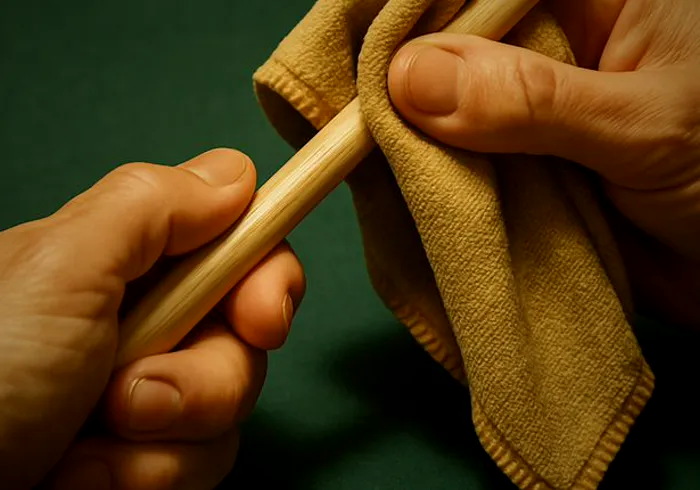
- Put a very small amount of wax on a clean cloth or your fingertip and rub it along the shaft, turning it as you go. Less than you think: the coat should be thin enough that you can barely see it.
- Keep it off the ferrule and the tip. The tip needs to stay dry and textured to hold chalk.
- Follow the product's directions on drying time, then buff with a dry microfiber cloth until the shaft feels dry to the touch.
- Finish with a light burnish. The shaft should feel slick and dry, never tacky or greasy.
If it feels sticky afterward, you used too much. Buff harder, or wipe it with a barely damp cloth, dry it and burnish again.
How often to wax
No cue maker gives an interval, so go by feel: re-wax when a clean, dry shaft starts to drag again and a burnish no longer fixes it. Thin coats are the rule. Piling wax on every week builds a layer that grabs your hand, which is the opposite of what you bought it for. A dry microfiber wipe after every session keeps the wax doing its job longer.
Do not wax a carbon fiber shaft
| Maker | Rule on wax and treatments |
|---|---|
| Predator (REVO, Venom) | No conditioning oils, no waxes, no powders; wax leaves a film that affects cue ball action |
| McDermott (Defy) | Wipe with a damp towel or alcohol wipe; no sanding, burnishing, talc or abrasives |
| Cuetec (Cynergy, AVID) | Any treatment of the surface with chemicals or abrasives voids the warranty |
One loose end: an older Predator page for Poison cues says carnauba wax may help seal a Venom shaft. Predator's newer carbon page, updated in October 2026, names Venom and says no waxes. Go with the newer one, and check your own shaft's maker before putting anything on it. More in best carbon fiber shafts.
Wax on the butt, not just the shaft
A sound clear coat on the butt can take a cue wax or a finish restorer when it looks dull. That's covered with the other finish options in how to refinish a pool cue. Keep wax off a linen or leather wrap; those have their own cleaning methods in pool cue wrap types.
Sources
- McDermott Cue: maintenance tips (silicone and lanolin warning)
- McDermott Cue: shaft maintenance kit (Ultra-Glide directions)
- McDermott Cue: Defy carbon shaft
- Predator: how to clean a carbon fiber shaft
- Predator: Poison care and maintenance
- Cuetec: Cynergy care
- McDermott Silky Smooth Shaft Wax, Longoni Special Cue Wax and Tiger E-Z Shine beeswax (product descriptions)
Our picks
Links open the current selection and price on Amazon so you can compare real reviews before buying.
Chem-Pak Q Wax Cue Shaft Wax, 2 oz
Best carnauba cue waxCarnauba-based and made in the USA for cue shafts, it repels moisture and dirt so a quick wipe after play keeps the shaft clean. Go thin and buff it dry for the hard, slick feel carnauba is known for.
Check price on Amazon
McDermott Silky Shaft Wax
One-step clean and sealOlive oil and beeswax from a cue maker, made for wooden shafts and sold as leaving no residue or buildup. A small amount on a clean cloth cleans and seals in one pass, which is why it suits players who won't do three steps.
Check price on Amazon
McDermott Shaft Care Kit with McMagic Papers
Clean and seal in the right orderRenew cleaner, McMagic papers, Ultra-Glide conditioner to seal the pores, and a leather pad. If your shaft has gone gray and sticky, this does the cleaning that has to come before any wax.
Check price on Amazon
Porper Suede Leather Shaft Burnisher
Burnishing before and after waxingSlip it over the shaft and rub up and down. Use it to smooth the wood before the wax goes on and to buff the thin coat dry afterward.
Check price on Amazon
Amazon Basics Microfiber Cloths, 24 Pack
Buffing and daily wipesNon-abrasive, lint-free and washable. One to buff off the wax, one for the after-session wipe that keeps grime from building on the wax layer.
Amazon price: $10.04 as of 3:01 PM EDT. Price and availability can change; Amazon’s price at purchase applies.
Check price on AmazonFrequently asked questions
What is the best pool cue wax?
For most maple shafts, a wax sold for cue shafts: Chem-Pak Q Wax if you want carnauba, or McDermott Silky Shaft Wax if you want a one-step product that cleans and seals. Apply it thin to a clean, burnished shaft.
Do I need to wax my pool cue?
No. A clean, burnished maple shaft plays well without wax. Wax helps if your hands sweat, you play in a humid room, or you want the shaft to stay clean longer between deep cleanings.
How often should I wax a pool cue shaft?
When a clean, dry shaft starts to drag and burnishing alone no longer fixes it. Keep each coat thin; heavy or frequent coats build up and feel sticky.
Can I use car wax or furniture polish on my cue?
Skip furniture polish and anything with silicone; McDermott warns that products like silicone and lanolin soften the wood. Car wax labels rarely list what else is in them, so a wax made for cue shafts is the safer choice.
Should I wax a carbon fiber shaft?
No. Predator says wax leaves a film on its carbon shafts that affects cue ball action, and McDermott and Cuetec rule out treatments on theirs. Wipe carbon with a damp cloth or the maker's wipes.
Why does my shaft feel sticky after waxing?
Too much wax, or not enough buffing. Buff it with a dry microfiber cloth and burnish. If it still grabs, wipe it with a barely damp cloth, dry it and burnish again before applying a thinner coat.
Related guides
LeaguePool is reader-supported. When you buy through links on this site we may earn an affiliate commission at no extra cost to you. As an Amazon Associate we earn from qualifying purchases.