
Pool Table Slate Seams and Repair: Fill, Chips, Cracks
Most pool table repairs come down to five parts of the table: cloth, cushions, pockets, level and the slate itself. The first four have their own guides (linked in the table below). This page covers the slate: the seams between the three pieces, the screw holes, chips at the edges and pocket cuts, and cracks.
The short version: seams and screw holes get filled with beeswax or auto body filler and dressed flush before the cloth goes on. Small chips get the same treatment. A clean crack can often be bonded and leveled; shattered slate gets replaced. Nearly all of it means taking the cloth off, which is why most owners have slate work done during a refelt.
Pool table repair: what's wrong, and who fixes it
| What you notice | Likely cause | DIY or pro | Where to go |
|---|---|---|---|
| Ball hops, clicks or drifts at the same spot across the table | Seam proud, sunken or open | Pro, or a careful DIY with the cloth off | This page |
| Slow balls roll off toward one side everywhere | Table out of level | DIY first | How to level a pool table |
| Tear, burn or bubble in the cloth | Damaged or loose cloth | DIY for small spots | How to fix pool table felt |
| Worn, bald or torn cloth across the bed | Cloth at end of life | Usually pro ($300 to $600) | Refelting cost |
| Banks come off short and dead | Hardened cushion rubber | Pro or advanced DIY ($250 to $500) | Cushion replacement |
| Torn or loose pockets | Worn leather or broken irons | DIY | Replacement pockets |
| Balls stick in the return | Ball return jam or worn track | DIY first | Ball return fixes |
| Visible crack or chunk missing in the slate | Cracked or chipped slate | Pro for cracks; DIY possible for small chips | This page |
If you're not sure which one you have, start with a slow roll test across the whole bed. Drift everywhere points to level; a hop or wiggle in one line across the table points to a seam.
Why three-piece slate has seams at all
A one-piece slab for a full-size table may not turn a stairway corner, and it can only be leveled as a whole, so most full-size tables use three pieces. The WPA requires three equal pieces on tournament tables and wants every joint in the same plane within .005 inch after leveling and shimming. That's roughly the thickness of a sheet of printer paper.
Even at that tolerance, there's a hairline gap and two edges under the cloth. Filler does two jobs: it gives the cloth continuous support across the joint, and it fills the countersunk screw holes so nothing dips under a slow ball. It doesn't hold the slates level by itself. Installers on AZBilliards' forum make the same point bluntly: if the slate screws are loose or the frame wasn't leveled first, no filler keeps a seam closed.
Beeswax, Bondo or something else: seam filler compared
| Filler | Good at | Weak at | Use it when |
|---|---|---|---|
| Beeswax | Easy to melt in and scrape flush; heat removes it cleanly at the next move | Softens in heat; installers report it loosening with big temperature and humidity swings; can't fill large chips | Home tables in a climate-controlled room that may move again |
| Auto body filler (Bondo) | Cures hard in minutes, sands to a feather edge, doesn't care about heat or humidity | Effectively permanent; has to be broken out at the next teardown, which can chip slate edges; fumes | Garages, hot rooms, commercial tables, or a seam that keeps opening |
| Plaster or spackle | Cheap and easy to find | Installers report it flaking apart over time; vinyl spackle is too soft | We'd skip it |
| Super glue, spot-bonded | Locks the slates together at a few points along the seam | Not a filler on its own | Under wax or body filler on a seam that pops |
| Two-part epoxy | Strong bond for cracks and larger chips | Slow cure; hard to remove | Crack repair; see below |
Our take for a home table: beeswax, done well, in a room you keep at about 40 to 50 percent humidity (our pool table humidity guide explains why). Choose body filler if the room swings hot and cold or the table is never going to move. Either one done carefully beats either one done in a hurry.
How to fill slate seams with beeswax
- Level the frame, set the slates, shim each one flat and tighten the slate screws. Recheck with a machinist level after tightening. Filling comes last, never first.
- Vacuum the seam and screw holes and wipe the slate with a barely damp cloth. Let it dry.
- Warm the seam area with a heat gun on low, moving constantly. You're warming stone, not cooking it.
- Hold the wax bar against the warm seam and melt it in so it flows down into the joint and fills each screw hole a little proud of the surface.
- Let it cool fully.
- Scrape it flush with a stiff putty knife or scraper held nearly flat. Work along the seam, not across it.
- Run your palm across the seam. You shouldn't feel an edge or a dip. Then roll a ball slowly across it in a few spots before the cloth goes on.
How to fill seams and screw holes with body filler
Level the slates first; adjusting them after the filler cures means grinding it out. Then:
- Fill only the screw holes a ball could actually reach. Put tape over the screw heads so filler doesn't lock them in.
- Lay cardboard or a blanket under the table edges and clean the slate.
- Mix only as much filler as you can spread in 5 to 10 minutes, with the hardener kept to the low side of the maker's directions.
- Press it into the screw holes and spread it along the seam with a putty knife.
- Scrape off the excess while it's still soft. Anything more than about a quarter inch from the seam is just more sanding later.
- Let it harden (about 20 to 30 minutes), then sand flush with light pressure, finishing with fine paper. Stop when the filler meets the slate; slate sands faster than you expect.
- Vacuum the dust, then check with your palm and a slow roll.
Work with the windows open and wear a mask and glasses. Body filler fumes and dust aren't something to breathe in a closed basement.
How to tell if a seam has gone bad
You can find a bad seam without pulling the cloth:
- Roll a ball slowly across the table about a third of the way in from each end, where the seams usually sit. A hop, wiggle or click as it crosses is a proud edge or a void.
- Slide your fingertips lightly across the cloth over the seam line. If you can feel a ridge or trench through the cloth, the ball feels it too.
- Listen on the break. A rattle or double-click as balls cross the middle is a classic loose-seam sound.
- Look at the cloth. A line of wear across the bed at a seam means something underneath is sticking up.
Seams most often go bad after a move, after the house settles, after a big humidity swing, or after someone adjusted the legs without touching the slate.
Chipped slate repair
Chips turn up at pocket cuts, along seam edges and at the corners, usually from a move or a dropped slab. If the chip is under a rail or outside the playing area, leave it. If a ball can roll over it, fill it.
Small, shallow chips take beeswax the same way a seam does. Bigger chips need something that cures hard: body filler for most, two-part epoxy for a deep chip at an edge that takes load. Clean the chip, overfill slightly, scrape while soft, then sand flush once cured.
Cracked slate: repair or replace?
It depends on how it broke.
- A clean, straight crack with pieces that fit tightly can often be bonded with epoxy, reinforced from underneath if needed, leveled and filled. Done well, it plays like a seam.
- Slate that's shattered into several pieces, or has pieces missing, gets replaced. Filler can't restore the strength or the flatness.
Triangle Billiards puts repair or replacement of a cracked or sagging slate at $500 to $1,500. Replacement slate has to match the frame, bolt holes and pocket cuts, so ask whether a matching slab is even available before you decide. Cracked slate also drops a used table's value sharply; see used pool table prices before you buy one with a crack.
Pool table slate repair kit: what you actually need
Few products sold as a "slate repair kit" contain everything. Here's the real list for seams, screw holes and small chips:
- Beeswax bars, or a can of auto body filler and hardener
- A heat gun for wax (more control than a torch)
- A stiff putty knife and a scraper
- Sandpaper in a medium and a fine grit, on a flat block
- Plastic slate shims, and a 12-inch machinist level to check each piece
- A shop vacuum
- A staple gun and staples for putting the cloth back, if you're doing the recover too
Releveling is where most DIY slate jobs go wrong, not the filling. If you've never shimmed slate, read pool table slate thickness for the three-piece leveling order before you start.
Hiring a billiard table repair service
Thumbtack puts the national average for hiring a pool table specialist at about $330 to $400, and Triangle Billiards puts a releveling visit at $100 to $300. Seam work almost always means pulling the rails and at least part of the cloth, so it's cheapest when it rides along with a refelt.
Questions to ask before you book:
- Does the quote include releveling the slate, or just the legs?
- Will you pull the cloth to refill the seams and screw holes, and what filler do you use?
- If the cloth comes off, is new cloth included or extra?
- Do you work on my table? Some shops exclude one-piece slate, tables 10 feet and up, slate thicker than 1-1/16 inch, particleboard beds, or certain older brands, and some add a fee for tables over 50 years old (A.E. Schmidt lists all of these).
- Do you guarantee the level for some period after the job?
Hire a billiard mechanic, not a general handyman. And don't keep playing on a seam that hops balls: every session teaches your stroke to correct for something the table is doing.
Sources
- WPA Recommended Equipment Specifications (three-piece slate, .005 inch joint tolerance)
- Triangle Billiards: hidden costs of pool table ownership (releveling and slate repair costs)
- Thumbtack: pool table repair costs (national average for a specialist)
- A.E. Schmidt Billiards: moving and repair services (what releveling covers, common exclusions)
- AZBilliards forum: slate seam fillers (installers comparing wax, body filler and plaster)
Our picks
Links open the current selection and price on Amazon so you can compare real reviews before buying.

Shupakul Pool Table Beeswax Bars, 4 Pack
Filling seams and screw holesFour 3-ounce beeswax bars, two green and two yellow, made for slate seams. Wax is the filler that comes back out with heat the next time the table moves, so the slates aren't glued into one slab.
Amazon price: $19.99 as of 1:31 PM EDT. Price and availability can change; Amazon’s price at purchase applies.
Check price on Amazon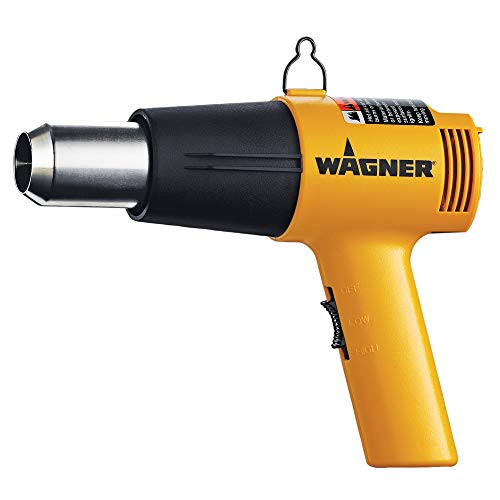
Wagner HT1000 Heat Gun
Melting wax into seamsTwo heat settings (750 and 1,000 degrees F) and two fan speeds give more control than a torch for warming slate and flowing wax without scorching the frame. The built-in stand keeps the hot nozzle off the slate between passes.
Amazon price: $29.00 as of 1:31 PM EDT. Price and availability can change; Amazon’s price at purchase applies.
Check price on Amazon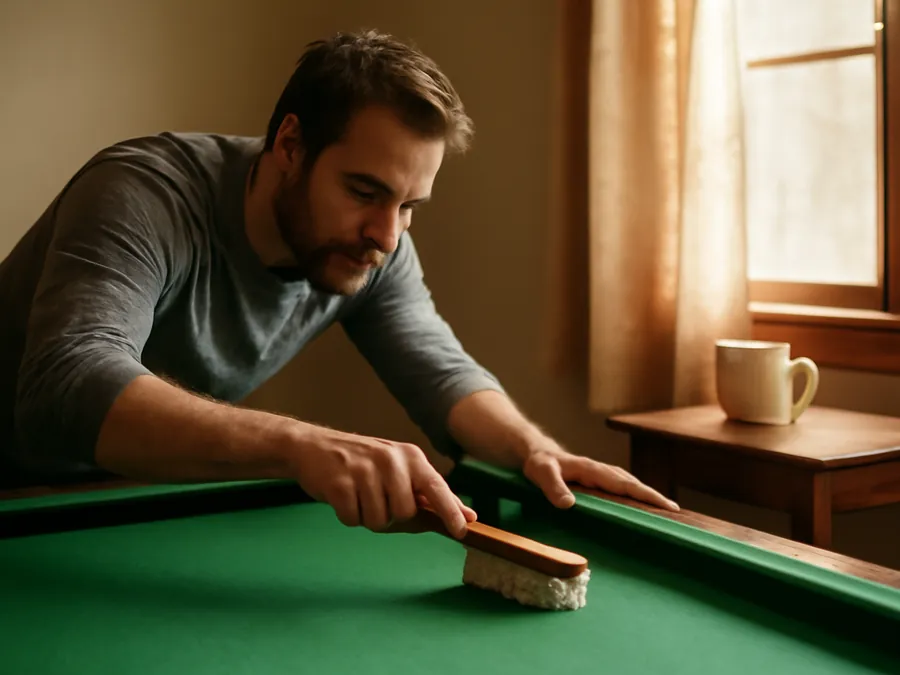
Putty Knife and Scraper Set
Scraping fill flushA stiff blade held nearly flat shears cooled wax or soft body filler level with the slate. Pair it with a sanding block to finish the seam smooth under your palm.
Check price on Amazon
Sterling Gaming Plastic Slate Shims, Set of 12
Releveling slate before you fillRibbed plastic shims about 3 by 1-1/4 inches that stay put under a slate edge. Unlike cardboard or folded paper, they don't compress or soak up humidity, so the level you set holds.
Amazon price: $11.99 as of 1:31 PM EDT. Price and availability can change; Amazon’s price at purchase applies.
Check price on Amazon
12-Inch Master Precision Machinist Level
Checking each slate after shimmingA carpenter's level can't see the small errors that make a slow ball drift or a seam stand proud. A machinist level can, which is why installers check each slate with one before any filler goes in.
Amazon price: $58.40 as of 1:31 PM EDT. Price and availability can change; Amazon’s price at purchase applies.
Check price on Amazon
Arrow T50 Heavy-Duty Staple Gun
Putting the cloth back onSeam work means the cloth comes up, and it goes back on with staples into the slate's wood backing. The T50 takes 1/4 to 9/16 inch T50 staples and has a jam-resistant rear-load magazine.
Amazon price: $19.95 as of 1:31 PM EDT. Price and availability can change; Amazon’s price at purchase applies.
Check price on AmazonFrequently asked questions
Can I play on a pool table with unfilled seams?
You can, but you shouldn't. Open seams make balls hop and drift, wear a line into the cloth and let the slates shift. Fill them before the cloth goes on, every time the table is set up.
Is beeswax or Bondo better for pool table seams?
Beeswax for most home tables in a climate-controlled room, because it scrapes flush easily and melts back out at the next move. Body filler for hot or damp rooms and tables that will never move, because it cures hard and ignores temperature, but it's effectively permanent.
Can you fix a seam without removing the cloth?
No. The cloth has to come up so the old filler can be scraped out, the slates releveled and new filler dressed flush. That's why seam work is usually done during a refelt.
Can cracked pool table slate be repaired?
A clean crack with tight-fitting pieces can often be bonded with epoxy, leveled and filled. Slate that's shattered or missing pieces needs replacing. Triangle Billiards puts the job at 500 to 1,500 dollars.
How much does pool table repair cost?
Thumbtack's national average for a pool table specialist is about 330 to 400 dollars. Releveling alone runs about 100 to 300, a refelt about 300 to 600, cushions about 250 to 500, and cracked slate about 500 to 1,500.
Do one-piece slate tables have seam problems?
No seams, so no seam problems. The trade-off is a heavy single slab that's harder to move and can only be leveled as one piece, and some repair shops won't work on one-piece tables at all.
What causes slate seams to open up?
Usually loose slate screws, a frame that wasn't leveled before the slate went on, a move, the house settling, or big humidity swings. Wax-filled seams in hot or changeable rooms open more often than body-filled ones.
Related guides
LeaguePool is reader-supported. When you buy through links on this site we may earn an affiliate commission at no extra cost to you. As an Amazon Associate we earn from qualifying purchases.