How to Burnish a Cue Shaft
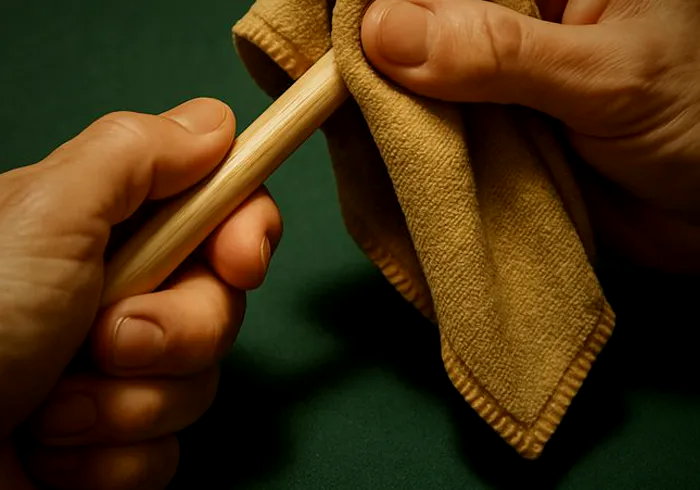
To burnish a cue shaft, clean and dry the wood, wrap a piece of smooth leather around it, and rub briskly up and down the shaft while you turn it, until the surface feels warm and slick. On a maple shaft it takes a minute or two and costs nothing if you have an old belt.
Burnishing is for wood only. Predator, Cuetec and McDermott all say not to burnish their carbon shafts, and McDermott puts it plainly for the Defy: burnishing will damage the finish.
What burnishing does to the wood
Burnishing is friction without abrasion. Leather or paper rubbed hard against maple presses down the loose fibers that stand up after cleaning, sweat or a humid night, and leaves a smoother, slightly polished surface. Predator describes shaft burnishers as tools "designed to compress maple grain", which is exactly the job.
Makers also say it seals. Tiger sells its leather burnisher as giving a moisture-resistant finish, and McDermott says its leather burnisher keeps dirt and oils from getting into the shaft. Treat that as a maker's claim. What you'll notice for sure is the feel: a burnished shaft slides through your bridge without catching.
Burnishing doesn't take wood off, which is what separates it from sanding. Micro-abrasive papers like McMagic sit in between: they do remove a tiny amount, so they're the smoothing step before you burnish, not a substitute for it.
When to burnish
- After a damp cleaning, once the shaft is completely dry. Water raises the grain on maple, and burnishing lays it back down.
- After raising a dent with water. Dr. Dave's dent FAQ says the shaft will feel slightly rough once dry and should be polished with a leather pad before you play.
- When a clean shaft starts to feel fuzzy or grabby in your bridge, often after a humid week.
- Before waxing, if you wax. Wax goes on burnished wood; see best pool cue wax.
Not when the shaft is dirty. Burnish over chalk and hand oil and you polish the grime into the surface. Clean it first: how to clean a pool cue.
What to burnish with
| Burnisher | What it is | Good to know |
|---|---|---|
| Leather pad (McDermott, Tiger, Porper, Pagulayan, Last 4 Ever) | A palm-sized piece of leather, sometimes suede on one side | The standard tool. Suede faces clean and burnish; a smooth face gives the final polish |
| A scrap of natural leather | An old belt, a shoe tongue | Works the same as a store-bought pad, as long as it's clean and has no finish on it |
| Paper (a brown bag, a dollar bill) | The old pool hall method | Works on a smooth shaft; less grip than leather, so it takes longer |
| Two-sided pads (Q-Wiz, Tiger Shaft Smoother, Cue Cube slicker) | A cleaning or rough side plus a polishing side | Cleans and burnishes in one tool; the rough side is a mild abrasive |
| Micro-abrasive papers (McMagic) | Washable abrasive sheets in grades | For smoothing before you burnish; a retailer lists the set as equivalent to 7500 grit |
Skip glass. Rubbing a bottle or glass rod over a dent is an old trick, but Dr. Dave's FAQ says it spreads the dent rather than removing it and slightly changes the shaft's shape.
How to burnish a cue shaft, step by step
- Take the shaft off the butt and screw a joint protector on the end, so you have something to hold that isn't the wood you're working on.
- Clean and dry the shaft. Give it a few minutes after any damp wipe.
- Run your fingers down it. If it feels rough or fuzzy, smooth it first with the finest paper you have, using light pressure along the whole length. McDermott's instruction for its McMagic papers is a circular, twisting motion, moving to the finer sheet only when the last sheet's effect is gone.
- Wrap the leather around the shaft so it covers about half the circumference, and squeeze lightly.
- Rub up and down quickly while turning the shaft a little every few strokes. Tiger's instructions call for quick, firm strokes. Work the whole length, not just the top 18 inches where your bridge sits, so the shaft feels the same wherever it slides.
- Stop when the wood feels warm and slick. If it gets hot enough to be uncomfortable, slow down. McDermott's directions for both its papers and its leather pad say to avoid creating excess heat.
- Wipe off any dust with a dry microfiber cloth. Wax now if you use it, then give it one more light burnish.
Stay off the ferrule with any abrasive paper, and go easy right at the tip so you don't catch the edge of the leather.
How hot should the shaft get?
Warm, not hot. This is where advice online gets loose. Some players say to rub as fast as you can until the wood heats up and seals; Tiger also says quick, firm strokes. McDermott, which makes both cues and burnishing products, says to avoid excess heat. The two fit together: you need enough friction to feel the shaft warm under the leather, and no more. If you can't hold your hand on the spot you just burnished, you've gone past the point that helps.
How often to burnish
No maker publishes a schedule, and the shaft tells you. Burnish after every damp cleaning, after any dent repair, and whenever a clean, dry shaft starts to catch in your bridge. A few passes with a pad before a match are fine. Burnishing removes no wood, so doing it often does no harm; the smoothing papers are the step to keep occasional.
Do not burnish carbon fiber
| Maker | What it says |
|---|---|
| McDermott (Defy) | Burnishing will damage the finish of the shaft; never sand |
| Predator (REVO and Venom) | Leather or paper burnishers are designed to compress maple grain and can scratch carbon; no abrasives or treatments |
| Cuetec (Cynergy and AVID) | No polishing, sanding or treatment of the surface of any kind; it voids the warranty |
An older Predator care page for Poison cues does suggest a leather burnisher for Venom shafts, but Predator's carbon cleaning page, updated in October 2026, names Venom and rules burnishers out. Carbon shafts get a damp cloth or their maker's wipes. See best carbon fiber shafts and wood vs carbon fiber shafts.
Burnishing the tip is a different job
Players also burnish the sides of a leather tip, to keep it from mushrooming over the ferrule. Same idea, different tool use: you rub the tip's side wall, not the shaft, often with a little water or a burnishing liquid. That's covered in how to scuff and shape a cue tip, and the tools are in pool cue tip tools.
Common mistakes
- Burnishing a dirty shaft, which seals grime in.
- Burnishing a damp shaft. Let it dry first.
- Using sandpaper when a burnisher would do. Sandpaper takes wood off and changes the taper; Seybert's lists it as a mistake to avoid on cues.
- Working only the bridge area, so the shaft feels different further back.
- Pressing so hard and so long in one place that the wood gets hot.
- Burnishing beeswax onto a shaft by hand. Tiger sells a beeswax for shafts and says a lathe is a must for it.
- Burnishing carbon.
If the shaft has deep dings, a finish problem or a warp, burnishing won't help: see how to refinish a pool cue and how to tell if a cue is warped.
Sources
- McDermott Cue: shaft maintenance kit (McMagic and leather pad directions, heat warning)
- McDermott Cue: Defy carbon shaft (no burnishing)
- Predator: how to clean a carbon fiber shaft
- Predator: Poison care and maintenance (older Venom instructions)
- Cuetec: Cynergy care and AVID care
- Dr. Dave: removing a dent from a pool cue
- Tiger leather burnisher and Tiger E-Z Shine beeswax (maker descriptions)
Our picks
Links open the current selection and price on Amazon so you can compare real reviews before buying.

Porper Suede Leather Shaft Burnisher
Everyday shaft burnishingTwo suede faces, one to clean and one to polish, and you just slip it over the shaft and rub. Small enough to live in the case, so the shaft gets burnished before a match, not once a season.
Check price on Amazon
Pagulayan Leather Cue Tip and Shaft Burnisher
One leather for shaft and tipMade for wood shafts and for the sides of the tip, so the same piece of leather smooths the shaft and keeps the tip from fuzzing. Compact enough for daily use.
Check price on Amazon
McDermott McMagic Micro Burnishing Papers
Smoothing raised grain firstWashable, reusable sheets for the step before the leather, when the wood feels rough. Light, twisting strokes and the finer sheet last leave a surface the burnisher can finish in seconds.
Check price on Amazon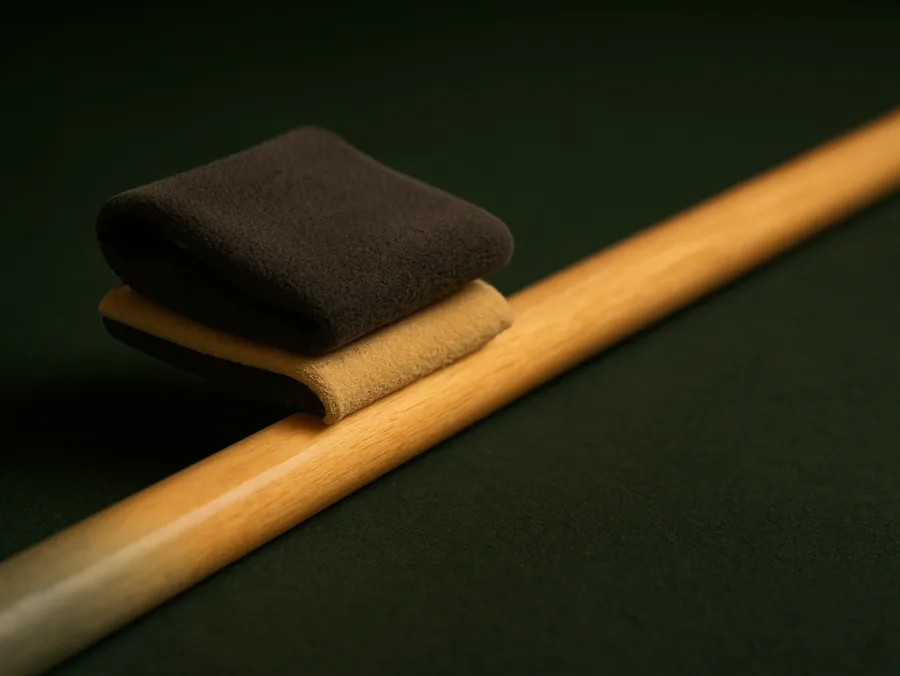
Q-Wiz Shaft Cleaner and Burnisher
Clean and polish in one toolPlain side to clean, logo side to polish, with long, light strokes. It rinses under the tap and weighs 4.5 grams, which is why it ends up in so many cue cases.
Check price on AmazonFrequently asked questions
What can I use to burnish a cue shaft?
A leather burnishing pad is the standard tool, but any clean piece of unfinished natural leather works, such as an old belt. Brown paper or a dollar bill is the old pool hall method. Don't use glass.
Do I need to clean the shaft before burnishing?
Yes. Burnishing a dirty shaft presses the chalk and hand oil into the wood. Clean it, let it dry, then burnish.
Can you burnish a carbon fiber shaft?
No. McDermott says burnishing damages the Defy's finish, Predator says burnishers can scratch REVO and Venom shafts, and Cuetec rules out any surface treatment on Cynergy and AVID shafts. Wipe carbon with a damp cloth or the maker's wipes.
Does burnishing take wood off the shaft?
No. Leather and paper compress and polish the surface. Micro-abrasive papers and the rough side of two-sided pads do remove a very small amount, so use those only when the shaft feels rough.
Should the shaft get hot when I burnish it?
Warm is right; hot is too much. McDermott's directions say to avoid creating excess heat. Keep the leather moving along the whole shaft.
Should I wax after burnishing?
It's optional. If you use a cue shaft wax, apply a thin coat to the burnished shaft and burnish lightly again. Our pool cue wax guide covers which waxes to use.
Related guides
LeaguePool is reader-supported. When you buy through links on this site we may earn an affiliate commission at no extra cost to you. As an Amazon Associate we earn from qualifying purchases.