Pool Table Golf: Billiards Golf Game Rules
Pool table golf (billiards golf) gives every player a ball to sink in each of the six pockets in turn, the way a golfer plays six holes. There are two ways to score it. The classic room game, written up in the BCA rule book and usually played on a snooker table, is a race: the first player to sink their ball in the sixth pocket wins, and fouls cost you "hickeys" that are paid off at the end. The older stroke-play version, printed in Brunswick's rule books more than a century ago, counts every shot and the lowest total wins.
Both work for two to eight players on an ordinary pool table. Here are the rules for each, how scratches and fouls are handled (it's different from 8-ball), and the variants you'll run into.
Pool table golf at a glance
Four games go by the name golf. Pick one before the first shot, because they score differently.
| Version | Balls | How you win | Fouls cost | Best for |
|---|---|---|---|---|
| Classic golf (BCA) | One object ball per player, shared cue ball | First to sink your ball in the 6 hole | A hickey (paid at the end) | Groups of 3 to 8 who like safety play |
| Stroke-play golf (Brunswick) | One cue ball, one shared object ball | Lowest total strokes for six pockets | Three penalty strokes plus the stroke | Mixed-skill home games |
| Around the world | Full rack; only the 1 ball counts | First to make the 1 ball in all six pockets in order | Lose your turn, 1 ball spotted | Two players or league play |
| Layout golf | A set rack for each hole | Fewest strokes to clear each layout | One penalty stroke | Practice, solo or with friends |
If you've never played, start with stroke-play golf. It's the easiest to explain, and a beginner shooting sevens can still finish the round.
How to play classic pool table golf
This is the version in the BCA rule book, as summarized by Bob Jewett in Billiards Digest (March 2011). It's normally played on a 10- or 12-foot snooker table, which has a semicircle called the D at the head end. On a pool table, use the kitchen (behind the head string) wherever the rules say D.
- Settle the order by lag or by drawing numbered peas from a shake bottle. Everyone shoots in that order all game.
- Each player takes a numbered object ball. All players share one cue ball.
- Number the pockets 1 to 6. The BCA order runs clockwise starting from a corner pocket; local rooms differ on which corner, so agree on it and write the order on the board.
- The first player spots their ball on the foot spot and shoots with the cue ball in the D. The standard opening is a one-cushion bank of your ball toward pocket 1.
- Make it, and your ball is spotted again and you keep shooting for pocket 2, with the cue ball where it stopped. Miss, and your ball stays where it is and the next player takes their opening shot from the D.
- Once everyone has had an opening shot, the cue ball is always played from where it lies.
- Keep going in turn. The first player to sink their ball in the 6 hole wins, even if others haven't had their next turn.
Most shots are soft. You're trying to leave your ball sitting near the pocket you need, because a ball near a pocket is easy to finish next turn and also blocks the player who wants the same pocket after you.
Scratches, fouls and hickeys
Golf doesn't use 8-ball's ball in hand. Each foul is a hickey, marked against you on a chalkboard, and the cue ball comes back to the D (or the kitchen) after a scratch. Under the BCA game these are fouls:
- Not hitting your own ball first, or missing it completely. If you hit someone else's ball first, they can have their ball put back where it was.
- No rail. Some ball, the cue ball or any object ball, has to touch a cushion at some point in the shot, before or after the hit.
- Making any ball in the wrong pocket, meaning a pocket that isn't the one that ball needs next.
- Scratching, or driving any ball off the table. A ball off the table is spotted as near the foot spot as possible.
- Every other normal foul, including touching a ball by accident.
There's one rule that you won't see in other pool games: the lift. If a player fouls and leaves the next shooter snookered, the incoming player can have the blocking balls marked and lifted off the table for one shot, then put back.
Settling up: when someone makes the 6 hole, each other player pays the winner the agreed game stake plus a smaller amount for every hickey they collected. The winner's own hickeys are canceled. The amounts are whatever the group agrees on, including zero if you're playing for bragging rights.
For what a scratch means in 8-ball, 9-ball and straight pool, see what is a scratch in pool and our list of common pool fouls.
Stroke-play golf: count every shot
This is the version most people picture, and it's the one Brunswick printed in its 1910 rule handbook (the 1916 book has the same game). It uses one cue ball and one object ball for everybody, and it's played on any size pool table.
- Draw for order. The cue ball goes on the head spot and the object ball (Brunswick used the red) on the center spot.
- The first player shoots until they sink the object ball in the first pocket, counting every stroke. In the 1910 rules the first hole is the left side pocket, played as a bank off the end cushion.
- The ball is spotted and the next player plays the same hole from the same setup. After the opening hole, each player shoots from wherever the previous player left the cue ball, so leaving it in a bad spot is part of the game.
- The holes go around the table in order: left side, upper left corner, upper right corner, right side, right lower corner, lower left corner.
- After the sixth pocket, add up the strokes. Lowest total wins.
| Penalty (1910 Brunswick rules) | Cost |
|---|---|
| Scratch (cue ball in a pocket) | 3 strokes plus the stroke; cue ball back on the head spot, keep shooting |
| Object ball in the wrong pocket | 3 strokes plus the stroke; ball spotted, keep shooting |
| No ball touches a cushion | 3 strokes plus the stroke; keep shooting |
A popular modern twist, described on Dr. Dave's pool site, plays the six pockets three times for an 18-hole round, puts the object ball on the center spot at the start of every hole, and adds a ball on the foot spot as a hazard that costs one stroke if you hit it. Partners can play too: Brunswick's rules add both partners' strokes together.
Around the world and layout golf
Around the world (also called roundy) is the league version from Manchester, New Hampshire, where the Queen City Pool League plays it as its league game (its written table rules date from 2004). Matches are one on one, on 9-foot tables.
- Rack all fifteen balls with the 1 ball in the middle of the third row and break.
- Only the 1 ball counts. You have to make it in all six pockets in order, counterclockwise from the lower right corner as seen from the head string: lower right, lower left, left side, upper left, upper right, right side.
- The 1 ball doesn't have to be hit first. Combinations count. The other fourteen balls are called and pocketed just to get position, and they stay down.
- Make the 1 in the wrong pocket and it's spotted and your turn ends without advancing.
- A legal shot only needs ball contact, with no rail required.
Layout golf comes from a 1960s A.E. Schmidt booklet that Jewett reprinted: each hole is a set rack, you count the strokes it takes to clear it, and a scratch is a one-stroke penalty. Because it's you against the par, it also works alone. Our list of pool games to play alone has a simple solo golf drill.
Strategy: lag it close, then lock the door
Golf rewards patience more than shotmaking. Three habits win games.
First, stop banging at the pocket. A ball that dies an inch from the hole is a near-certain make next turn and a roadblock for anyone needing the same pocket. Speed control is the skill, the same one our position play basics page drills.
Second, never leave the next player a straight shot if you can help it. Jewett's advice is blunt: in an established group, failing to play safe is the quickest way to stop getting invited back. When you're snookered with no good shot, your job is to make sure the next player can't advance either, even if that costs you a hickey.
Third, move other people's hangers. If an opponent's ball sits in the jaws of their next hole, a combination or carom that knocks it away is often worth more than advancing your own ball. In stroke play, think like a golfer laying up: take two easy strokes before one hopeful one that can cost you three penalty strokes.
Which table, and how many players
Jewett calls the snooker-table game the most common form of golf in the US, and the bigger bed and smaller pockets are why: every hole is hard. On a 7- or 8-foot pool table the pockets are easy enough that stroke-play golf is the better choice for a home group, while classic golf turns into a race of whoever breaks first.
Two to eight players works. Jewett notes that seven or eight isn't too big a crowd, since nobody sits out a whole rack the way they would in 8-ball. You need a chalkboard, a scorepad or a bead counter to track strokes or hickeys. For other big-group games, see pool games for groups and kelly pool, which uses the same shake bottle to set the order.
Looking for the general rules of a pool table game rather than golf? Start with how to play pool and 8-ball rules.
Not the tabletop putting toys
Search for pool table golf and you'll also find mini putting greens and golf-themed table toys. Those are a different thing. Billiards golf is played with a normal cue, cue ball and pool or snooker balls on a regular table; nothing extra to buy beyond a way to keep score.
Sources
- Bob Jewett, "More the Merrier IV," Billiards Digest, March 2011 (BCA golf, hickeys and lift rule, 1916 Brunswick version, layout golf)
- Brunswick-Balke-Collender, A Complete Hand-Book of Standard Rules of All the Prominent Games of Billiards and Pool (1910), Rules for Golf Pool
- Queen City Pool League, Around-the-World Table Rules (2004)
- Dr. Dave Pool Info: How do you play golf on a pool table?
- Wikipedia: Golf (billiards), citing the BCA Official Rules and Record Book (2000 and 2006 editions)
Our picks
Links open the current selection and price on Amazon so you can compare real reviews before buying.
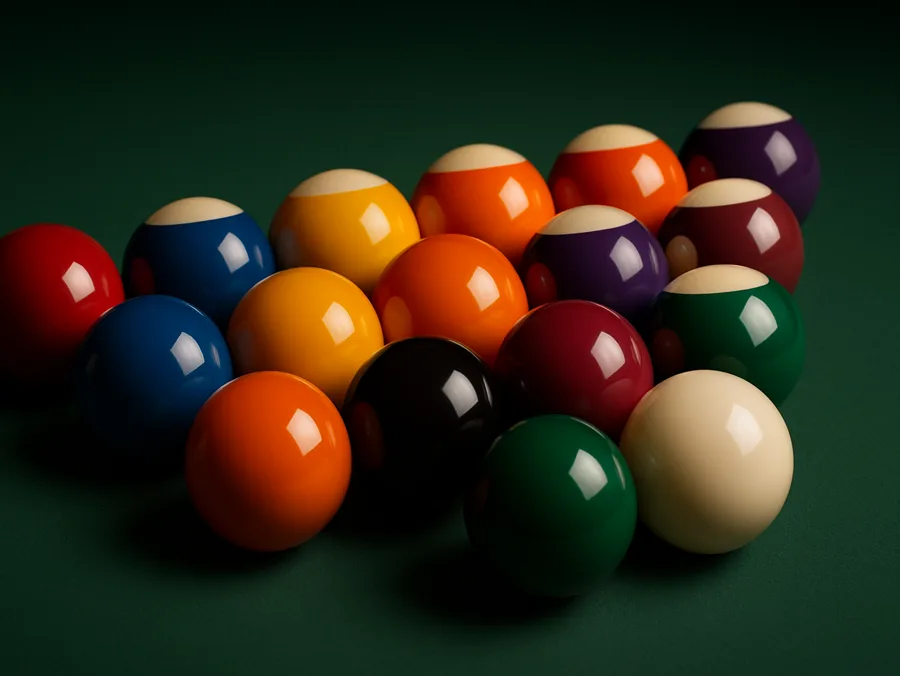
Aramith Crown Standard Ball Set
A ball for every golferClassic golf gives each player a numbered ball, so a full sixteen-ball set covers a crowd of eight with room to spare. Golf is all soft touch shots that have to die near the pocket, and true-rolling cast phenolic balls behave far better at slow speed than the polyester sets that come with budget tables.
Check price on Amazon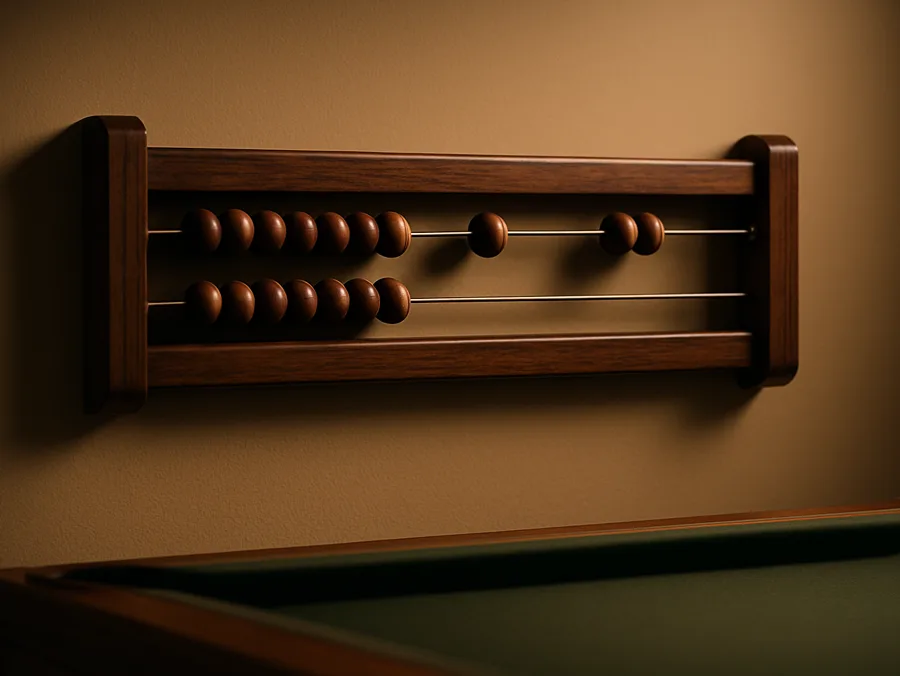
Wooden Bead Score Keeper
Tracking strokes and hickeysGolf is a scoring game first. Sliding wooden beads on a strung wall rail let everyone see the count from their chair, with no batteries and no arguing over whose turn added a stroke.
Check price on Amazon
Predator 1080 Pure Chalk Set
Clean hits on slow shotsIn stroke-play golf a miscue that scratches costs you four strokes. Chalk that grips the tip the same way on the last hole as the first is cheap insurance.
Check price on AmazonFrequently asked questions
How do you play golf on a pool table?
Each player tries to pocket a ball in pockets 1 through 6 in order. In stroke play you count every shot and the lowest total wins. In the classic BCA game each player has their own ball and the first to make the sixth pocket wins, with fouls charged as hickeys.
What happens if you scratch in pool table golf?
In the classic game a scratch is a foul worth one hickey and the cue ball goes back to the D or the kitchen. In Brunswick's stroke-play rules a scratch adds three strokes plus the stroke itself, and you keep shooting with the cue ball on the head spot.
What is a hickey in pool golf?
A hickey is a foul mark. You get one for scratching, missing your ball, hitting another ball first, making a ball in the wrong pocket or failing to hit a rail. At the end each loser pays the winner a set amount per hickey on top of the game stake.
How many players can play billiards golf?
Two to eight is comfortable. Each player has a ball (or a turn at the shared ball in stroke play), so the game handles a crowd better than rack games like 8-ball.
Which pocket is hole 1?
It depends on the version. The BCA game numbers pockets clockwise from a corner, Brunswick's stroke-play rules start at the left side pocket, and around the world starts at the lower right corner and goes counterclockwise. Agree on the order and write it down before you start.
Do you have to hit a rail in pool table golf?
In the classic and Brunswick versions, yes: some ball must touch a cushion on every shot or it's a foul. Around the world only needs a ball hit, no rail.
Can you play pool golf on a 7-foot table?
Yes. Stroke-play golf works on any size table. The classic race version is tougher and more interesting on a big snooker table with tight pockets, since on a small bar table the early players can run through the holes quickly.
Related guides
LeaguePool is reader-supported. When you buy through links on this site we may earn an affiliate commission at no extra cost to you. As an Amazon Associate we earn from qualifying purchases.